 Skip to content

The Role of Flooring in Maintaining Resident Dignity and Independence 🏠
When we think about creating supportive living environments for seniors and individuals with mobility challenges, our minds often jump to grab bars, ramps, or accessible doorways. However, there’s one fundamental element that literally supports every step of daily life yet rarely gets the attention it deserves: flooring. The surface beneath our feet plays a crucial role in maintaining dignity, independence, and quality of life for residents in care facilities, assisted living communities, and aging-in-place homes.
The right flooring choice can mean the difference between confident mobility and fearful hesitation, between maintaining independence and requiring constant assistance. Let’s explore how thoughtful flooring decisions can preserve dignity while promoting safety and autonomy for those who need it most. 💪
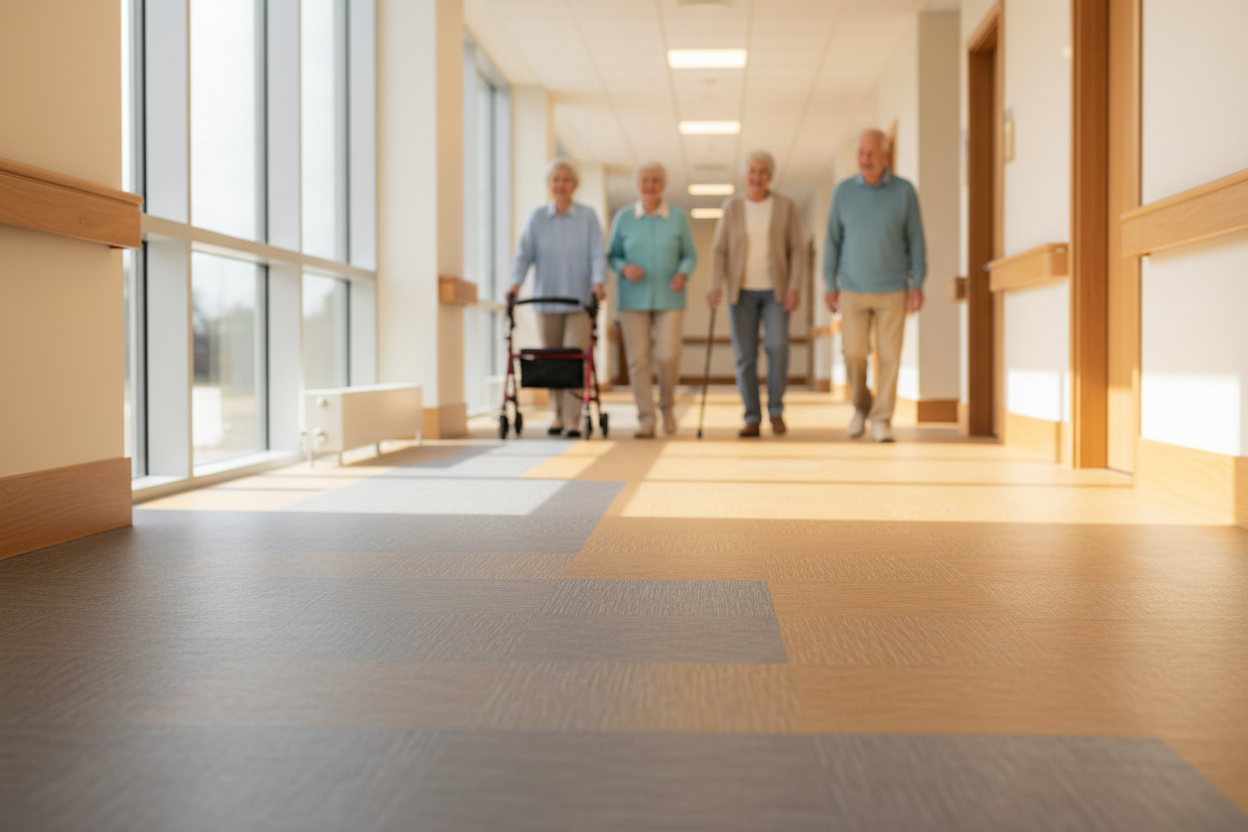
Understanding the Connection Between Flooring and Dignity
Dignity in residential care isn’t just about respectful treatment—it’s about maintaining a sense of control, capability, and self-worth. When residents feel secure in their mobility, they’re more likely to engage in social activities, maintain personal routines, and preserve their independence. Poor flooring choices can create barriers that chip away at confidence and autonomy.
Consider Maria, an 82-year-old resident who loves attending the facility’s morning exercise class. If the flooring between her room and the activity center is slippery or uneven, she might skip her favorite activity rather than risk a fall. This seemingly small accommodation issue ripples outward, affecting her physical health, social connections, and overall well-being.
Quality flooring serves as an invisible support system, allowing residents to move freely without constant worry about their safety. When people can trust their environment, they maintain greater independence and preserve their sense of self-reliance—key components of human dignity. ✨
Safety Features That Promote Independence
The most dignity-preserving flooring incorporates safety features so seamlessly that residents barely notice them. Slip-resistant surfaces, for instance, should provide excellent traction without feeling rough or uncomfortable underfoot. Modern flooring technologies have made it possible to achieve hospital-grade slip resistance while maintaining an attractive, residential appearance.
Cushioned flooring systems offer another layer of protection that can boost confidence. These surfaces provide slight give underfoot, reducing the impact of falls and making walking more comfortable for those with joint pain or balance issues. When residents feel physically supported by their environment, they’re more likely to maintain active lifestyles.
Seamless transitions between different flooring areas prevent tripping hazards that could otherwise force residents to watch their feet constantly. Smooth transitions allow for natural, confident movement throughout living spaces, whether someone is walking independently, using a cane, or navigating with a wheelchair or walker.
Visual Clarity and Wayfinding Through Smart Flooring Design
For residents with vision impairments or cognitive challenges, flooring can serve as a subtle navigation system. Strategic use of color contrast helps define different areas and pathways without creating institutional-looking environments. A slightly different shade in hallway centers, for example, can provide visual guidance while maintaining aesthetic appeal.
Consistent flooring patterns throughout similar spaces help residents develop spatial memory and confidence in navigation. When the dining room, activity areas, and common spaces share similar flooring characteristics, residents can more easily orient themselves and move independently through their environment.
Avoiding busy patterns or high-contrast designs that might cause visual confusion is equally important. Some residents with dementia or other cognitive conditions may perceive certain patterns as obstacles or holes in the floor, creating unnecessary anxiety and limiting their willingness to move freely. 🧠
Comfort and Mobility Enhancement
The physical comfort provided by appropriate flooring directly impacts a resident’s willingness and ability to remain active. Hard surfaces like concrete or stone can exacerbate joint pain and fatigue, making residents reluctant to walk longer distances or participate in activities that require standing.
Ergonomic flooring solutions, such as those with built-in cushioning or resilient backing, reduce stress on joints and provide energy return with each step. This can be particularly beneficial for residents with arthritis, hip replacements, or other mobility challenges. When walking feels easier and more comfortable, residents naturally maintain higher activity levels.
Temperature regulation is another often-overlooked comfort factor. Floors that remain comfortable year-round—neither too cold in winter nor too warm in summer—encourage barefoot or slipper use, which many residents prefer for comfort and ease of movement around their personal spaces.
Maintenance and Hygiene Considerations
Dignity extends to living in clean, well-maintained environments. Flooring that’s easy to clean and maintain helps ensure that living spaces remain fresh and hygienic without requiring excessive maintenance activities that might disrupt residents’ daily routines.
Stain-resistant and antimicrobial flooring options help maintain cleanliness standards while reducing the need for harsh cleaning chemicals that could create slippery conditions or unpleasant odors. This is particularly important in areas where spills are common, such as dining rooms and kitchens.
Quick-drying properties in flooring materials minimize the time that areas must be cordoned off for cleaning, allowing residents to maintain their normal routines and access to all areas of their living environment. Nothing undermines independence quite like constantly encountering “wet floor” signs and blocked pathways. 🚧
Creating Home-Like Environments
Institutional-looking flooring can make even the most well-intentioned care facility feel clinical and unwelcoming. Residents maintain greater dignity when their environment feels like home rather than a medical facility. Modern commercial flooring options can achieve the warmth and beauty of residential materials while meeting the durability and safety requirements of care environments.
Wood-look luxury vinyl, for example, provides the aesthetic appeal of hardwood with superior slip resistance, easy maintenance, and comfort underfoot. These materials allow facilities to create welcoming, home-like spaces that residents feel proud to call their own.
Allowing for personalization through area rugs or mats in private spaces gives residents some control over their environment while maintaining safety standards. The key is establishing clear guidelines for acceptable materials and ensuring proper installation to prevent tripping hazards.
Technology Integration and Future-Proofing
Modern flooring solutions increasingly incorporate smart technologies that can enhance safety and independence. Sensor-embedded flooring systems can detect falls and automatically alert staff, providing peace of mind for both residents and families without requiring residents to wear monitoring devices.
LED-integrated flooring can provide gentle pathway lighting during nighttime hours, helping residents navigate safely to bathrooms or common areas without fully illuminating spaces and disturbing sleep patterns. This technology supports independence while maintaining comfort and privacy.
As smart home technologies continue to evolve, flooring systems that can integrate with other assistive technologies will become increasingly valuable. Future-proofing flooring choices ensures that facilities can adapt to new technologies without major renovations. 🔮
Economic Considerations and Long-Term Value
While high-quality, dignity-preserving flooring may require a larger initial investment, the long-term benefits often justify the cost. Reduced fall incidents mean lower liability and medical costs, while increased resident satisfaction can improve occupancy rates and family satisfaction scores.
Durable flooring materials that maintain their appearance and safety features over time provide better value than cheaper options that require frequent replacement or create safety hazards as they age. The total cost of ownership should include not just purchase and installation costs, but also maintenance, replacement, and the potential costs of safety incidents.
Many modern flooring solutions offer warranties of 15-20 years or more, providing predictable flooring costs and reducing the need for disruptive replacement projects that can temporarily limit residents’ access to areas of their home.
Conclusion: Stepping Forward with Dignity
The flooring beneath our feet does far more than simply provide a surface to walk on—it forms the foundation of confidence, safety, and independence for residents in care environments. By choosing flooring solutions that prioritize slip resistance, comfort, visual clarity, and aesthetic appeal, we can create environments where residents feel secure, valued, and empowered to maintain their independence.
Every step a resident takes with confidence is a step toward preserving their dignity and quality of life. The investment in appropriate flooring pays dividends not just in safety statistics, but in the immeasurable value of allowing people to age with grace and independence in environments that truly feel like home.
As we continue to evolve our understanding of person-centered care, let’s not overlook the ground-level factors that make independence possible. After all, dignity begins with the confidence to take that next step—and the right flooring ensures that every step is a safe and secure one. 🌟
Call Us Now!