 Skip to content

The Impact of Flooring on Nursing Home Staff Morale: How the Right Surface Can Transform Workplace Satisfaction 🏥
When we think about nursing home environments, our minds often drift to patient care, medical equipment, and comfortable living spaces. However, there’s one crucial element that’s frequently overlooked yet profoundly impacts the daily lives of those who work tirelessly to provide care: the flooring beneath their feet. 👩⚕️
Imagine walking miles every day on surfaces that cause your feet to ache, your back to strain, and your energy to drain. For nursing home staff who spend 8-12 hours on their feet daily, the choice of flooring isn’t just about aesthetics—it’s about their physical wellbeing, job satisfaction, and ultimately, their ability to provide quality care to residents.
The connection between flooring and staff morale might seem surprising at first glance, but when you consider the physical demands of healthcare work, it becomes crystal clear why this seemingly simple design decision can make or break a workplace environment. Let’s explore how the ground beneath our healthcare heroes’ feet can either support their mission or become an invisible barrier to their success.
The Physical Demands of Nursing Home Work 💪
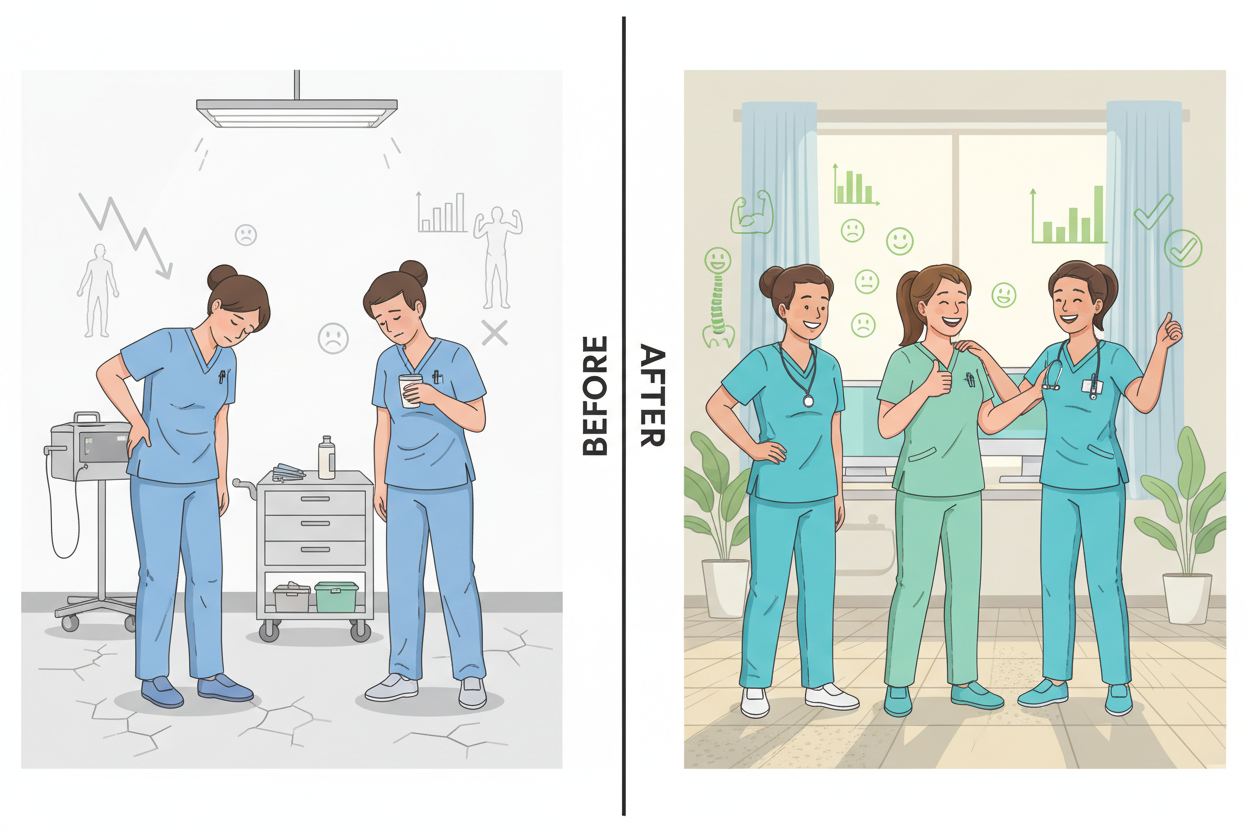
Working in a nursing home is physically demanding in ways that many people don’t fully appreciate. Staff members are constantly on the move—rushing between rooms, assisting residents with mobility, lifting equipment, and responding to emergencies. The average nursing home employee walks between 4-7 miles during a typical shift, often while carrying supplies or supporting residents.
This constant movement takes place on various types of flooring, from hard tile in medical areas to carpeted common spaces. When flooring doesn’t provide adequate support or cushioning, the cumulative effect on staff bodies can be devastating. Foot pain, leg fatigue, lower back strain, and joint stress become daily companions rather than occasional discomforts.
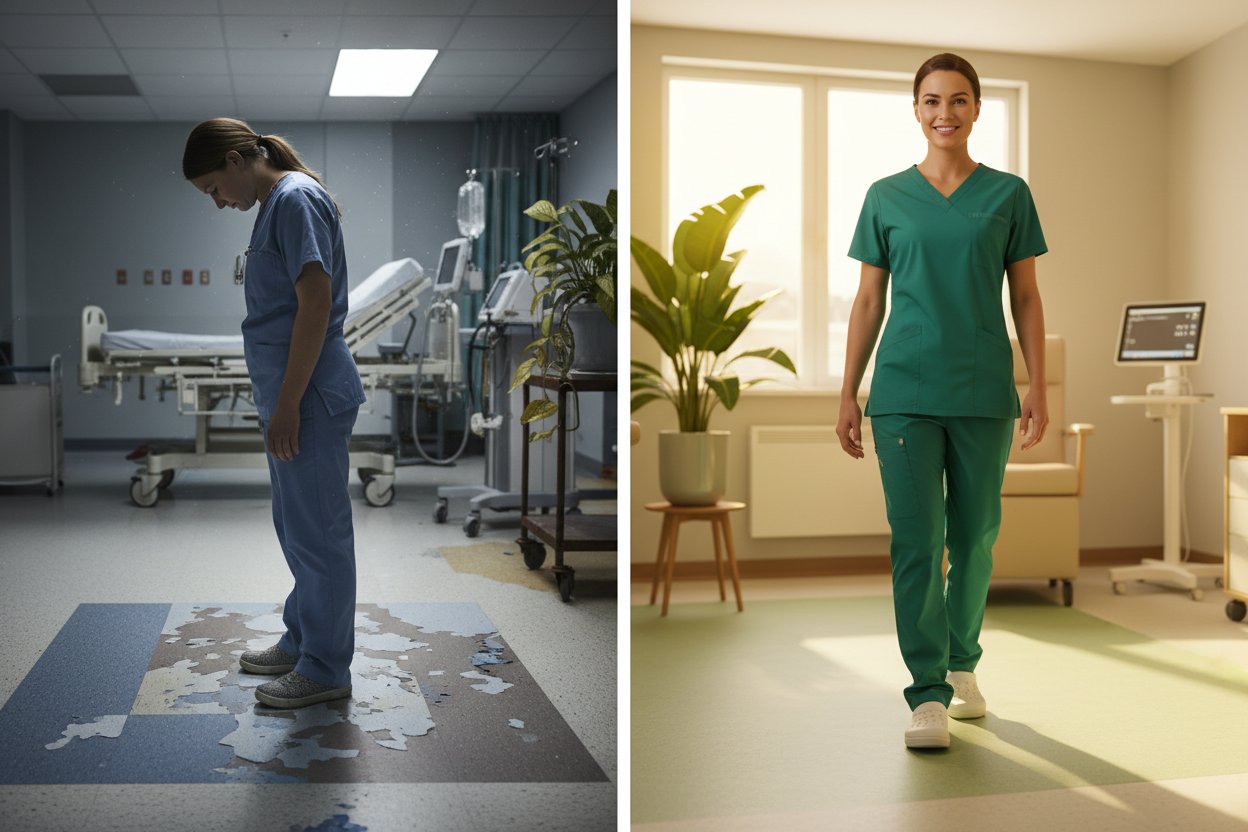
Consider Sarah, a certified nursing assistant who’s worked in long-term care for eight years. She describes her experience: “By the end of my shift, my feet would be screaming, and I’d go home with this deep ache in my lower back. I started dreading coming to work, not because I didn’t love caring for our residents, but because I knew how much pain I’d be in by the end of the day.”
How Poor Flooring Choices Affect Staff Wellbeing 😔
The impact of inappropriate flooring extends far beyond simple discomfort. When staff members experience chronic pain and fatigue due to inadequate flooring support, several concerning issues emerge that directly affect their morale and job performance.
Physical exhaustion becomes a constant companion when employees must work on hard, unforgiving surfaces. Concrete floors covered with basic vinyl or ceramic tiles might be easy to clean and maintain, but they offer virtually no shock absorption. Every step sends impact waves through the feet, up the legs, and into the spine. Over time, this repetitive stress can lead to serious musculoskeletal problems.
Mental fatigue often follows physical discomfort. When staff members are constantly aware of their aching feet and tired legs, it becomes difficult to maintain the positive, caring attitude that’s essential for quality patient care. The cognitive load of managing pain while performing complex care tasks can be overwhelming.
Increased absenteeism naturally follows when employees are dealing with chronic pain issues. Staff members may call in sick more frequently, not necessarily due to illness, but because their bodies need recovery time from the daily stress of working on unsuitable surfaces. This creates staffing challenges that affect the entire care team.
The Science Behind Supportive Flooring and Employee Satisfaction 🔬
Research in occupational health has consistently demonstrated the connection between flooring choices and worker wellbeing. Studies show that anti-fatigue flooring can reduce leg and back discomfort by up to 50% compared to hard surfaces. This isn’t just about comfort—it’s about creating an environment where staff can perform at their best.
Ergonomic flooring works by providing cushioning that absorbs impact and encourages subtle muscle movement. This micro-movement promotes blood circulation, reducing the pooling that can occur when standing or walking on hard surfaces for extended periods. Better circulation means less fatigue, reduced swelling, and improved overall comfort throughout long shifts.
The psychological benefits are equally important. When employees feel physically comfortable, they’re more likely to maintain positive attitudes, engage meaningfully with residents, and take pride in their work. This creates a positive feedback loop where better physical conditions lead to improved morale, which in turn enhances job performance and satisfaction.
Temperature regulation is another often-overlooked benefit of quality flooring. Surfaces that provide insulation help maintain comfortable temperatures underfoot, preventing the chill that can come from walking on cold concrete or tile floors. This might seem minor, but small comforts accumulate to create a more pleasant work environment.
Flooring Solutions That Boost Staff Morale 🌟
Fortunately, there are numerous flooring solutions specifically designed to support healthcare workers while meeting the stringent hygiene and safety requirements of nursing home environments. These options prove that facilities don’t have to choose between functionality and staff comfort.
Cushioned vinyl flooring represents one of the most popular solutions in modern healthcare facilities. These products combine the easy-clean properties that nursing homes require with shock-absorbing underlayments that provide crucial support for staff feet and legs. Many facilities report noticeable improvements in staff comfort within weeks of installation.
Rubber flooring systems offer excellent slip resistance and cushioning properties. While initially more expensive than basic vinyl options, the long-term benefits in terms of staff retention and satisfaction often justify the investment. Rubber floors are also incredibly durable, maintaining their supportive properties even under heavy use.
Anti-fatigue mats can be strategically placed in high-traffic areas or workstations where staff spend extended periods standing. Nurses’ stations, medication preparation areas, and common gathering spots can benefit tremendously from these targeted comfort solutions. The key is ensuring that mats are properly secured to prevent tripping hazards while providing maximum benefit.
Carpet tiles in appropriate areas can provide comfort while maintaining the ability to replace damaged sections easily. While not suitable for all areas of a nursing home due to infection control requirements, carpet tiles can be excellent choices for administrative areas, break rooms, and some common spaces where staff spend time.
Real-World Success Stories: Facilities That Got It Right ✅
Sunset Manor, a 120-bed facility in Oregon, undertook a comprehensive flooring renovation in 2022 after experiencing high staff turnover and numerous complaints about foot and leg pain. The facility invested in cushioned vinyl flooring throughout resident care areas and added anti-fatigue mats at key workstations.
The results were remarkable. Within six months, staff satisfaction surveys showed a 40% improvement in physical comfort ratings. More importantly, staff turnover decreased by 25%, and the facility reported fewer workers’ compensation claims related to musculoskeletal injuries. “Our staff actually thank us for the new floors,” says Director of Operations Maria Rodriguez. “It’s not something you expect to hear, but the difference has been that significant.”
Similarly, Riverside Care Center in Michigan saw dramatic improvements after replacing their hard tile floors with ergonomic rubber flooring in high-traffic areas. Night shift supervisor James Thompson notes, “I used to go home every morning with my feet killing me. Now, even after a busy night, I feel like I could keep going. It’s made such a difference in how I feel about coming to work.”
The Ripple Effect: How Staff Comfort Improves Resident Care 🌊
The benefits of supportive flooring extend far beyond staff comfort, creating a positive ripple effect that ultimately enhances the quality of care provided to residents. When employees feel physically comfortable and energized, they’re naturally more attentive, patient, and engaged in their caregiving responsibilities.
Comfortable staff members are more likely to spend quality time with residents, engaging in conversations and activities that improve the overall living experience. They’re less likely to rush through tasks due to discomfort and more likely to notice subtle changes in resident conditions that might require attention.
The reduced turnover that often accompanies improved working conditions means residents benefit from more consistent caregivers. Building relationships with familiar staff members is crucial for resident wellbeing, and when employees stay longer due to improved working conditions, these important relationships have time to develop and flourish.
Staff who aren’t dealing with chronic pain and fatigue are also safer caregivers. They’re less likely to make mistakes due to distraction from discomfort and more capable of responding quickly and effectively to emergency situations. This enhanced safety benefits everyone in the facility.
Making the Business Case for Better Flooring 💼
While the humanitarian reasons for investing in supportive flooring are compelling, nursing home administrators also need to consider the financial implications. The good news is that the business case for better flooring is remarkably strong when all factors are considered.
Reduced turnover represents one of the most significant cost savings. The average cost of replacing a nursing home employee ranges from $3,000 to $7,000 when factoring in recruitment, training, and lost productivity. Facilities that reduce turnover by even 10-15% through improved working conditions can see substantial savings that quickly offset flooring investment costs.
Decreased workers’ compensation claims related to musculoskeletal injuries can result in significant insurance savings. Many facilities report 20-30% reductions in these types of claims after installing ergonomic flooring solutions. Lower injury rates also contribute to improved staff availability and reduced overtime costs.
Enhanced reputation as an employer of choice can make recruitment easier and less expensive. Word spreads quickly in the healthcare community about facilities that prioritize staff wellbeing, making it easier to attract quality employees and reducing recruitment costs.
Implementation Strategies for Maximum Impact 📋
Successfully implementing flooring improvements requires careful planning and consideration of multiple factors. The most effective approaches involve staff input, phased installation, and ongoing evaluation to ensure maximum benefit.
Start by conducting staff surveys and assessments to identify the areas where flooring improvements would have the greatest impact. High-traffic corridors, nurses’ stations, and medication preparation areas are typically priority locations. Understanding where staff experience the most discomfort helps prioritize investments for maximum return.
Consider a phased approach that allows for evaluation and adjustment. Installing new flooring in one wing or department first provides an opportunity to assess effectiveness and make any necessary modifications before proceeding with facility-wide improvements. This approach also helps spread costs over time.
Involve staff in the selection process when possible. Having employees test flooring samples or visit showrooms where they can experience different options firsthand helps ensure the final choice will meet their needs. Staff buy-in is crucial for maximizing the morale benefits of flooring improvements.
Plan installations carefully to minimize disruption to care operations. Many facilities choose to complete flooring projects during slower periods or in phases that allow continued operation. Proper planning ensures that improvements don’t negatively impact resident care during the transition period.
Conclusion: Stepping Forward with Purpose 🚀
The flooring beneath our feet might seem like a minor detail in the grand scheme of nursing home operations, but as we’ve seen, its impact on staff morale and overall facility success is anything but small. When we invest in surfaces that support and comfort the dedicated professionals who provide care around the clock, we’re investing in the foundation of quality healthcare delivery.
The evidence is clear: supportive flooring reduces physical strain, improves job satisfaction, decreases turnover, and ultimately enhances the quality of care provided to residents. These improvements create a positive cycle where better working conditions lead to happier staff, which leads to better resident care, which leads to improved facility reputation and success.
For nursing home administrators considering facility improvements, flooring should be near the top of the priority list. The relatively modest investment required for ergonomic flooring solutions pales in comparison to the ongoing costs of high turnover, workers’ compensation claims, and low staff morale.
Most importantly, choosing supportive flooring demonstrates a commitment to the wellbeing of the healthcare heroes who dedicate their lives to caring for others. It’s a tangible way to show appreciation for their hard work and dedication while creating an environment where they can thrive professionally and personally.
Every step matters in healthcare, and when those steps are supported by thoughtfully chosen flooring, everyone benefits—staff, residents, and families alike. The ground beneath our feet might be the foundation we stand on, but in nursing homes, it’s also the platform from which compassionate care is delivered every single day. 💝
Call Us Now!