 Skip to content

The Benefits of Sustainable Flooring Solutions in Elderly Care: Creating Healthier Environments for Our Seniors 🌿
When we think about creating the perfect environment for elderly care, our minds often jump to medical equipment, comfortable furniture, or accessible bathroom fixtures. However, there’s one crucial element that literally forms the foundation of every senior living space: the flooring. As someone who has spent years observing how environmental factors impact our aging population, I can tell you that sustainable flooring solutions are revolutionizing elderly care facilities in ways that extend far beyond aesthetics.
The intersection of sustainability and senior care represents more than just a trendy design choice—it’s a thoughtful approach to creating healthier, safer, and more comfortable living spaces for our most vulnerable population. Today’s eco-friendly flooring options offer remarkable benefits that directly address the unique challenges faced by elderly residents while supporting our collective environmental responsibility.
Understanding the Unique Flooring Needs in Senior Care Facilities 👴👵
Before diving into sustainable solutions, it’s essential to recognize what makes flooring requirements in elderly care so distinctive. Unlike typical residential or commercial spaces, senior living facilities must balance multiple complex factors simultaneously.
Safety stands as the paramount concern. Falls represent one of the leading causes of injury among seniors, making slip resistance and cushioning properties absolutely critical. The flooring must provide adequate traction even when wet, yet remain easy to clean and maintain to high hygiene standards.
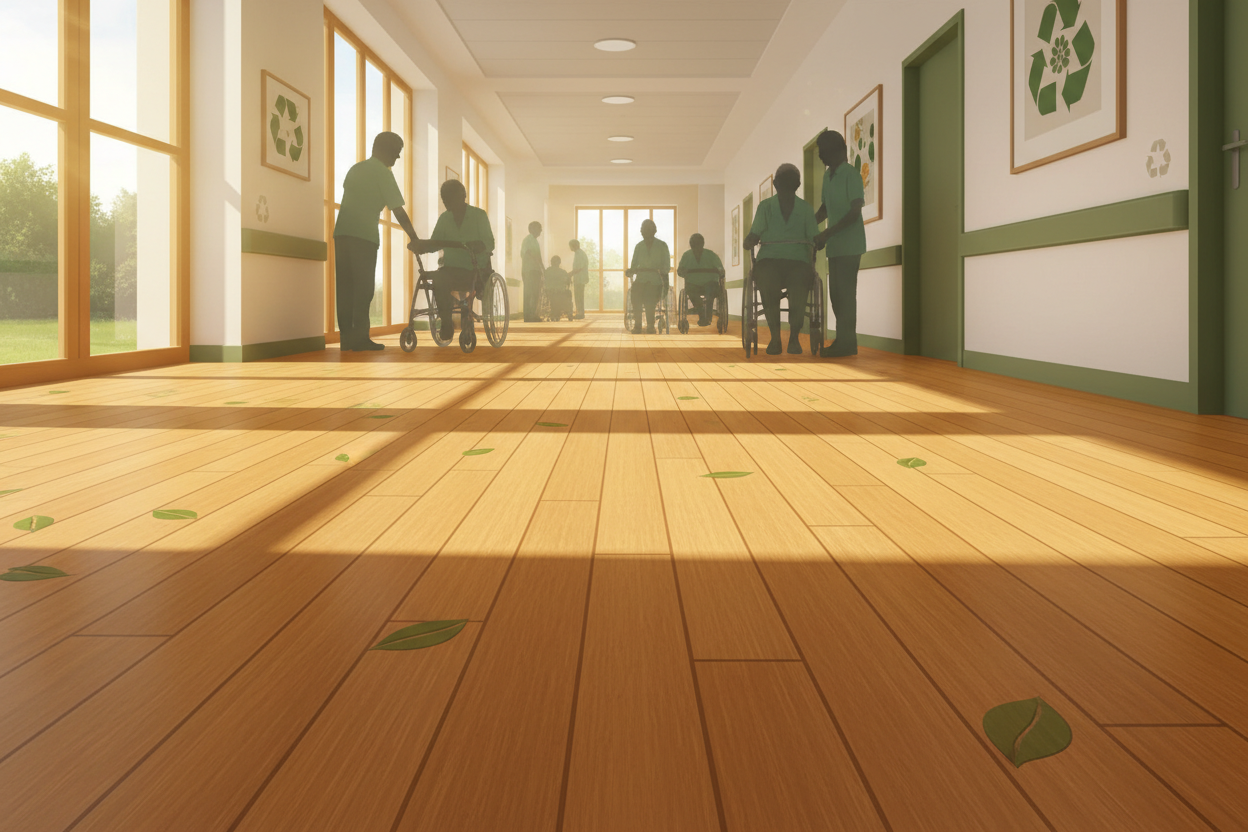
Comfort plays an equally important role. Many elderly residents spend significant time on their feet or use mobility aids that can create pressure points. The right flooring can reduce fatigue, provide joint support, and minimize the impact of walking or wheelchair movement.
Durability cannot be overlooked either. High-traffic areas in care facilities experience constant use from residents, staff, medical equipment, and cleaning procedures. The flooring must withstand this intensive use while maintaining its appearance and functional properties over time.
Environmental Impact: Why Sustainable Flooring Matters More Than Ever 🌍
The environmental footprint of elderly care facilities extends far beyond what meets the eye. These facilities operate 24/7, housing multiple residents who rely on consistent heating, cooling, lighting, and medical equipment. When you multiply this by thousands of facilities worldwide, the environmental impact becomes staggering.
Sustainable flooring solutions address this challenge through multiple pathways. Manufacturing processes that minimize chemical emissions, reduce waste, and utilize renewable resources significantly lower the overall environmental burden. Additionally, many eco-friendly flooring options improve indoor air quality, which directly benefits residents’ respiratory health.
The longevity factor of sustainable flooring also contributes to environmental responsibility. When flooring lasts longer and requires fewer replacements, it reduces waste generation and the resources needed for frequent renovations. This creates a positive cycle where environmental stewardship aligns perfectly with economic efficiency.
Health Benefits: Creating Cleaner Indoor Environments for Seniors 🏥
The health implications of flooring choices in elderly care cannot be overstated. Traditional flooring materials often contain volatile organic compounds (VOCs) that can trigger respiratory issues, allergic reactions, and other health complications—concerns that become amplified when dealing with seniors who may already have compromised immune systems.
Sustainable flooring materials typically feature low or zero VOC emissions, creating cleaner indoor air environments. This improvement in air quality can lead to reduced respiratory symptoms, fewer allergic reactions, and an overall improvement in residents’ quality of life.
Many eco-friendly flooring options also possess natural antimicrobial properties, helping to reduce the spread of bacteria and other pathogens. In environments where infection control is crucial, these properties provide an additional layer of protection for vulnerable residents.
The psychological benefits shouldn’t be overlooked either. Natural materials and earth-tones commonly found in sustainable flooring options can create a more calming, home-like atmosphere that reduces stress and anxiety among residents. This connection to nature, even in small ways, has been shown to improve mental well-being and overall satisfaction in care environments.
Top Sustainable Flooring Options for Elderly Care Facilities 🔧
The market for sustainable flooring has exploded in recent years, offering care facilities numerous options that balance environmental responsibility with practical functionality. Each option brings unique advantages that can be tailored to specific areas within a facility.
Cork flooring has emerged as a standout choice for many senior living spaces. Harvested from the bark of cork oak trees without harming the tree itself, cork represents true sustainability in action. Its natural cushioning properties provide excellent joint support, while its inherent antimicrobial characteristics help maintain cleaner environments. The slip-resistant surface offers enhanced safety, and its natural insulation properties can contribute to energy efficiency.
Bamboo flooring presents another excellent sustainable option, particularly in high-traffic areas. As one of the fastest-growing plants on Earth, bamboo can be harvested and regenerated quickly without depleting natural resources. Modern bamboo flooring offers remarkable durability and can withstand the heavy use typical in care facilities while maintaining an attractive appearance.
Recycled rubber flooring, often made from reclaimed tires, provides exceptional slip resistance and cushioning—perfect for areas where fall prevention is critical. This option transforms waste materials into functional flooring that offers superior safety benefits while diverting materials from landfills.
Natural linoleum, made from linseed oil, wood flour, and other renewable materials, offers excellent durability and easy maintenance. Unlike vinyl alternatives, natural linoleum doesn’t release harmful chemicals and actually improves with age, developing a patina that adds character while maintaining functionality.
Safety Features: How Sustainable Options Enhance Fall Prevention 🛡️
Fall prevention remains one of the most critical safety considerations in elderly care, and sustainable flooring options often excel in this area. The natural properties of many eco-friendly materials provide inherent safety advantages that synthetic alternatives struggle to match.
The slip resistance of sustainable materials like cork and natural rubber significantly exceeds that of traditional options. These materials maintain their grip even when exposed to moisture, a common concern in areas near bathrooms, kitchens, or during cleaning procedures.
Cushioning properties represent another crucial safety feature. Materials like cork and recycled rubber provide natural shock absorption that can reduce the severity of injuries if falls do occur. This cushioning also reduces fatigue during extended walking or standing, potentially preventing falls caused by tiredness or instability.
Many sustainable flooring options also offer better visibility and contrast options, helping seniors with vision impairments navigate spaces more safely. Natural materials often provide subtle texture variations that can help residents sense changes in elevation or surface type through their feet or mobility aids.
Cost-Effectiveness: Long-term Financial Benefits of Eco-Friendly Flooring 💰
While sustainable flooring options may require higher upfront investment, their long-term financial benefits often make them the more economical choice for elderly care facilities. Understanding these cost dynamics helps facility managers make informed decisions that benefit both their budgets and their residents.
Durability represents the most significant cost advantage. High-quality sustainable flooring materials often last significantly longer than conventional alternatives, reducing replacement frequency and associated labor costs. When you factor in the disruption caused by flooring replacement in occupied care facilities, the value of longevity becomes even more apparent.
Maintenance costs also tend to be lower with many sustainable options. Natural antimicrobial properties reduce the need for harsh cleaning chemicals, while the inherent durability of materials like bamboo and cork means they require less frequent deep cleaning or restoration procedures.
Energy efficiency benefits provide ongoing cost savings. Many sustainable flooring materials offer superior insulation properties, helping to reduce heating and cooling costs—a significant consideration for facilities that operate around the clock.
The potential for LEED certification and other green building recognitions can also provide financial incentives through tax credits, grants, or reduced insurance premiums, further improving the economic case for sustainable flooring choices.
Installation and Maintenance: Practical Considerations for Care Facilities 🔨
The practical aspects of installation and ongoing maintenance play crucial roles in the success of any flooring choice in elderly care settings. Sustainable options often offer advantages in both areas, though proper planning remains essential.
Installation of sustainable flooring materials has become increasingly straightforward as the industry has matured. Many options now feature click-lock systems or adhesive-free installation methods that minimize disruption to facility operations. This is particularly valuable in occupied facilities where residents’ comfort and safety must be maintained throughout renovation processes.
The low-maintenance nature of many sustainable materials proves especially beneficial in care environments. Cork’s natural resistance to moisture and bacteria means it requires less frequent deep cleaning, while bamboo’s durability means it maintains its appearance with routine care rather than intensive maintenance procedures.
Staff training requirements for maintaining sustainable flooring are typically minimal, as most eco-friendly options respond well to standard cleaning procedures. In fact, many sustainable materials perform better with gentler, chemical-free cleaning methods, aligning perfectly with the health-conscious approach of modern senior care.
Repair and replacement procedures also tend to be more straightforward with sustainable options. Many materials can be spot-repaired or replaced in sections without affecting surrounding areas, minimizing disruption to residents and reducing long-term maintenance costs.
Conclusion: Building a Sustainable Future for Senior Care 🌟
The benefits of sustainable flooring solutions in elderly care extend far beyond environmental responsibility, though that alone would justify their consideration. These innovative materials create healthier indoor environments, enhance safety features, provide long-term cost savings, and contribute to the overall well-being of our senior population.
As we face an aging population and growing environmental challenges, the intersection of sustainability and senior care represents an opportunity to address multiple critical issues simultaneously. Sustainable flooring solutions offer a practical, immediate way for care facilities to improve their environmental impact while enhancing the quality of life for their residents.
The choice of flooring may seem like a simple design decision, but in elderly care settings, it represents a fundamental commitment to resident health, safety, and comfort. By choosing sustainable options, care facilities demonstrate their dedication to both their residents’ immediate needs and the long-term health of our planet.
For facility managers, administrators, and anyone involved in senior care planning, sustainable flooring represents more than just a trend—it’s a responsible investment in creating better environments for our most vulnerable population while building a more sustainable future for generations to come. The foundation of great care truly does start from the ground up. 🏠💚
Call Us Now!