 Skip to content

How to Use Flooring to Highlight Wayfinding Cues in Senior Living: A Complete Guide to Creating Safe, Navigable Spaces 🏡
When my grandmother moved into assisted living three years ago, I watched her struggle to find her way around what should have been her safe haven. Despite the friendly staff and beautiful common areas, she’d often get turned around in the hallways, missing meals because she couldn’t remember which corridor led to the dining room. That’s when I learned about the incredible power of thoughtful flooring design in senior living communities.
Creating effective wayfinding systems in senior living facilities isn’t just about hanging signs on walls – it’s about using every design element, especially flooring, to guide residents naturally and confidently through their home. Today’s senior living communities are discovering that strategic flooring choices can dramatically improve navigation, reduce confusion, and enhance the overall quality of life for residents.
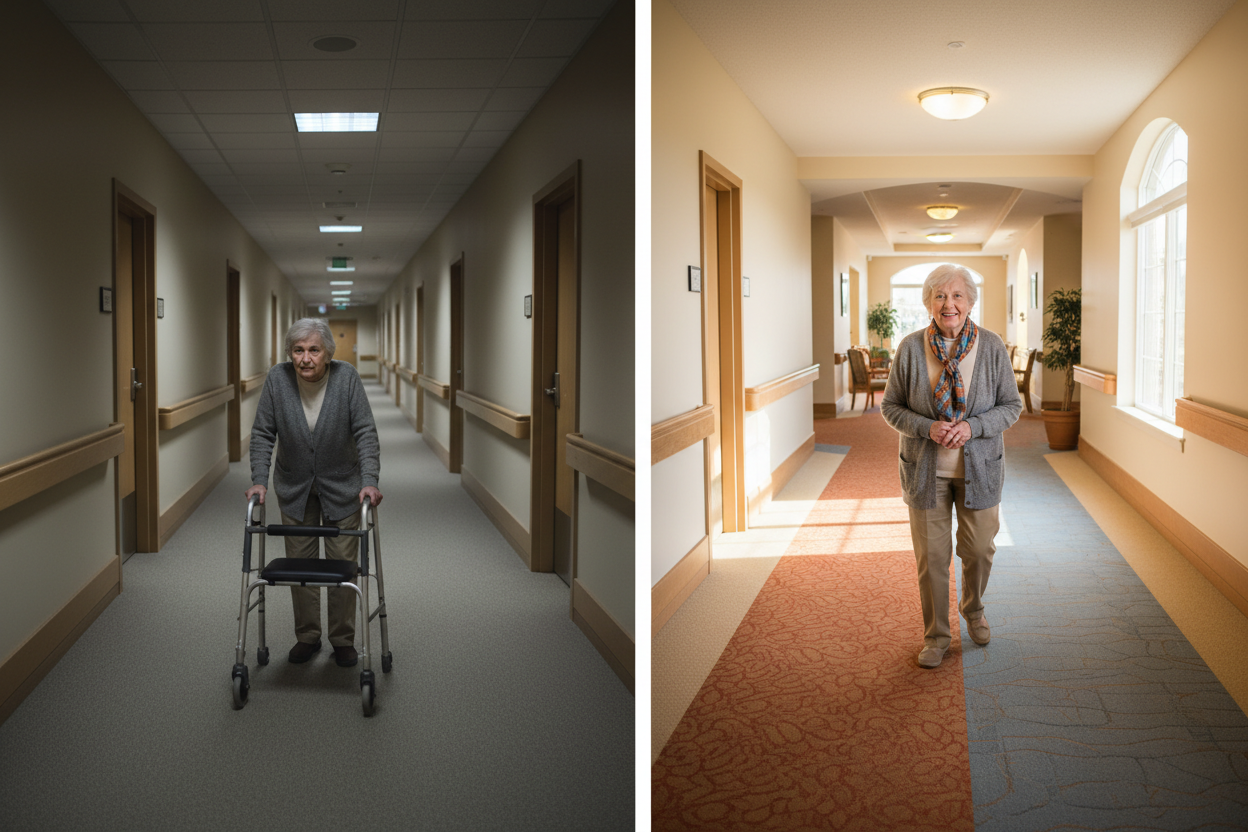
Understanding the Unique Navigation Challenges in Senior Living 👥
Before diving into flooring solutions, it’s essential to understand why navigation becomes more challenging as we age. Vision changes, including decreased depth perception and reduced ability to distinguish between similar colors, make traditional wayfinding methods less effective. Many seniors also experience cognitive changes that affect spatial memory and orientation.
In senior living environments, these challenges are amplified by unfamiliar surroundings, similar-looking hallways, and the stress of adjusting to a new home. Traditional signage alone often falls short because it requires residents to actively search for and read directional information – a process that can be overwhelming when you’re already feeling disoriented.
This is where flooring-based wayfinding becomes a game-changer. Unlike wall-mounted signs that require conscious attention, flooring cues work subconsciously, guiding residents through intuitive visual and tactile feedback that feels natural and effortless.
The Science Behind Flooring-Based Wayfinding Systems 🧠
Research in environmental psychology shows that people naturally follow visual pathways created by changes in flooring materials, colors, and patterns. This phenomenon, called “natural wayfinding,” occurs because our brains are wired to notice and follow linear elements in our environment.
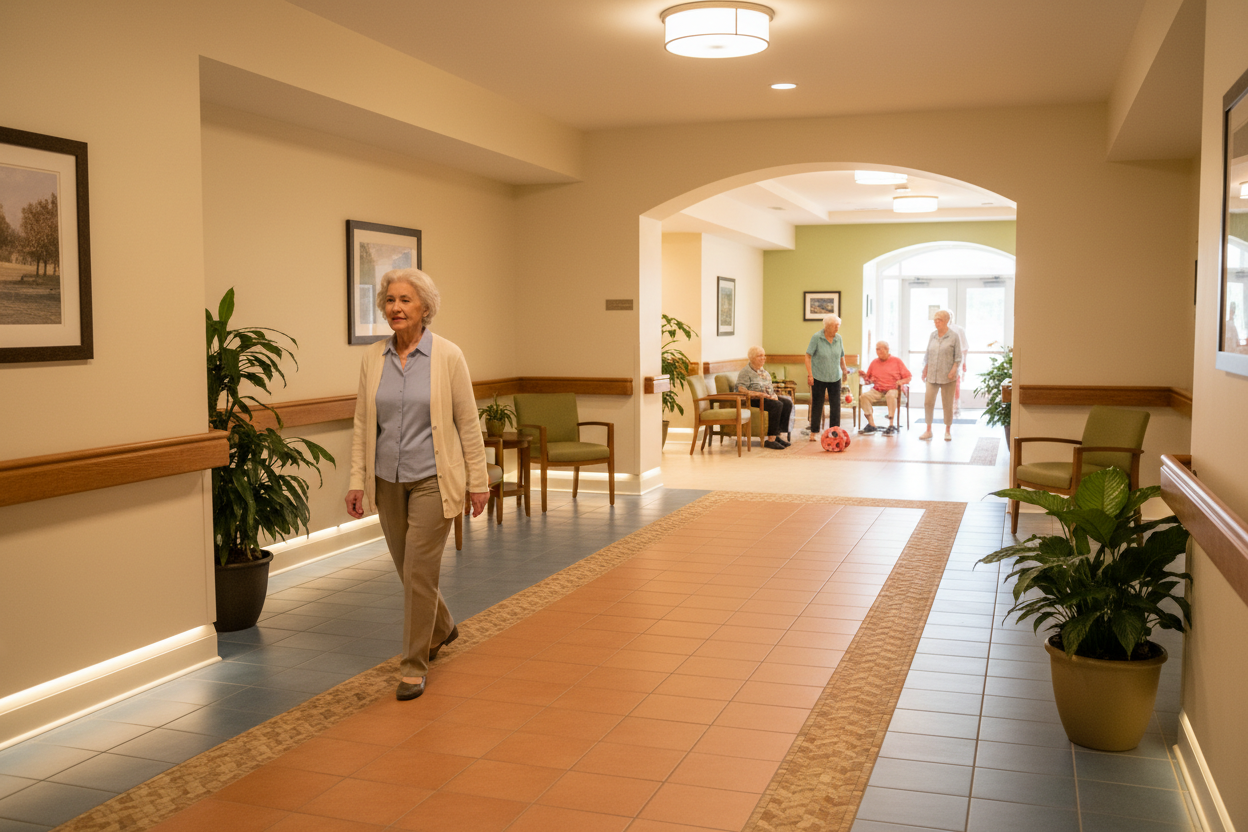
For seniors, this instinctive navigation method is particularly valuable because it doesn’t rely heavily on short-term memory or complex decision-making processes. Instead, it taps into deeper, more preserved cognitive functions that help people move through space safely and confidently.
Studies have shown that well-designed flooring wayfinding systems can reduce navigation errors by up to 40% in senior living facilities. More importantly, they help residents feel more independent and confident in their daily activities, leading to improved mental health and social engagement.
Color Psychology and Contrast Strategies for Senior-Friendly Flooring 🎨
Color plays a crucial role in creating effective wayfinding systems for seniors. However, age-related vision changes mean that color strategies for senior living must be more sophisticated than simply using bright, contrasting hues.
The aging eye has difficulty distinguishing between similar colors, particularly in the blue-green spectrum. This means that traditional color-coding systems using blues and greens may not be effective. Instead, successful senior living flooring designs rely on high-contrast combinations using warmer tones like deep burgundy and cream, or rich brown and soft gold.
Contrast isn’t just about color intensity – it’s also about value contrast, which refers to the difference between light and dark elements. A deep navy blue and bright yellow might seem high-contrast to younger eyes, but for seniors, the value contrast between warm beige and rich chocolate brown might be much more noticeable and useful for navigation.
When implementing color-based wayfinding, consider using a consistent color palette throughout the facility, with specific color combinations assigned to different destinations. For example, warm terracotta borders might always lead to dining areas, while sage green accents guide residents to outdoor spaces and gardens.
Material Selection: Balancing Safety, Comfort, and Visual Guidance ⚖️
Choosing the right flooring materials for senior living wayfinding involves balancing multiple priorities: safety, comfort, durability, and visual effectiveness. Each material offers unique advantages for creating navigational cues while meeting the specific needs of older adults.
Luxury vinyl plank (LVP) flooring has become increasingly popular in senior living because it offers excellent design flexibility while maintaining safety standards. LVP can mimic wood, stone, or tile appearances while providing the slip-resistance and cushioning that seniors need. The ability to create distinct visual zones with different “wood” tones or plank directions makes LVP an excellent choice for wayfinding applications.
Carpet remains valuable in senior living, particularly in residential areas where comfort and sound absorption are priorities. Modern carpet tiles allow designers to create intricate patterns and pathways that guide residents while providing the warmth and familiarity that many seniors prefer. The key is choosing carpets with subtle but distinct patterns that create visual movement without overwhelming busy designs.
Hard surface materials like ceramic tile, stone, and polished concrete can be excellent for creating dramatic wayfinding elements, particularly in transition zones and main corridors. These materials allow for precise color and pattern control, making them ideal for creating bold directional cues that are easy for seniors to follow.
Pattern and Texture Techniques for Intuitive Navigation 🔄
Patterns and textures in flooring can create powerful wayfinding cues that work on both visual and tactile levels. For seniors who may have vision impairments, textural changes in flooring can provide important navigational feedback through their feet and walking aids.
Linear patterns are particularly effective for creating directional flow. Hardwood or LVP planks installed in specific directions can subtly guide movement toward important destinations. Running planks perpendicular to a hallway creates a sense of width and openness, while planks that run parallel to the corridor encourage forward movement and can make long hallways feel less institutional.
Border treatments using contrasting materials or colors can define pathways and create visual boundaries that help seniors understand spatial relationships. A subtle tile border running along the center of a hallway can create a “walking path” that residents naturally follow, while borders around seating areas help define spaces for rest and social interaction.
Textural contrasts should be noticeable but not jarring. Smooth transitions between different flooring materials prevent tripping hazards while still providing the tactile feedback that can help residents with vision impairments navigate confidently.
Creating Distinct Zones with Strategic Flooring Choices 🏢
Effective wayfinding in senior living involves creating distinct environmental zones that residents can easily identify and remember. Flooring plays a crucial role in establishing these zones and helping residents understand where they are and where they’re going.
Common areas like lounges, libraries, and activity rooms benefit from flooring that creates a sense of warmth and invitation. Carpet or warm-toned hard surfaces can make these spaces feel comfortable and homelike while clearly distinguishing them from circulation areas. Using consistent flooring materials in similar function spaces helps residents develop spatial memory – once they learn that soft carpet means “relaxation area,” they can apply that knowledge throughout the facility.
Dining areas require their own distinct flooring identity that balances practicality with appetite appeal. Hard surfaces are often necessary for cleaning and maintenance, but warm colors and inviting patterns can make these spaces feel welcoming rather than institutional. Creating a visual transition zone as residents approach dining areas – perhaps through a change in flooring color or pattern – helps build anticipation and makes mealtimes feel more special.
Residential corridors and private room areas benefit from flooring that feels more intimate and homelike. Softer materials, warmer colors, and smaller-scale patterns can help these areas feel less institutional while still providing clear wayfinding cues toward individual rooms and common areas.
Implementing Flooring Wayfinding Systems: Best Practices and Installation Tips 🔧
Successfully implementing flooring-based wayfinding requires careful planning and attention to detail during both design and installation phases. The most beautiful design concepts can fail if they’re not properly executed with senior-specific considerations in mind.
Transition strips between different flooring materials must be carefully selected and installed to prevent tripping hazards. For seniors using walkers, wheelchairs, or other mobility aids, even small height differences can create significant obstacles. Modern transition solutions include beveled strips and flexible transition materials that create smooth pathways between different flooring types.
Lighting interaction with flooring is crucial for wayfinding effectiveness. Colors and patterns that look distinct under showroom lighting may become indistinguishable under the varied lighting conditions found in senior living facilities. Testing flooring samples under actual facility lighting conditions, including natural light at different times of day, ensures that wayfinding cues remain visible and effective.
Maintenance considerations are particularly important in senior living environments. Flooring wayfinding systems must maintain their visual effectiveness even after years of heavy use and frequent cleaning. This means choosing materials and finishes that won’t fade, wear unevenly, or become slippery when wet.
Technology Integration: Smart Flooring Solutions for Modern Senior Living 📱
Emerging technologies are creating new possibilities for flooring-based wayfinding in senior living. While these solutions are still developing, they represent exciting opportunities for facilities looking to provide cutting-edge navigation support for their residents.
LED-embedded flooring systems can provide dynamic wayfinding that adapts to different times of day or specific resident needs. Imagine flooring that automatically illuminates a path to the dining room during meal times, or provides gentle lighting to guide residents safely to restrooms during nighttime hours. While still expensive, these systems are becoming more practical for high-end senior living communities.
Smart sensor integration can make traditional flooring wayfinding more responsive to individual needs. Sensors embedded in flooring can detect when residents are moving slowly or appear disoriented, triggering additional wayfinding cues like increased lighting or audio prompts. This technology can be particularly valuable for residents with cognitive impairments who may need extra navigation support.
Digital pattern projection systems allow facilities to change wayfinding cues without replacing physical flooring. These systems can project patterns, colors, or directional arrows onto existing flooring surfaces, providing flexibility to adapt wayfinding systems as resident needs change or as facilities are renovated.
Measuring Success: Evaluating the Effectiveness of Your Flooring Wayfinding System 📊
Implementing flooring-based wayfinding is just the beginning – ongoing evaluation ensures that these systems continue to serve residents effectively over time. Successful evaluation requires both quantitative metrics and qualitative feedback from residents, families, and staff.
Staff observations provide valuable insights into how well wayfinding systems are working in practice. Training staff to notice and document instances of resident confusion or successful navigation helps identify areas where the system is working well and areas that might need improvement. Simple metrics like the number of times staff need to provide directions or the frequency of residents missing scheduled activities can indicate wayfinding effectiveness.
Resident and family feedback is equally important for understanding the real-world impact of flooring wayfinding systems. Regular surveys or informal conversations can reveal whether residents feel more confident navigating the facility and whether families notice improvements in their loved ones’ independence and engagement.
Long-term monitoring helps identify how wayfinding systems age and whether they maintain their effectiveness over time. Colors may fade, patterns may wear unevenly, or resident needs may change, requiring adjustments to maintain optimal navigation support.
Conclusion: Creating Homes That Guide and Welcome 🌟
Thoughtful flooring design has the power to transform senior living environments from confusing institutional spaces into intuitive, welcoming homes. By understanding the unique navigation challenges that seniors face and implementing strategic flooring solutions, we can create environments that support independence, confidence, and quality of life.
The key to successful flooring wayfinding lies in balancing multiple considerations: safety, aesthetics, functionality, and the specific needs of the senior population. It requires thinking beyond traditional design approaches to create solutions that work on both conscious and subconscious levels, guiding residents naturally through their daily activities.
As I watch my grandmother confidently navigate her current senior living community – one that thoughtfully implemented many of these flooring wayfinding principles – I’m reminded of how small design details can have profound impacts on people’s lives. When seniors can move through their environment with confidence and independence, they’re free to focus on what really matters: building relationships, pursuing interests, and enjoying their golden years to the fullest.
Whether you’re designing a new senior living facility or renovating an existing one, remember that flooring is far more than just a surface to walk on – it’s a navigation tool, a comfort provider, and a foundation for creating truly supportive environments where seniors can thrive. 💙
Call Us Now!