 Skip to content

How to Use Flooring to Define Spaces in Open-Plan Nursing Homes 🏠
Open-plan nursing homes have become increasingly popular in recent years, and for good reason. These spacious, flowing environments promote social interaction, improve staff supervision, and create a more homelike atmosphere for residents. However, one challenge that facility managers and designers often face is how to create distinct functional areas within these expansive spaces without compromising the open feel that makes them so beneficial.
The secret lies beneath our feet – literally! Strategic flooring choices can work wonders in defining different zones while maintaining the seamless flow that makes open-plan facilities so special. When I first started working with nursing home design, I was amazed at how something as simple as changing the flooring material could transform a space from feeling chaotic to feeling purposeful and organized. 🌟
In this comprehensive guide, we’ll explore how different flooring materials, patterns, and design techniques can help you create distinct spaces that serve specific functions while keeping your nursing home feeling welcoming and cohesive.
Understanding the Importance of Space Definition in Nursing Homes
Before diving into specific flooring strategies, it’s crucial to understand why defining spaces matters so much in nursing home environments. Residents with dementia or cognitive impairments often struggle with spatial orientation, and clearly defined areas can provide important visual cues that help them navigate their environment more confidently.
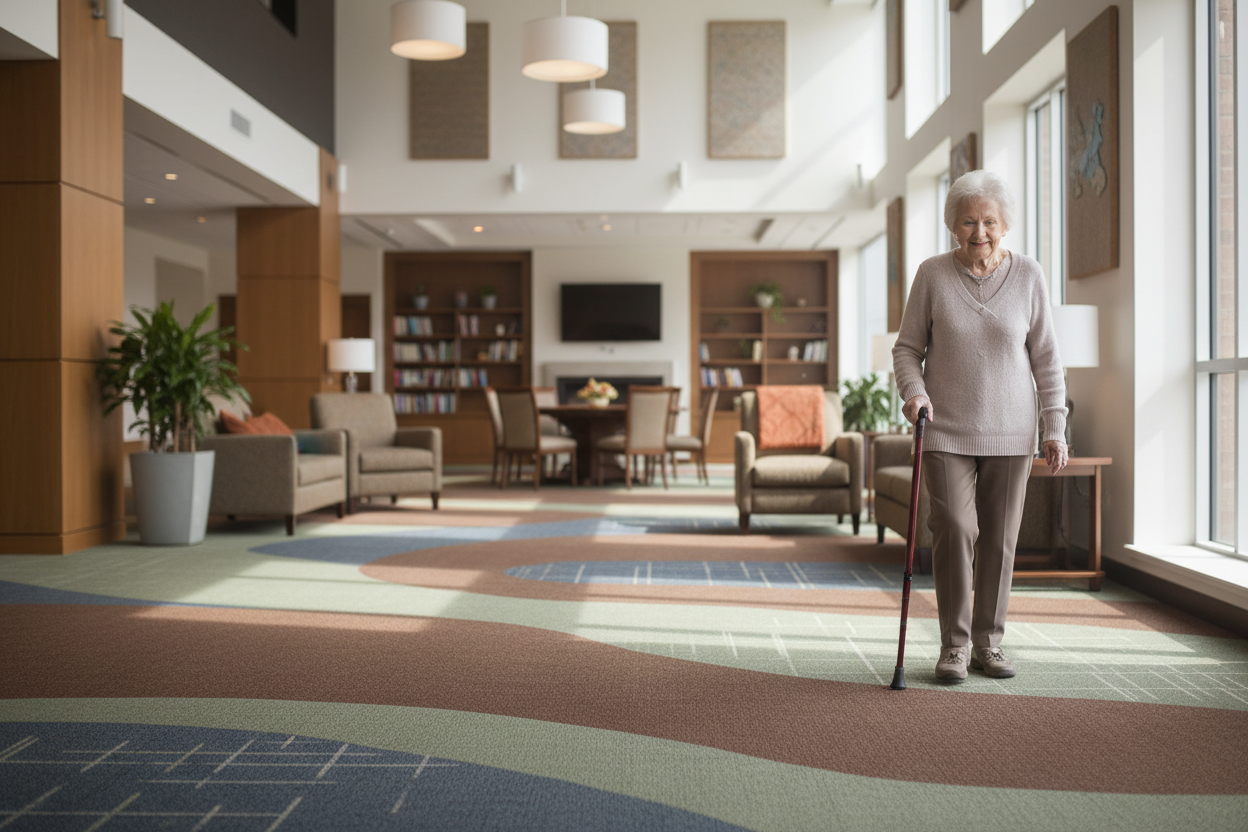
Well-defined spaces also serve practical purposes for staff members. When different areas have distinct visual identities, it becomes easier for caregivers to quickly locate residents, organize activities, and maintain efficient workflows. Additionally, defined spaces can help reduce noise levels by creating natural sound barriers and encouraging appropriate activities in designated areas.
The psychological benefits shouldn’t be overlooked either. When residents can easily identify different areas – like a quiet reading nook, a social dining space, or a therapeutic activity zone – they’re more likely to use these spaces appropriately and feel a sense of control over their environment. 💭
Choosing the Right Flooring Materials for Different Zones
The foundation of successful space definition starts with selecting appropriate flooring materials for each functional area. Different zones in your nursing home will have varying requirements for durability, comfort, safety, and maintenance.
For dining areas, consider materials that can withstand spills and frequent cleaning while still providing comfort underfoot. Luxury vinyl tile (LVT) with realistic wood or stone patterns offers excellent durability and easy maintenance, while still creating a warm, residential feel. The key is choosing patterns and colors that clearly distinguish the dining space from surrounding areas.
Common areas and lounges benefit from softer, more comfortable flooring options. Carpet tiles are an excellent choice here because they provide cushioning for residents who may fall, reduce noise levels, and can be easily replaced if damaged. Choose carpet tiles in colors and patterns that create a cozy, living room atmosphere while clearly defining the space boundaries.
For therapy and activity areas, rubber flooring or specialized healthcare flooring provides the perfect combination of safety, comfort, and easy maintenance. These materials offer excellent slip resistance and cushioning, which is essential for areas where residents engage in physical activities or therapy sessions. 🏃♀️
Using Color and Pattern to Create Visual Boundaries
Color psychology plays a significant role in how we perceive and navigate spaces. In nursing homes, strategic use of color through flooring can create intuitive wayfinding systems while defining different functional areas.
Warm colors like soft browns, beiges, and muted oranges work beautifully in social areas, creating an inviting atmosphere that encourages interaction. These colors can make large spaces feel more intimate and comfortable. Cool colors like soft blues and greens are perfect for quiet areas or therapy spaces, as they promote calmness and relaxation.
Pattern can be just as powerful as color in defining spaces. Consider using different patterns to distinguish between areas – perhaps a wood-look pattern for dining areas, stone-look for common areas, and solid colors for therapy spaces. The key is maintaining enough contrast between adjacent areas while ensuring the overall design remains cohesive throughout the facility.
One technique I’ve seen work particularly well is using a neutral base color throughout the facility with accent colors that define specific zones. This approach maintains visual flow while providing clear area definition. For example, you might use a warm gray base with burgundy accents in dining areas and soft blue accents in quiet zones. 🎨
Implementing Transition Zones and Border Techniques
The way you handle transitions between different flooring areas can make or break your space definition strategy. Abrupt changes between flooring materials can create trip hazards and feel jarring, while thoughtful transitions create smooth flow between spaces.
Border strips are an excellent tool for creating smooth transitions. These can be made from contrasting materials or colors that complement both adjacent flooring types. For instance, a thin strip of darker vinyl between a light dining area floor and a medium-toned lounge carpet can create clear definition without feeling abrupt.
Gradual color transitions work wonderfully in open-plan environments. You might start with a light color in one area and gradually transition to a deeper shade in another zone. This technique maintains visual flow while still providing clear area definition that residents and staff can easily recognize.
Consider the width of your transition zones as well. Wider transitions can accommodate furniture placement and create more flexible use of space, while narrower transitions provide cleaner, more defined boundaries. The choice depends on your specific layout and functional requirements. 🔄
Safety Considerations and Accessibility Requirements
While aesthetics and space definition are important, safety must always be the top priority in nursing home flooring design. All flooring materials should meet or exceed slip resistance requirements, and transitions between different materials must be properly executed to prevent trip hazards.
Pay special attention to level changes between different flooring materials. Even small differences in height can pose significant risks for residents with mobility challenges. Use appropriate transition strips and ensure all edges are properly finished and secured.
Lighting plays a crucial role in safety as well. Ensure that transitions between different flooring areas are well-lit so residents can clearly see changes in surface materials. Consider how natural light throughout the day might affect the visibility of your flooring transitions, and plan artificial lighting accordingly.
Accessibility requirements under the Americans with Disabilities Act (ADA) must be carefully considered in all flooring decisions. This includes ensuring wheelchair accessibility across all flooring types and transitions, as well as meeting specific requirements for slip resistance and level changes. 🦽
Maintenance and Longevity Considerations
The most beautiful flooring design won’t be successful if it can’t stand up to the demands of daily use in a healthcare environment. Different areas of your nursing home will experience varying levels of traffic and different types of wear, so your flooring choices need to reflect these realities.
High-traffic areas like main corridors and dining spaces need flooring materials that can withstand constant use while maintaining their appearance. Commercial-grade materials with appropriate wear ratings are essential in these areas. Don’t forget to consider how your chosen materials will age – some materials develop a beautiful patina over time, while others may show wear more obviously.
Maintenance requirements should align with your facility’s capabilities and budget. While some flooring materials may have higher upfront costs, they might offer lower long-term maintenance expenses. Consider factors like frequency of deep cleaning, replacement cycles for individual sections, and availability of matching materials for future repairs.
It’s also worth thinking about how maintenance activities might affect your space definition strategy. If you need to replace sections of flooring over time, will you be able to maintain the visual boundaries you’ve created? Planning for long-term maintenance from the beginning can save significant headaches down the road. 🔧
Budget-Friendly Strategies for Maximum Impact
Creating effective space definition through flooring doesn’t have to break the budget. There are several cost-effective strategies that can deliver impressive results without requiring a complete facility renovation.
One approach is to focus on high-impact areas first. Defining key spaces like the main dining area, primary lounge, and main corridors can create significant improvements in wayfinding and atmosphere, even if other areas remain unchanged initially. This phased approach allows you to spread costs over time while still achieving meaningful improvements.
Consider using area rugs strategically to define spaces within larger areas. High-quality commercial rugs can create intimate seating areas within large lounges or define conversation spaces in common areas. This approach is much more budget-friendly than changing permanent flooring and offers flexibility to adjust layouts as needs change.
Another cost-effective strategy is using existing flooring as a base and adding definition through borders, inlays, or strategic placement of different materials in key areas. Sometimes, small changes can create big impacts when executed thoughtfully. 💰
Conclusion
Using flooring to define spaces in open-plan nursing homes is both an art and a science. It requires careful consideration of resident needs, staff workflows, safety requirements, and budget constraints. However, when done well, strategic flooring choices can transform a large, potentially confusing space into a series of welcoming, functional areas that residents and staff can navigate with confidence.
Remember that the most successful flooring strategies are those that feel natural and intuitive. Residents shouldn’t have to think about why certain areas feel different – they should simply feel comfortable and oriented in each space. By combining appropriate materials, thoughtful color and pattern choices, smooth transitions, and careful attention to safety and maintenance requirements, you can create an environment that truly feels like home.
The investment in thoughtful flooring design pays dividends in resident satisfaction, staff efficiency, and overall facility atmosphere. Whether you’re planning a new facility or updating an existing one, consider how your flooring choices can work harder to create the welcoming, functional environment your residents deserve. ✨
Call Us Now!