 Skip to content

How to Make Flooring Decisions Based on Climate and Location 🏠
Choosing the right flooring for your home isn’t just about aesthetics or budget—it’s about understanding how your local climate and geographic location will impact your floors over time. I’ve seen too many homeowners make costly mistakes by selecting beautiful flooring that simply wasn’t suited for their environment. Whether you’re dealing with humid summers in Florida, dry winters in Colorado, or the constant moisture of the Pacific Northwest, your climate should be the foundation of your flooring decision.
The reality is that different materials react dramatically to temperature fluctuations, humidity levels, and seasonal changes. What works perfectly in a desert climate might warp and buckle in a coastal environment. That’s why understanding your local conditions isn’t just helpful—it’s essential for making a smart, long-term investment in your home.
Understanding Your Climate Zone and Its Impact on Flooring 🌡️
Before diving into specific flooring options, you need to honestly assess your climate zone. The United States is divided into several distinct climate regions, each presenting unique challenges for flooring materials.
Humid subtropical climates, found across the southeastern United States, bring high moisture levels year-round, with hot summers and mild winters. These conditions create the perfect storm for mold, mildew, and material expansion. Meanwhile, arid desert climates in the Southwest feature extreme temperature swings between day and night, along with very low humidity that can cause materials to shrink and crack.
Continental climates in the Midwest and Northeast experience dramatic seasonal variations, with freezing winters and warm, humid summers. This constant expansion and contraction cycle puts enormous stress on flooring materials. Coastal areas deal with salt air, high humidity, and potential flooding risks that require special consideration.
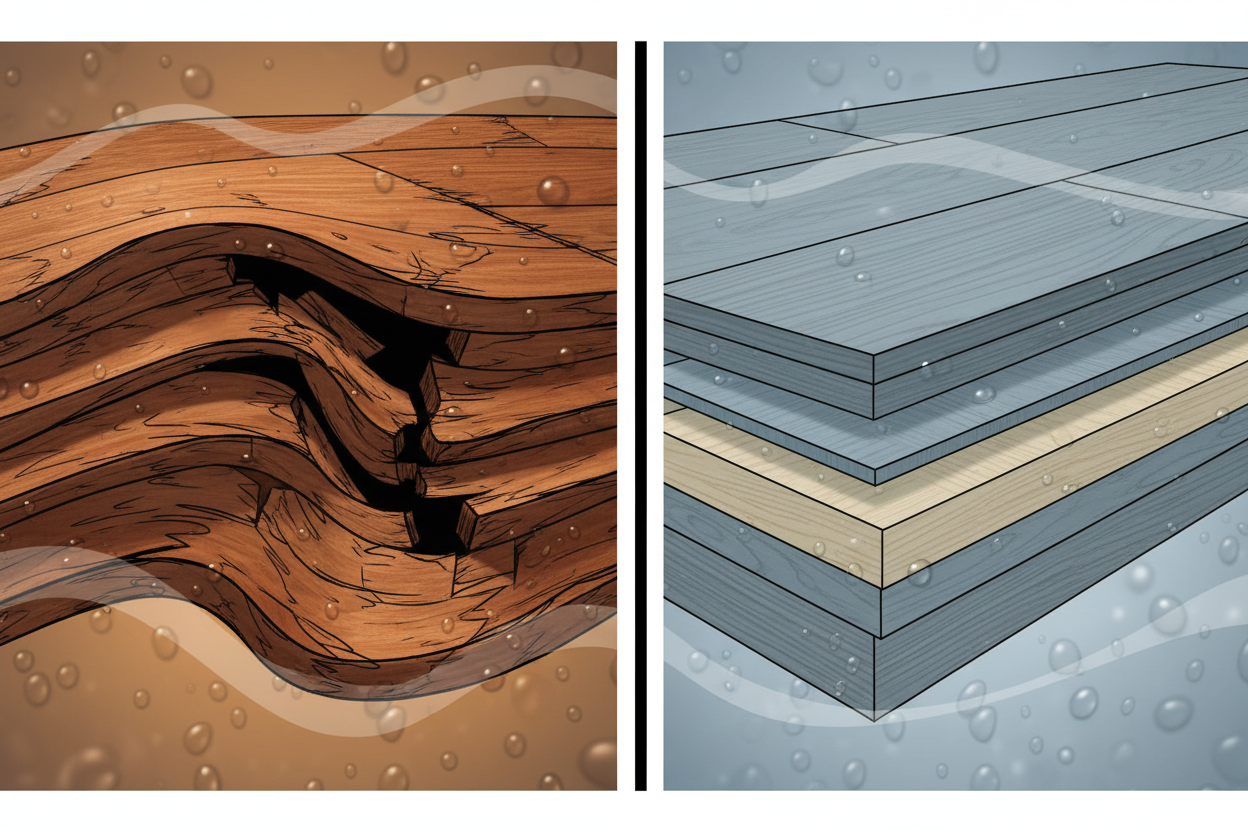
Don’t forget about microclimates within your own home, either. Basements naturally have higher humidity levels, while rooms with large windows might experience more temperature fluctuation than interior spaces. Understanding these nuances will help you make more informed decisions for each area of your home.
Hardwood Flooring: Climate Considerations and Best Practices 🌳
Hardwood flooring remains one of the most popular choices among homeowners, but its performance varies dramatically based on climate conditions. Wood is a natural material that expands and contracts with changes in humidity and temperature—a characteristic that can be either manageable or problematic depending on your location.
In humid climates, hardwood faces significant challenges. Excessive moisture can cause boards to swell, creating gaps, cupping, or even buckling. I always recommend engineered hardwood over solid wood in these environments because the layered construction provides better dimensional stability. The multiple layers work against each other to minimize movement, making engineered options more forgiving in challenging conditions.
For dry climates, the opposite problem occurs. Low humidity causes wood to shrink, potentially creating unsightly gaps between boards. While this is often a temporary seasonal issue, it can be concerning for homeowners. Maintaining consistent indoor humidity levels between 30-50% helps minimize these effects, regardless of your climate zone.
Species selection also matters tremendously. Dense hardwoods like oak, maple, and hickory tend to be more stable than softer species like pine or poplar. Quartersawn boards, while more expensive, offer superior stability compared to plain-sawn lumber because of how the growth rings are oriented.
Luxury Vinyl and Laminate: Modern Solutions for Challenging Climates 💪
The flooring industry has revolutionized synthetic options in recent years, making luxury vinyl plank (LVP) and high-quality laminate excellent choices for challenging climates. These materials offer the appearance of natural wood or stone while providing superior stability and moisture resistance.
Luxury vinyl particularly shines in humid environments because it’s completely waterproof. Unlike traditional vinyl, modern LVP uses advanced printing and texturing techniques that create remarkably realistic wood and stone appearances. The material doesn’t expand or contract significantly with temperature changes, making it ideal for homes without consistent climate control.
Quality laminate flooring has also improved dramatically, though it’s not as moisture-resistant as LVP. However, laminate typically offers better scratch resistance and can handle heavy foot traffic exceptionally well. The key is choosing products with proper moisture barriers and ensuring professional installation with appropriate expansion gaps.
Both options work well in extreme temperature climates because they’re engineered to remain stable. They’re also excellent choices for basements, bathrooms, and other areas where traditional hardwood might struggle. The installation process is often easier too, with many products featuring click-lock systems that don’t require glue or nails.
Tile and Stone: Durability Meets Climate Challenges 🏛️
Ceramic, porcelain, and natural stone flooring offer excellent durability and climate resistance, but they come with their own considerations. These materials are generally unaffected by humidity changes and can handle temperature fluctuations better than wood products.
Porcelain tile stands out as particularly climate-friendly because it’s fired at higher temperatures than ceramic, making it denser and less porous. This translates to better freeze-thaw resistance in cold climates and superior moisture resistance in humid areas. The material also doesn’t fade from UV exposure, making it perfect for sunny rooms with large windows.
Natural stone requires more careful consideration. While materials like granite and slate are extremely durable, they’re also porous and may require regular sealing to prevent moisture damage. Limestone and marble are beautiful but can be problematic in areas with high humidity or potential flooding because they’re susceptible to etching from acidic substances.
The grout lines in tile installations deserve special attention in challenging climates. Epoxy grout offers superior moisture resistance compared to traditional cement-based grout, though it’s more expensive and challenging to install. Proper sealing and maintenance of grout lines is crucial regardless of the type you choose.
Regional Flooring Recommendations by Climate Zone 🗺️
Let me break down specific recommendations for major climate zones across the United States, based on years of experience and regional best practices.
For the hot, humid Southeast (Florida, Georgia, Louisiana), prioritize moisture resistance above all else. Luxury vinyl plank, porcelain tile, and engineered hardwood with proper moisture barriers are your best bets. Avoid solid hardwood in bathrooms, basements, or any area prone to flooding. If you choose hardwood, ensure proper acclimation and maintain consistent indoor humidity levels.
The arid Southwest (Arizona, Nevada, New Mexico) presents different challenges. Here, you can get away with more hardwood options, but pay attention to seasonal humidity changes. Tile and stone flooring excel in these climates, providing cool surfaces during hot summers. Just ensure proper expansion joints in large installations to handle temperature swings.
Cold northern climates (Minnesota, Maine, Montana) require flooring that can handle freeze-thaw cycles and significant seasonal humidity changes. Engineered hardwood, high-quality laminate, and porcelain tile all perform well. Avoid natural stone that isn’t rated for freeze-thaw resistance, and ensure any hardwood is properly acclimated before installation.
Coastal areas face unique challenges from salt air and potential storm damage. Waterproof options like luxury vinyl and porcelain tile make the most sense, especially in areas prone to flooding. If choosing hardwood, select species and finishes that can handle occasional moisture exposure.
Installation and Maintenance Tips for Different Climates 🔧
Proper installation techniques vary significantly based on climate conditions, and these details can make or break your flooring investment. In humid climates, moisture barriers become absolutely critical. This might mean installing vapor barriers under hardwood, using moisture-resistant adhesives, or ensuring proper subfloor preparation.
Acclimation periods are crucial for wood products, but the timeline varies by climate. In humid areas, hardwood might need 7-10 days to acclimate, while dry climates might require shorter periods. The key is allowing the material to reach equilibrium with your home’s conditions before installation.
Expansion gaps around the perimeter of rooms aren’t just suggestions—they’re requirements that vary by climate. Humid areas typically need larger gaps to accommodate seasonal expansion, while dry climates might allow smaller gaps. Your installer should adjust these recommendations based on your specific location and the time of year.
Maintenance routines also need climate-specific adjustments. Humid climates require more vigilant moisture control and potentially more frequent cleaning to prevent mold and mildew. Dry climates might necessitate humidifiers during winter months to prevent excessive shrinkage in wood floors.
Making Your Final Decision: Balancing Climate, Lifestyle, and Budget 💡
Your climate should heavily influence your flooring choice, but it shouldn’t be the only factor. Consider your lifestyle, maintenance preferences, and long-term budget alongside climate requirements. A family with pets and children might prioritize durability and easy maintenance over perfect climate optimization.
Think about your home’s specific microclimates too. You might choose different flooring for different areas—perhaps luxury vinyl in the basement and kitchen, engineered hardwood in living areas, and tile in bathrooms. This targeted approach often provides the best balance of performance and aesthetics.
Don’t forget about future climate considerations either. With changing weather patterns, some regions are experiencing more extreme conditions than in the past. Choosing flooring with a wider tolerance for climate variations might provide better long-term performance.
Budget considerations should include long-term maintenance and potential replacement costs, not just initial installation. A more expensive, climate-appropriate option often proves more economical over time than a cheaper choice that requires frequent repairs or early replacement.
Conclusion: Climate-Smart Flooring for Long-Term Success 🎯
Making flooring decisions based on climate and location isn’t just about avoiding problems—it’s about setting yourself up for years of satisfaction with your investment. The right flooring choice will maintain its appearance, perform reliably, and require minimal maintenance regardless of what Mother Nature throws at it.
Remember that no single flooring type is perfect for every situation, but understanding your climate’s specific challenges allows you to make informed compromises. Whether you prioritize the warmth of hardwood, the durability of tile, or the versatility of luxury vinyl, choosing climate-appropriate options ensures your floors will look great and perform well for decades to come.
Take the time to research your local climate patterns, consult with experienced local installers, and don’t rush the decision. Your floors are a major investment that you’ll live with daily—making climate-conscious choices now will pay dividends in comfort, appearance, and peace of mind for years to come. 🏡
Call Us Now!