 Skip to content

How to Integrate Flooring with Technology for Enhanced Care: The Future of Smart Healthcare Environments 🏥
Picture this: you’re walking through a hospital corridor, and the floor beneath your feet is quietly monitoring patient movements, detecting falls before they happen, and even tracking the cleanliness of the environment. This isn’t science fiction anymore—it’s the reality of smart flooring technology that’s revolutionizing healthcare facilities worldwide. As someone who’s spent years observing the evolution of healthcare infrastructure, I can tell you that the integration of flooring with advanced technology is one of the most exciting developments I’ve witnessed in modern care environments.
The convergence of flooring materials with cutting-edge technology is transforming how we approach patient safety, staff efficiency, and overall care quality. From pressure-sensitive surfaces that can detect when someone has fallen to antimicrobial coatings that actively fight infections, today’s smart flooring solutions are making healthcare facilities safer, more efficient, and more responsive to patient needs than ever before.
Understanding Smart Flooring Technology in Healthcare Settings 💡
Smart flooring represents a paradigm shift in how we think about the surfaces beneath our feet. Unlike traditional flooring that serves merely as a foundation, intelligent flooring systems are embedded with sensors, processors, and communication capabilities that transform them into active participants in patient care.
These innovative systems typically incorporate pressure sensors, motion detectors, RFID technology, and even LED lighting systems that can respond to various environmental conditions and user needs. What makes this technology particularly compelling in healthcare settings is its ability to operate continuously and unobtrusively while providing valuable real-time data about patient movements, staff workflows, and facility usage patterns.
The beauty of smart flooring lies in its invisibility—patients and staff can go about their daily routines without any awareness that the floor is actively monitoring and responding to their presence. This seamless integration ensures that technology enhances care without creating additional complexity or disruption to established workflows.
Fall Detection and Prevention Systems: Your Silent Guardian 🛡️
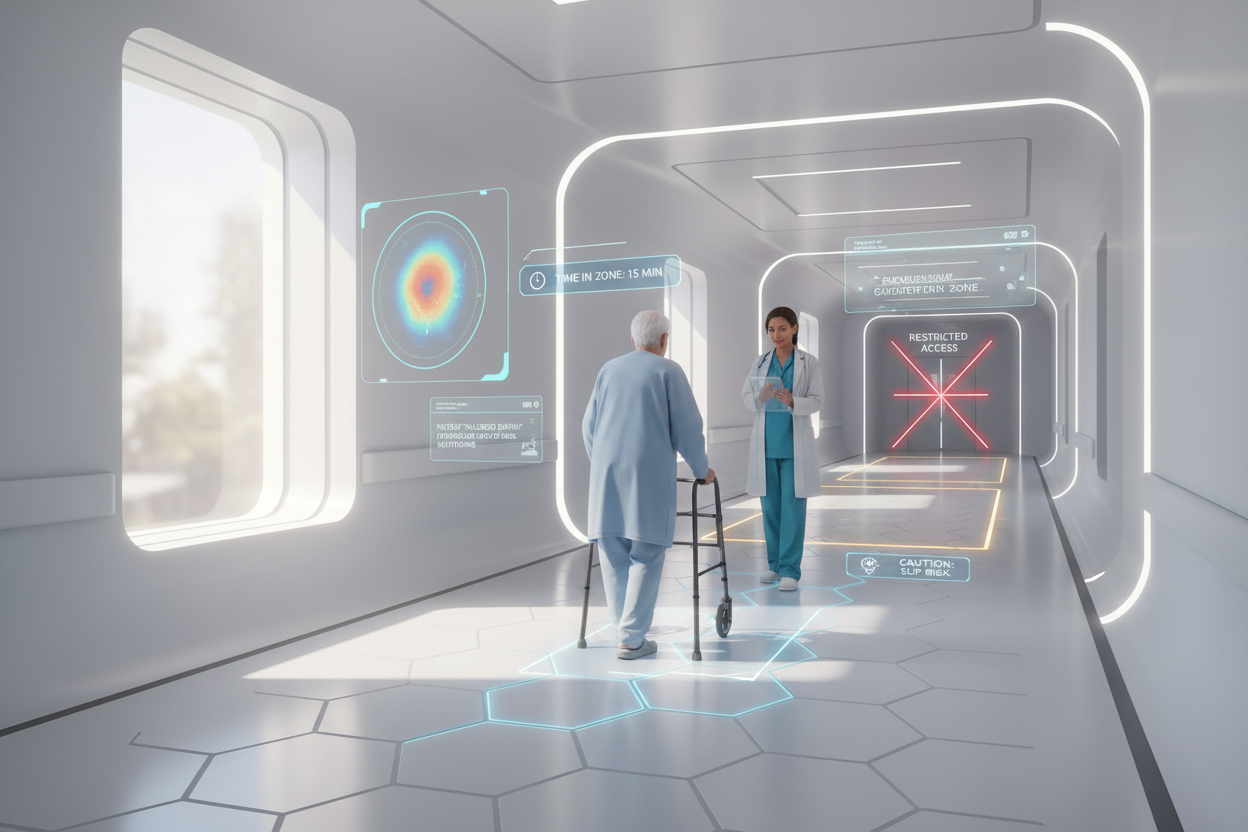
One of the most impactful applications of smart flooring technology is in fall detection and prevention. Falls remain one of the leading causes of injury in healthcare facilities, particularly among elderly patients and those with mobility challenges. Traditional fall detection systems often rely on wearable devices that patients may forget to use or find uncomfortable.
Smart flooring systems solve this problem by embedding pressure-sensitive sensors throughout the floor surface. These sensors can detect sudden changes in pressure patterns that indicate a fall has occurred, immediately alerting nursing staff through integrated communication systems. More advanced systems can even predict potential falls by analyzing gait patterns and identifying patients who may be at risk due to unsteady movements or sudden changes in walking behavior.
I’ve seen facilities where these systems have reduced fall-related injuries by up to 40% within the first year of implementation. The technology doesn’t just detect falls—it learns from patterns and can identify high-risk areas where falls are more likely to occur, allowing facility managers to implement targeted safety measures.
Patient Tracking and Movement Monitoring Solutions 📍
Modern healthcare facilities are complex environments where tracking patient movements can be crucial for both safety and operational efficiency. Smart flooring systems equipped with RFID readers and pressure mapping technology can monitor patient movements throughout the facility without requiring patients to wear additional devices.
This capability is particularly valuable in specialized units such as memory care facilities, where patients with dementia may wander into unsafe areas. The flooring system can create virtual boundaries and alert staff when patients enter restricted zones or attempt to leave secure areas. The technology can also track how long patients spend in different areas, providing valuable insights into their daily routines and helping care teams identify patterns that might indicate changes in health status.
For rehabilitation facilities, movement tracking through smart flooring provides objective data about patient progress. Physical therapists can analyze walking patterns, step frequency, and balance metrics to adjust treatment plans and measure improvement over time. This data-driven approach to rehabilitation has shown remarkable results in helping patients achieve better outcomes more quickly.
Infection Control Through Advanced Flooring Materials 🦠
The COVID-19 pandemic highlighted the critical importance of infection control in healthcare environments, and smart flooring technology has risen to meet this challenge. Advanced antimicrobial flooring materials now incorporate silver nanoparticles, copper ions, and other antimicrobial agents that actively eliminate bacteria, viruses, and fungi on contact.
Some of the most innovative systems include photocatalytic coatings that use ambient light to break down organic contaminants and pathogens. These self-cleaning surfaces can reduce the microbial load on floors by up to 99.9% within hours of contamination, significantly reducing the risk of healthcare-associated infections.
Smart flooring systems can also monitor cleaning protocols by tracking when and where cleaning activities occur. Sensors can detect the application of cleaning solutions and verify that proper contact times are maintained. This data helps facility managers ensure that infection control protocols are being followed consistently and identify areas that may need additional attention.
Environmental Monitoring and Air Quality Integration 🌬️
The integration of environmental monitoring capabilities into flooring systems represents another significant advancement in healthcare technology. Smart floors can incorporate sensors that monitor air quality, humidity levels, temperature variations, and even volatile organic compounds that might indicate the presence of harmful substances.
This environmental data is particularly valuable in sensitive areas such as operating rooms, intensive care units, and isolation rooms where maintaining optimal environmental conditions is critical for patient outcomes. The flooring system can automatically adjust HVAC settings or alert facility managers when environmental parameters fall outside acceptable ranges.
I’ve observed facilities where this integrated approach to environmental monitoring has improved patient comfort scores and reduced the incidence of respiratory complications among vulnerable patients. The ability to maintain consistent environmental conditions throughout the facility contributes to better overall care quality and patient satisfaction.
Implementation Strategies for Healthcare Facilities 🏗️
Successfully implementing smart flooring technology in healthcare facilities requires careful planning and consideration of several key factors. The first step is conducting a comprehensive assessment of current facility needs and identifying specific areas where smart flooring can provide the greatest benefit.
Budget considerations are crucial, as smart flooring systems represent a significant investment. However, the long-term benefits in terms of reduced liability, improved patient outcomes, and operational efficiency often justify the initial costs. Many facilities choose to implement smart flooring in phases, starting with high-priority areas such as patient rooms, corridors, and rehabilitation spaces.
Staff training is another critical component of successful implementation. Healthcare workers need to understand how to interpret data from smart flooring systems and respond appropriately to alerts and notifications. Regular training sessions and ongoing support help ensure that staff can maximize the benefits of the technology.
Integration with existing healthcare information systems is also essential. Smart flooring data should seamlessly flow into electronic health records and facility management systems to provide a comprehensive view of patient care and facility operations.
Cost-Benefit Analysis and ROI Considerations 💰
While the initial investment in smart flooring technology can be substantial, the return on investment often becomes apparent within the first few years of operation. Reduced fall-related injuries alone can save facilities hundreds of thousands of dollars in liability costs and improved patient outcomes.
The operational efficiencies gained through automated monitoring and data collection can also reduce staffing requirements and improve resource allocation. Facilities report savings in cleaning costs due to antimicrobial flooring properties and reduced maintenance needs thanks to self-monitoring capabilities.
Insurance providers are increasingly recognizing the value of smart flooring technology in reducing risk, and some offer premium discounts for facilities that implement these advanced safety systems. This additional financial incentive can help offset implementation costs and improve the overall business case for smart flooring adoption.
Future Trends and Innovations in Smart Flooring 🚀
The future of smart flooring in healthcare looks incredibly promising, with emerging technologies set to expand capabilities even further. Artificial intelligence and machine learning algorithms are being integrated into flooring systems to provide predictive analytics and personalized care recommendations based on individual patient movement patterns.
Wireless power transmission through flooring systems is another exciting development that could eliminate the need for charging stations and power cords throughout healthcare facilities. This technology could power medical devices, mobile equipment, and even patient monitoring systems simply by placing them on specially equipped floor surfaces.
Biometric monitoring capabilities are also being explored, with flooring systems that can detect heart rate, body temperature, and other vital signs through contact with bare feet or specialized footwear. This could revolutionize patient monitoring in residential care facilities and home healthcare settings.
Conclusion: Stepping Into the Future of Healthcare 👣
The integration of flooring with technology represents a fundamental shift in how we approach healthcare facility design and patient care. As I’ve witnessed throughout my career, the most successful healthcare innovations are those that seamlessly blend into existing workflows while providing measurable improvements in patient outcomes and operational efficiency.
Smart flooring technology delivers on both counts, offering invisible yet powerful capabilities that enhance safety, improve care quality, and provide valuable insights into facility operations. From fall prevention and infection control to environmental monitoring and patient tracking, these systems are transforming the very foundation of modern healthcare facilities.
As we look toward the future, the continued evolution of smart flooring technology promises even greater possibilities for improving patient care and facility management. Healthcare organizations that embrace these innovations today will be well-positioned to provide superior care while managing costs and improving operational efficiency in the years to come.
The question isn’t whether smart flooring technology will become standard in healthcare facilities—it’s how quickly forward-thinking organizations will adopt these game-changing solutions to enhance the care they provide to their patients and communities. 🌟
Call Us Now!