 Skip to content

How to Incorporate Art into Flooring Designs for Nursing Homes: Creating Healing Environments Through Beautiful Floors 🎨
When we think about nursing home design, our minds often drift to comfortable furniture, proper lighting, and accessible layouts. But there’s one element that’s frequently overlooked yet holds incredible potential for transformation: the floors beneath our feet. Artistic flooring in nursing homes isn’t just about aesthetics—it’s about creating environments that inspire, comfort, and heal. 🏠
The power of art in healthcare settings has been well-documented, with studies showing that beautiful, thoughtfully designed spaces can reduce stress, improve mood, and even accelerate healing. For elderly residents who spend most of their time indoors, the visual environment becomes particularly crucial. Floors, being the largest surface area in most rooms, present an unique canvas for artistic expression that can dramatically impact the daily experience of residents, staff, and visitors alike.
Understanding the Psychology of Artistic Flooring in Senior Care 🧠
The relationship between our environment and our wellbeing runs deeper than many realize. For nursing home residents, who may be dealing with memory issues, mobility challenges, or feelings of displacement, the visual cues in their surroundings become anchors to comfort and familiarity. Artistic flooring serves multiple psychological functions that go far beyond mere decoration.
Color psychology plays a significant role in how residents perceive and interact with their space. Warm earth tones can create feelings of security and grounding, while soft blues and greens can promote tranquility and reduce anxiety. When these colors are woven into floor designs through artistic patterns or nature-inspired motifs, they work subconsciously to create a more therapeutic environment.
For residents with dementia or Alzheimer’s, artistic flooring can serve as wayfinding tools. Distinctive patterns or color schemes can help orient residents and provide visual cues for navigation. A flowing river design might lead to the dining room, while a garden path pattern could guide residents to outdoor spaces. These artistic elements transform potentially confusing corridors into intuitive, beautiful pathways.
Choosing the Right Materials for Artistic Nursing Home Floors 🔧
The foundation of any successful artistic flooring project lies in selecting materials that balance beauty with practicality. Nursing homes have unique requirements that must be considered alongside aesthetic goals. Safety, durability, and maintenance needs are non-negotiable factors that will determine the long-term success of any flooring design.
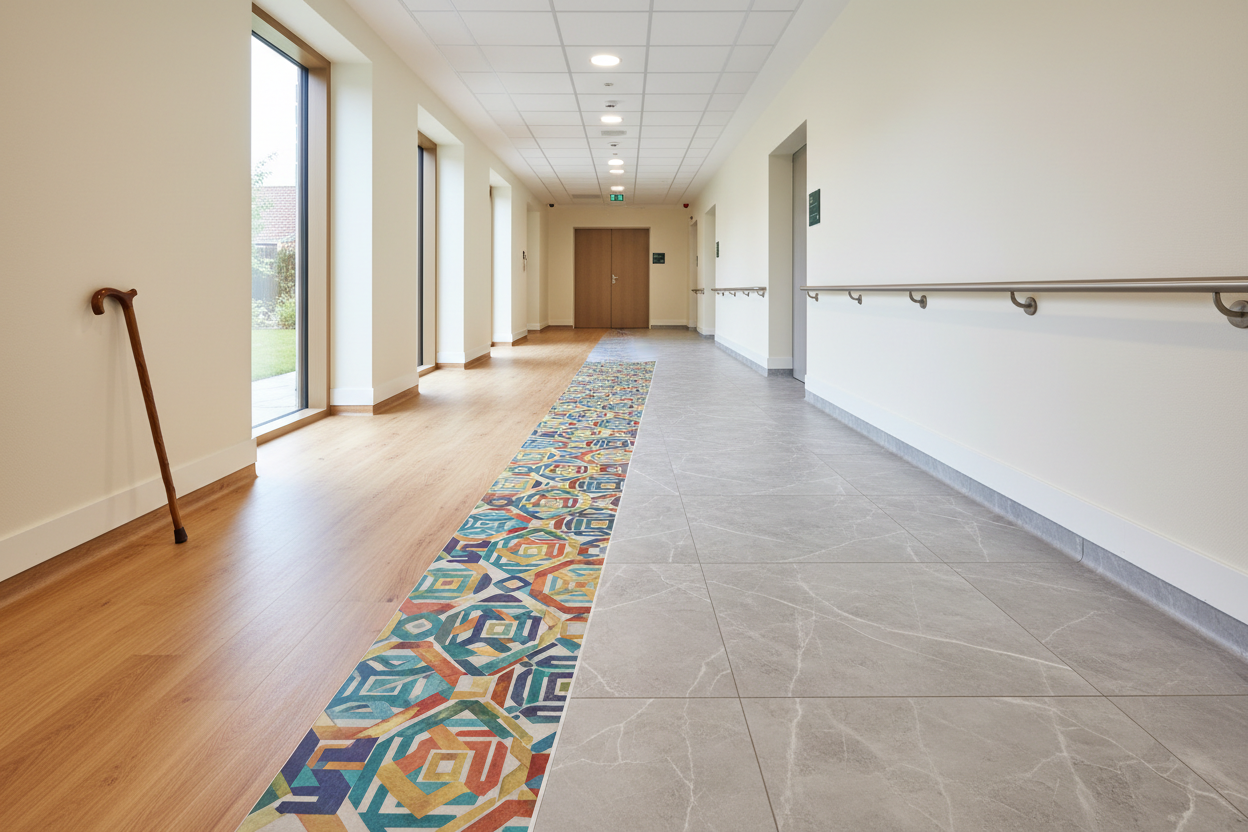
Luxury vinyl tile (LVT) has emerged as a favorite for artistic nursing home flooring due to its incredible versatility and practical benefits. Modern LVT can convincingly replicate wood, stone, or ceramic while offering superior slip resistance and easy maintenance. The ability to create custom prints means virtually any artistic design can be achieved, from subtle textures that mimic natural materials to bold, colorful patterns that energize spaces.
Polished concrete with decorative overlays offers another exciting option for artistic expression. Concrete can be stained, stamped, or embedded with decorative elements to create stunning visual effects. The seamless nature of concrete flooring eliminates trip hazards while providing a canvas for large-scale artistic designs. Epoxy coatings can add both protection and artistic flair, with options for metallic finishes, color blending, and even embedded objects like leaves or stones.
For areas where comfort is paramount, such as bedrooms or quiet lounges, carpet tiles with artistic designs provide warmth and sound absorption. Modern carpet tiles come in countless patterns and can be arranged to create larger artistic compositions. The modular nature means damaged sections can be easily replaced without disrupting the overall design.
Nature-Inspired Designs That Bring the Outdoors In 🌿
One of the most powerful themes for nursing home flooring art is nature. Many elderly residents have spent lifetimes connected to the natural world, whether through gardening, farming, or simply enjoying outdoor activities. Bringing natural elements indoors through flooring design can provide comfort, spark memories, and create a sense of connection to the outside world.
Forest floor designs using realistic wood-grain LVT arranged in organic patterns can create the feeling of walking through a peaceful woodland. Adding subtle variations in plank width and color creates natural randomness that makes the space feel authentic rather than manufactured. Strategic placement of “fallen leaves” created through decorative inlays can enhance the forest floor illusion while maintaining the practical benefits of hard surface flooring.
Ocean and beach themes work beautifully in common areas, creating a sense of openness and tranquility. Wave patterns in varying shades of blue and green can flow through corridors, while sandy beige tones in gathering areas evoke peaceful shorelines. Decorative elements like embedded shells or sea glass can add tactile interest for residents who enjoy sensory experiences.
Garden pathways represent another popular nature theme that serves both artistic and practical purposes. Meandering “stone” paths created with textured LVT can guide residents through spaces while flower and plant motifs along the edges create visual interest. Seasonal variations can be incorporated, with spring flowers in one area transitioning to autumn leaves in another, providing year-round natural beauty regardless of outdoor weather conditions.
Memory-Triggering Historical and Cultural Themes 📚
The power of nostalgia in senior care cannot be overstated. Flooring designs that evoke specific time periods or cultural memories can provide comfort and stimulate positive reminiscence among residents. These themes work particularly well in gathering areas where residents spend time socializing and participating in activities.
Mid-century modern patterns featuring geometric designs and bold colors can transport residents back to the 1950s and 1960s, a time many remember fondly. Terrazzo-look flooring with colorful chips and metallic accents captures the optimistic spirit of post-war America while providing a durable, low-maintenance surface perfect for high-traffic areas.
Traditional quilt patterns translated into flooring designs can evoke memories of family traditions and handmade crafts. These patterns work beautifully in vinyl or carpet tiles, allowing for intricate geometric designs that celebrate American folk art traditions. The repetitive nature of quilt patterns also provides visual rhythm that can be soothing for residents with cognitive challenges.
For communities with specific cultural populations, incorporating relevant cultural motifs can create a sense of home and belonging. Celtic knots for Irish-American residents, southwestern patterns for those with connections to that region, or Art Deco designs for urban dwellers can all be beautifully executed in modern flooring materials.
Interactive and Sensory Flooring Elements 👋
Modern nursing home design increasingly recognizes the importance of sensory engagement for residents, particularly those dealing with dementia or other cognitive challenges. Artistic flooring can incorporate interactive and sensory elements that provide therapeutic benefits while maintaining safety and cleanliness standards.
Textural variations within artistic designs can provide subtle sensory feedback that helps residents with spatial awareness and balance. Slightly raised elements or changes in surface texture can indicate transitions between spaces or highlight important areas like seating zones or activity centers. These elements must be carefully designed to provide sensory input without creating trip hazards.
Color-changing or responsive flooring elements, while more advanced, offer exciting possibilities for engagement. LED systems embedded beneath translucent flooring materials can create gentle lighting effects that respond to movement or time of day. These systems can be programmed to provide wayfinding assistance or simply create beautiful, slowly changing patterns that capture attention and provide visual stimulation.
Tactile pathways using different textures can be particularly beneficial for residents with visual impairments. A smooth “river” of polished concrete flowing through textured surroundings, or alternating smooth and textured tiles in a pattern, can provide navigation assistance while creating visual interest for all residents.
Practical Implementation Strategies for Nursing Home Flooring Art 🛠️
Successfully implementing artistic flooring in nursing homes requires careful planning that balances creative vision with practical realities. The process should begin with a thorough assessment of the facility’s needs, including traffic patterns, maintenance capabilities, and resident demographics.
Phased implementation often works best for large facilities, allowing staff and residents to adjust to changes gradually while spreading costs over time. Starting with high-impact areas like main lobbies or dining rooms can provide immediate visual benefits while serving as proof of concept for more extensive installations.
Collaboration between designers, facility managers, and healthcare professionals is essential for success. Each group brings valuable perspectives: designers contribute aesthetic vision, facility managers understand practical constraints, and healthcare professionals can advise on therapeutic benefits and resident needs. Regular communication throughout the design process ensures that the final result meets all stakeholder requirements.
Maintenance planning should be integrated into the design process from the beginning. Even the most beautiful flooring will fail if it cannot be properly maintained by facility staff. Choosing materials and designs that align with existing maintenance capabilities and training staff on proper care procedures are crucial for long-term success.
Budget-Friendly Approaches to Artistic Flooring 💰
Creating beautiful, artistic flooring doesn’t have to break the budget. Strategic planning and creative approaches can achieve stunning results while respecting financial constraints that many nursing homes face.
Focus areas strategy involves concentrating artistic elements in high-impact zones while using simpler, coordinating designs in secondary spaces. A beautiful, elaborate design in the main lobby can create a strong first impression, while simpler coordinating colors and patterns in corridors maintain visual continuity without the expense of detailed artwork throughout the facility.
Modular approaches using carpet tiles or LVT allow for creative arrangements without custom manufacturing costs. Standard tiles can be arranged in artistic patterns, creating unique designs from readily available materials. This approach also provides flexibility for future changes and easy replacement of worn sections.
Partnerships with local art schools or community organizations can provide design services at reduced costs while giving students real-world experience. Many artists and designers are willing to work with healthcare facilities on projects that benefit the community, sometimes offering services at reduced rates in exchange for portfolio pieces and positive publicity.
Maintaining Artistic Floors in Healthcare Settings 🧽
The longevity and continued beauty of artistic flooring depends heavily on proper maintenance procedures adapted to healthcare environments. Nursing homes face unique challenges including frequent cleaning requirements, potential spills of medical or food substances, and heavy equipment traffic.
Daily maintenance protocols should be designed to preserve artistic elements while meeting infection control standards. This might involve specialized cleaning products that won’t fade or damage decorative elements, or specific techniques for cleaning textured surfaces without allowing debris to accumulate in crevices.
Staff training becomes particularly important with artistic flooring installations. Maintenance personnel need to understand which cleaning products are safe for different materials, how to address stains without damaging decorative elements, and when to call for professional restoration services. Regular training updates help ensure that artistic floors continue to look their best years after installation.
Protective measures in high-risk areas can help preserve artistic elements without compromising their visual impact. Strategic placement of mats in areas prone to spills, temporary protection during major cleaning or maintenance activities, and prompt attention to any damage can significantly extend the life of artistic flooring installations.
Measuring Success: The Impact of Artistic Flooring on Residents and Staff 📊
The true value of artistic flooring in nursing homes extends far beyond aesthetics, and successful implementations should be evaluated based on their impact on the people who live and work in these spaces daily. Understanding and measuring these impacts can help justify investments and guide future design decisions.
Resident satisfaction surveys often show marked improvements following artistic flooring installations. Comments frequently focus on how the new floors make spaces feel “more like home” or “brighter and more cheerful.” Quantitative measures might include reduced requests for room changes, increased participation in common area activities, or improved scores on quality of life assessments.
Staff feedback provides another valuable measure of success. Beautiful, well-designed environments can boost staff morale and job satisfaction, potentially leading to reduced turnover and improved care quality. Staff often report feeling prouder of their workplace and more motivated to maintain high standards when working in beautiful environments.
Family satisfaction represents a crucial but sometimes overlooked measure of success. When family members feel good about the environment where their loved ones live, it can reduce anxiety and guilt while increasing their confidence in the care facility. This often translates to improved relationships between families and staff, creating a more positive atmosphere for everyone.
Incorporating art into nursing home flooring designs represents a powerful opportunity to transform healthcare environments into spaces that truly support the wellbeing of residents, staff, and visitors. Through thoughtful material selection, creative design approaches, and careful attention to practical considerations, facilities can create floors that are not just surfaces to walk on, but canvases that inspire, comfort, and heal. The investment in artistic flooring pays dividends in improved quality of life, enhanced facility reputation, and the simple joy that comes from spending time in beautiful, thoughtfully designed spaces. As we continue to evolve our understanding of therapeutic design, artistic flooring will undoubtedly play an increasingly important role in creating nursing homes that feel less institutional and more like the warm, welcoming homes they should be. ✨
Call Us Now!