 Skip to content

How to Choose Flooring That Supports Resident Mobility: A Complete Guide for Safe and Accessible Homes
When it comes to creating a safe, comfortable living environment, the flooring beneath our feet plays a much more crucial role than most people realize. For residents with mobility challenges—whether they’re aging in place, recovering from surgery, or living with disabilities—the right flooring choice can literally be the difference between independence and injury. 🏠
I’ve spent years helping families navigate this important decision, and I’ve seen firsthand how the wrong flooring can turn a simple trip to the kitchen into a dangerous obstacle course. But here’s the good news: with the right knowledge and careful planning, you can create a beautiful, functional space that supports mobility while maintaining style and comfort.
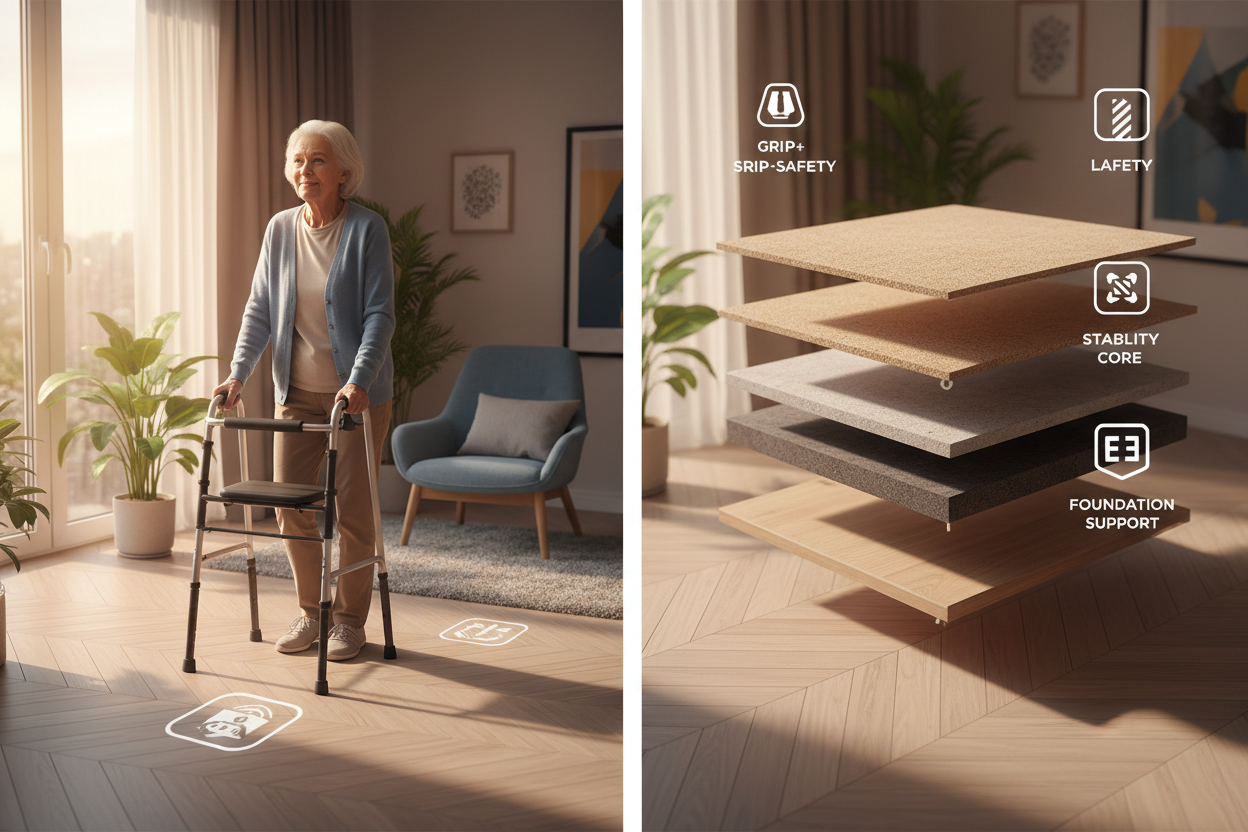
In this comprehensive guide, we’ll explore everything you need to know about selecting mobility-friendly flooring, from understanding the key safety features to comparing different materials and installation considerations. Whether you’re planning a renovation or building new, this information will help you make an informed decision that prioritizes both safety and aesthetics.
Understanding Mobility-Friendly Flooring Fundamentals
Before diving into specific flooring types, it’s essential to understand what makes flooring truly supportive of resident mobility. The foundation of mobility-friendly flooring rests on several key principles that work together to create a safe environment.
First and foremost is slip resistance. This isn’t just about avoiding wet surfaces—it’s about providing consistent traction under various conditions. A floor that feels secure when dry but becomes treacherous with the slightest moisture can pose serious risks to residents who may already have balance concerns.
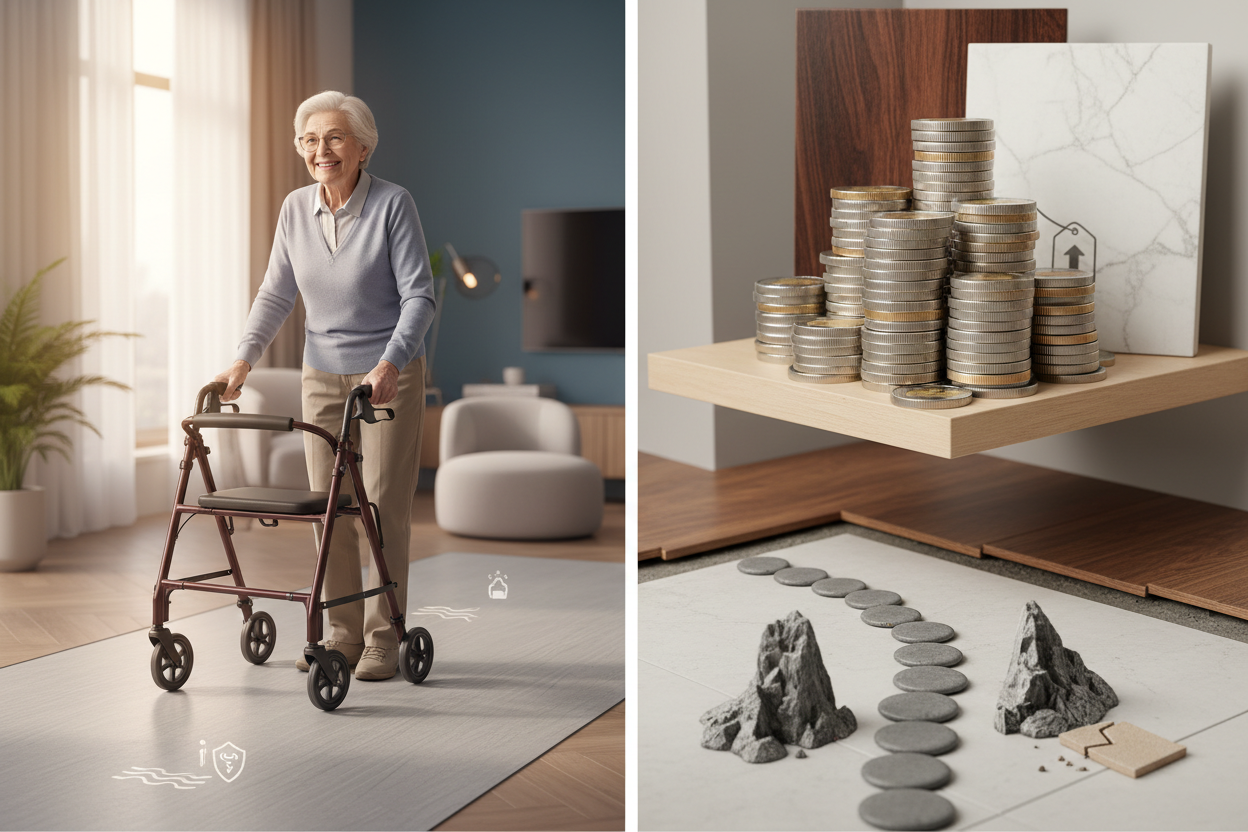
Surface stability is another critical factor. Floors that flex, buckle, or create uneven surfaces can catch mobility aids like walkers or wheelchairs, potentially causing falls or making movement more difficult than necessary. The ideal mobility-friendly floor provides a firm, stable foundation that supports both feet and assistive devices equally well.
Cushioning properties also deserve consideration, especially for residents who may be at higher risk of falls. While we want stability, a floor with some shock absorption can reduce the severity of injuries if accidents do occur. It’s about finding that sweet spot between firmness and comfort.
Essential Safety Features to Prioritize
When evaluating flooring options for mobility support, certain safety features should top your priority list. These characteristics can significantly impact daily safety and long-term well-being for residents with mobility challenges.
Slip resistance ratings provide valuable guidance, but understanding these numbers is crucial. Look for flooring with a coefficient of friction (COF) of at least 0.6 for dry conditions and 0.4 for wet conditions. However, remember that these are baseline numbers—higher ratings often provide better safety margins, especially in areas prone to moisture like bathrooms and kitchens. 🛡️
Level transitions between rooms can create significant hazards for those using mobility aids. The ideal scenario eliminates transitions entirely, but when that’s not possible, keep height differences to an absolute minimum—preferably under ¼ inch. Beveled transition strips can help, but they’re still not as safe as a completely level surface.
Surface texture requires careful consideration. While some texture can improve grip, too much can make the surface difficult to clean or create problems for wheelchair users. Smooth surfaces are easier to navigate with mobility aids, but they must still provide adequate slip resistance through other means, such as material composition or subtle texturing.
Maintenance requirements directly impact safety over time. Flooring that requires frequent waxing, special treatments, or complex cleaning procedures may not maintain its safety characteristics consistently. Choose options that retain their slip-resistant properties with standard cleaning methods.
Comparing Popular Flooring Materials for Mobility Support
Each flooring material brings unique advantages and challenges when it comes to supporting resident mobility. Understanding these differences helps you make an informed choice that aligns with your specific needs and circumstances.
Luxury vinyl plank (LVP) and luxury vinyl tile (LVT) have gained popularity in mobility-friendly applications for good reason. These materials offer excellent slip resistance, especially when textured appropriately, and provide a stable, level surface that’s easy to maintain. The cushioned backing found in many premium options adds comfort underfoot while maintaining the stability needed for mobility aids. Installation can create seamless surfaces with minimal transitions, and the material handles moisture well—a crucial factor in bathrooms and kitchens.
Ceramic and porcelain tiles present both opportunities and challenges. On the positive side, they’re incredibly durable and can provide excellent slip resistance when properly selected and installed. However, the grout lines can create slight irregularities that some mobility aids might catch on, and the hardness of the material offers no cushioning in case of falls. If choosing tile, opt for larger formats to minimize grout lines and select slip-resistant varieties specifically rated for safety applications.
Hardwood flooring, while beautiful, requires careful consideration for mobility applications. Traditional hardwood can become slippery, especially when polished, and the natural expansion and contraction can create slight level changes over time. However, engineered hardwood with appropriate finishes can work well, particularly when combined with area rugs in strategic locations for additional traction.
Carpet presents a complex picture for mobility support. While it provides excellent cushioning and natural slip resistance, it can be challenging for wheelchair users and those with walkers to navigate. Low-pile, dense carpets work better than plush options, and proper installation with quality padding is essential to prevent bunching or shifting that could create trip hazards.
Special Considerations for Different Living Areas
Different areas of the home present unique challenges and requirements when it comes to mobility-friendly flooring. Tailoring your approach to each space ensures comprehensive safety throughout the living environment.
Bathrooms demand the highest level of slip resistance due to constant moisture exposure. Here, textured vinyl or specially treated ceramic tiles work exceptionally well. Avoid glossy finishes entirely, and consider heated flooring options that can help reduce condensation and improve comfort for residents who may move more slowly or have circulation issues. 🚿
Kitchens require flooring that can handle spills while providing safe footing during meal preparation. The area around sinks and cooking surfaces sees the most moisture and potential spills, so consistent slip resistance across the entire surface is crucial. Materials that can be easily cleaned without losing their safety properties work best here.
Living areas and bedrooms allow for more flexibility in material choice, but consistency remains important. If a resident uses mobility aids, having different flooring types between rooms can create navigation challenges. When possible, extend the same flooring throughout main living areas to eliminate transitions and provide predictable surface characteristics.
Entryways and hallways see heavy traffic and often deal with moisture from outdoors. These areas benefit from highly durable materials with excellent slip resistance, even when wet. Consider the transition from outdoor surfaces to indoor flooring, ensuring that any change in level or material doesn’t create a hazard.
Installation and Maintenance Best Practices
Even the best mobility-friendly flooring material can become a safety hazard if not properly installed and maintained. Attention to installation details and ongoing care ensures that your flooring continues to support resident mobility over time.
Professional installation becomes even more critical when mobility is a concern. Proper subfloor preparation ensures a level, stable foundation that won’t develop problems over time. Any irregularities in the subfloor can telegraph through the finished flooring, creating trip hazards or areas where mobility aids might catch or stick.
Transition planning requires special attention during installation. Work with your installer to minimize the number and height of transitions between different flooring materials. When transitions are unavoidable, ensure they’re properly secured and won’t shift over time, creating new hazards.
Ongoing maintenance plays a crucial role in preserving safety characteristics. Establish cleaning routines that maintain slip resistance without creating temporary hazards. Avoid products that leave residue or create slippery surfaces, even temporarily. Regular inspection helps identify potential problems before they become safety issues—look for loose areas, worn spots, or damage that could affect the surface’s integrity. ✨
Consider establishing a maintenance schedule that includes professional deep cleaning or refinishing as needed. Some flooring materials may require periodic treatment to maintain their slip-resistant properties, while others maintain these characteristics naturally over time.
Budget-Friendly Options That Don’t Compromise Safety
Creating a mobility-friendly environment doesn’t have to break the budget. Several cost-effective options can provide excellent safety and functionality while keeping expenses manageable.
Sheet vinyl, often overlooked in favor of more premium options, can provide excellent mobility support at a fraction of the cost of other materials. Modern sheet vinyl offers good slip resistance, easy maintenance, and seamless installation that eliminates trip hazards. While it may not have the aesthetic appeal of hardwood or tile, it delivers on the safety features that matter most for mobility support.
Laminate flooring has evolved significantly and now offers options specifically designed with slip resistance in mind. While not suitable for moisture-prone areas, laminate can work well in bedrooms and living areas where budget constraints are a primary concern. Look for products with textured surfaces and quality underlayment for best results.
Strategic use of area rugs can enhance the safety of existing flooring without requiring complete replacement. High-quality, low-profile rugs with non-slip backing can provide additional traction in key areas while maintaining the overall flooring’s integrity. This approach works particularly well when working with existing hardwood or tile that may need safety enhancement.
Making Your Final Flooring Decision
Choosing the right mobility-friendly flooring involves balancing multiple factors: safety requirements, aesthetic preferences, budget constraints, and long-term maintenance considerations. The key is prioritizing the features that matter most for your specific situation while ensuring that safety remains the top concern.
Start by conducting a thorough assessment of current and anticipated mobility needs. Consider not just present requirements but potential future changes that might affect flooring needs. A solution that works well today should also accommodate evolving mobility challenges over time.
Consult with healthcare professionals, occupational therapists, or mobility specialists who understand the specific challenges faced by residents. Their insights can help identify potential issues you might not have considered and validate your flooring choices from a safety perspective.
Don’t forget to factor in the preferences and comfort of the residents who will be living with the flooring daily. While safety is paramount, a solution that makes residents feel uncomfortable or unhappy in their space isn’t sustainable long-term. The best flooring choice supports both physical safety and emotional well-being. 💝
Creating a safe, beautiful, and functional living environment through thoughtful flooring choices is one of the most impactful improvements you can make for residents with mobility challenges. By understanding the key safety features, comparing materials objectively, and planning for proper installation and maintenance, you can create a space that truly supports independence and quality of life. Remember, the right flooring isn’t just about what’s underfoot—it’s about providing the foundation for confident, safe movement throughout the home for years to come.
Call Us Now!