 Skip to content

How to Choose Flooring That Matches Diverse Resident Needs: A Complete Guide for Property Managers
Choosing the right flooring for a multi-family property isn’t just about picking something that looks good – it’s about finding solutions that work for everyone who calls your building home. Whether you’re managing a luxury apartment complex, affordable housing units, or senior living facilities, the flooring decisions you make today will impact your residents’ daily lives for years to come. 🏠
As someone who’s walked through countless properties and seen both flooring successes and disasters, I can tell you that getting this decision right requires more than just browsing through pretty samples. You need to think like your residents, understand their unique challenges, and balance their needs with practical considerations like maintenance costs and durability.

Let’s dive into how you can make flooring choices that truly serve your diverse community while protecting your investment.
Understanding Your Resident Demographics and Lifestyle Needs
Before you even think about materials or colors, you need to understand who lives in your property. I’ve learned this lesson the hard way – what works beautifully in a young professional building can be a nightmare in a family-friendly complex.
Start by analyzing your current resident mix. Are you housing primarily families with young children? Working professionals? Seniors? Students? Each group has distinct flooring needs that go far beyond aesthetics.
Families with toddlers need flooring that can handle spills, sticky fingers, and the occasional crayon masterpiece. These residents prioritize easy cleanup and safety features like slip resistance. On the other hand, young professionals might value style and noise reduction more highly, especially if they’re working from home or entertaining frequently.
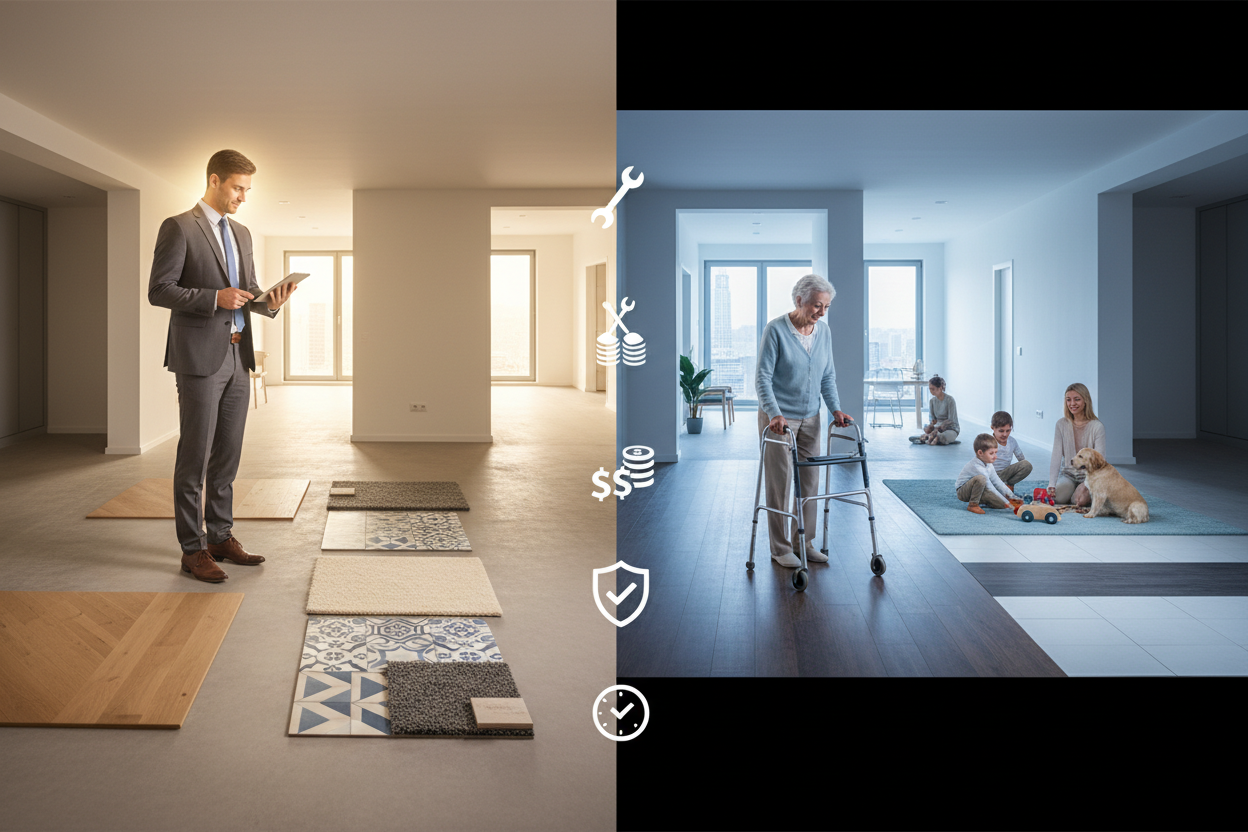
Senior residents have their own set of requirements that are often overlooked. They need flooring that provides stability, reduces fall risk, and accommodates mobility aids like walkers or wheelchairs. What might seem like a minor texture difference to you could be a major safety hazard for an elderly resident.
Don’t forget about pet owners! 🐕 If your property allows pets, you’ll need flooring that can withstand claws, accidents, and the occasional zoomies session. Pet-friendly doesn’t have to mean ugly – there are plenty of attractive options that can handle furry family members.
Accessibility and Safety Considerations for All Ages
Universal design isn’t just a buzzword – it’s a necessity when you’re serving diverse residents. The flooring choices you make can either create barriers or remove them, and frankly, it’s much easier (and cheaper) to get it right from the start.
Slip resistance should be non-negotiable, regardless of your resident demographics. I’ve seen too many preventable accidents caused by flooring that becomes treacherous when wet. Look for flooring with appropriate slip ratings, especially in entryways, bathrooms, and kitchen areas where water is common.
Transitions between different flooring types need special attention. Those little metal strips between rooms? They can be tripping hazards for anyone with mobility challenges. Smooth, level transitions aren’t just safer – they make the space feel more cohesive and professional.
Consider the visual contrast in your flooring choices too. Residents with vision impairments rely on color and texture differences to navigate safely. A floor that’s all one tone might look sleek, but it can be disorienting for someone who needs visual cues to identify room boundaries or potential hazards.
Maintenance accessibility is another crucial factor. Choose flooring that doesn’t require residents to get down on hands and knees for regular care. Standing-height cleaning methods aren’t just convenient – they’re essential for residents with back problems, arthritis, or mobility limitations.
Budget-Friendly Options That Don’t Compromise Quality
Here’s the truth nobody wants to talk about: you don’t need to break the bank to provide quality flooring that serves diverse needs. Some of the best solutions I’ve seen in multi-family properties cost far less than you’d expect. 💰
Luxury vinyl plank (LVP) has revolutionized budget-friendly flooring. Today’s LVP options are incredibly realistic, completely waterproof, and can handle everything from pet accidents to wheelchair traffic. The initial cost is reasonable, and the long-term savings in maintenance and replacement make it even more attractive.
Don’t overlook quality laminate flooring either. Modern laminate has come a long way from the obviously fake wood-look products of the past. Many current options include attached padding for comfort and sound reduction, plus they’re often more scratch-resistant than real hardwood.
Polished concrete might sound industrial, but it can be an excellent choice for certain properties. It’s incredibly durable, easy to clean, and can be colored or textured to create visual interest. Plus, it works beautifully with radiant heating systems, which many residents love.
When evaluating budget options, always calculate the total cost of ownership, not just the upfront price. A slightly more expensive flooring that lasts twice as long and requires half the maintenance is actually the budget-friendly choice in the long run.
Durability and Maintenance Requirements
Let’s be honest – residential flooring takes a beating. Between normal wear and tear, the occasional move-in disaster, and the simple reality of people living their lives, your flooring needs to be tough enough to handle whatever comes its way.
High-traffic areas require special consideration. Entryways, hallways, and common spaces see constant use and need flooring that can maintain its appearance despite heavy foot traffic. Look for options with wear ratings appropriate for commercial use, even in residential settings.
Water resistance isn’t optional in most residential applications. Kitchen spills, bathroom humidity, and the occasional plumbing mishap are all part of residential life. Flooring that can’t handle moisture will cost you dearly in repairs and replacements, not to mention the headaches of dealing with damage claims.
Consider the maintenance skills and motivation of your resident population. College students and busy professionals aren’t going to follow complex care instructions, no matter how clearly you explain them. Choose flooring that looks good with minimal effort – think daily sweeping and weekly mopping, not monthly deep cleaning rituals.
Stain resistance is crucial, especially in family housing. Red wine, coffee, pet accidents, and kids’ art projects are all going to happen. Your flooring should be able to handle these incidents without permanent damage or requiring professional intervention every time.
Aesthetic Appeal Across Different Age Groups and Cultures
Creating spaces that feel welcoming to diverse residents is both an art and a science. What appeals to one demographic might feel completely wrong to another, so you need to find that sweet spot of broad appeal without being boring. ✨
Neutral doesn’t have to mean bland. Rich, warm neutrals like deep grays, soft beiges, and muted browns work well across cultures and age groups. These colors provide a sophisticated backdrop that residents can personalize with their own furniture and décor.
Texture plays a huge role in perceived quality and comfort. Smooth surfaces can feel cold and institutional, while subtle textures add visual interest and can help hide minor wear and imperfections. However, avoid textures so pronounced that they’re difficult to clean or navigate.
Consider the psychological impact of your flooring choices. Warmer tones tend to make spaces feel more intimate and homey, while cooler tones can make small spaces feel larger and more open. Think about the natural light in your units and how different flooring colors will interact with it throughout the day.
Cultural preferences do matter, even if we don’t always talk about them openly. Some cultures strongly prefer the feeling of hard surfaces under foot, while others gravitate toward softer options. When possible, offering variety between units can help you appeal to different preferences.
Sound Control and Privacy Between Units
Nothing destroys the residential experience faster than constant noise complaints. The flooring choices you make have a massive impact on sound transmission between units, and getting this wrong can create ongoing headaches for both residents and management staff.
Impact noise is the biggest culprit in multi-family buildings. Footsteps, dropped objects, and furniture movement all create vibrations that travel through floors to the units below. Hard surface flooring without proper underlayment is basically a drum that broadcasts every movement to your downstairs neighbors.
Quality underlayment is worth every penny. Even if you’re installing hard surface flooring, the right underlayment can dramatically reduce sound transmission. Look for products specifically designed for multi-family applications – they’re engineered to handle the acoustic challenges of shared living spaces.
Carpet still has its place in sound control, especially in bedrooms and living areas. Modern carpet options are much more stain-resistant and easier to maintain than older versions, and nothing beats carpet for reducing impact noise. Consider carpet tiles for easy replacement of damaged sections.
Don’t forget about airborne sound transmission. While flooring primarily affects impact noise, the materials you choose can also influence how voices and music travel between units. Softer surfaces generally absorb more sound than hard ones.
Climate and Environmental Considerations
Your local climate plays a bigger role in flooring performance than many people realize. What works beautifully in Arizona might be a disaster in Florida, and vice versa. Understanding these environmental factors upfront can save you from costly mistakes down the road. 🌡️
Humidity is the enemy of many flooring materials. Wood flooring can warp, buckle, and gap in high humidity environments, while some laminates can swell and become permanently damaged. If you’re in a humid climate, prioritize materials that are either completely waterproof or specifically engineered to handle moisture fluctuations.
Temperature swings affect different materials in different ways. Some vinyl products can become brittle in extreme cold or soft in extreme heat. Concrete floors can crack if the building settles or if temperature changes cause significant expansion and contraction.
UV exposure from windows can cause fading and degradation in many flooring materials. If your units have large windows or lots of natural light, choose flooring with UV-resistant properties or plan for more frequent replacement in high-exposure areas.
Environmental consciousness is increasingly important to residents across all demographics. Many people actively seek out low-VOC flooring options, sustainable materials, and products with environmental certifications. These choices can be selling points that help attract and retain quality residents.
Professional Installation vs. DIY Considerations
The installation quality can make or break even the best flooring materials. I’ve seen expensive flooring look cheap because of poor installation, and budget materials look amazing when properly installed. This decision affects both your immediate costs and long-term satisfaction.
Some flooring types absolutely require professional installation. Hardwood, tile, and carpet all need experienced installers to achieve proper results. Cutting corners on installation often leads to premature failure, warranty voids, and resident complaints.
However, some modern flooring options are genuinely DIY-friendly, which can offer significant cost savings on large projects. Many luxury vinyl planks and laminate floors feature click-together installation systems that don’t require special tools or extensive experience.
Consider your timeline when making installation decisions. Professional installers can work much faster than DIY approaches, which matters when you’re trying to minimize vacancy time between residents. The cost of extended vacancy often outweighs the savings from DIY installation.
Don’t forget about the warranty implications. Many flooring manufacturers require professional installation to maintain warranty coverage. While you might save money upfront with DIY installation, you could be left without recourse if problems develop later.
Making the Final Decision: A Practical Framework
With all these factors to consider, making the final flooring decision can feel overwhelming. Here’s the framework I use to cut through the confusion and make choices that actually work in the real world.
Start by identifying your non-negotiables. What absolutely must this flooring accomplish? Safety features, durability requirements, and budget constraints should top this list. Everything else is nice-to-have, not must-have.
Create a scoring system for your priorities. Assign points to factors like initial cost, maintenance requirements, resident appeal, and durability. This helps you make objective comparisons between options that might all seem equally good at first glance.
Test your top choices if possible. Many flooring suppliers offer samples or even small trial installations. Seeing how materials look and perform in your actual lighting conditions and space configurations can reveal issues that aren’t obvious in showrooms.
Don’t make decisions in isolation. Get input from your maintenance team about cleaning and repair requirements. Talk to current residents about their priorities and pain points. Sometimes the people who live with your decisions daily have insights that completely change your perspective.
Remember that perfection is the enemy of good enough. No flooring choice will make every resident completely happy or solve every problem. Focus on finding solutions that work well for the majority of your residents while avoiding major pitfalls.
Choosing flooring for diverse residential communities requires balancing multiple competing priorities, but it’s absolutely achievable with the right approach. By understanding your residents’ needs, prioritizing safety and accessibility, and making informed decisions about durability and maintenance, you can create spaces that truly serve everyone who calls your property home. The investment in thoughtful flooring choices pays dividends in resident satisfaction, reduced maintenance costs, and the pride that comes from providing quality housing for your community. 🏡
Call Us Now!