 Skip to content

How to Balance Aesthetics and Functionality in Nursing Home Flooring: Creating Spaces That Care 🏥
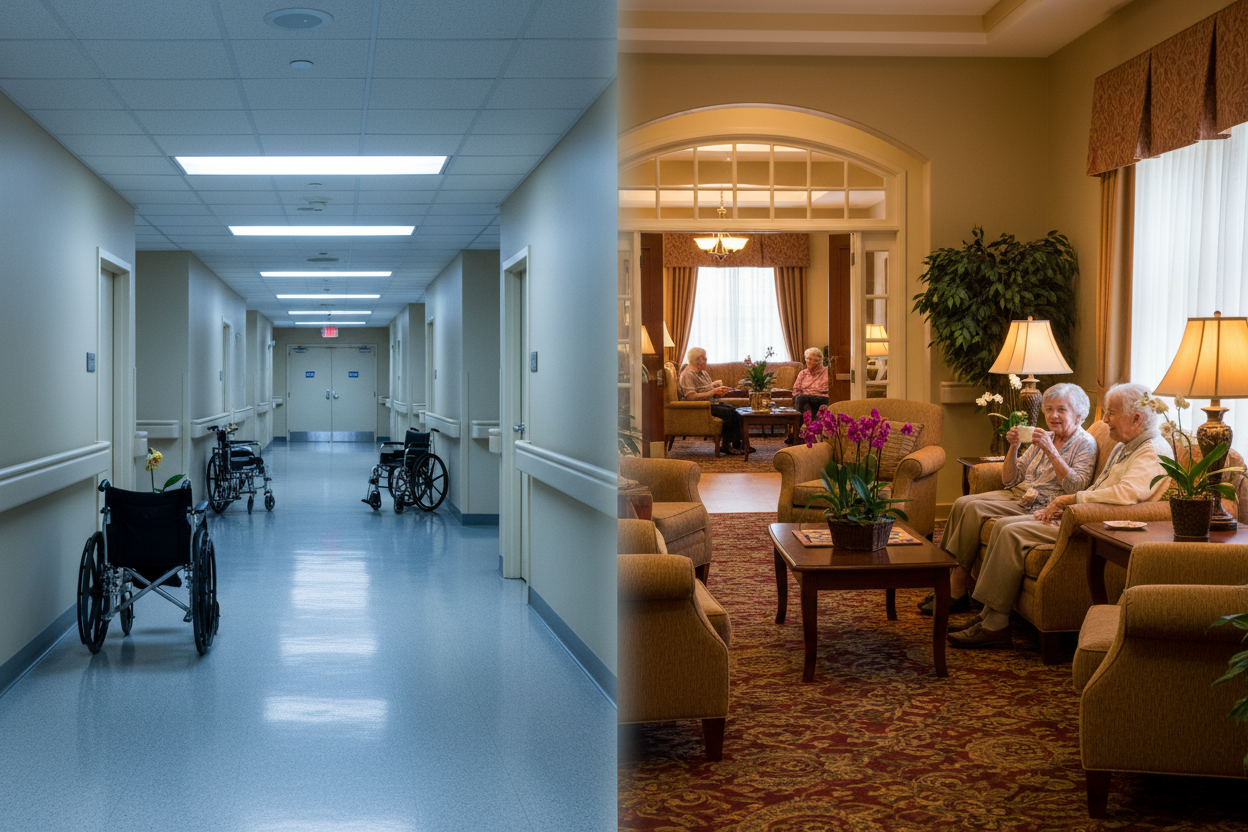
When I first walked into my grandmother’s nursing home five years ago, I was struck by how sterile and institutional everything felt. The cold, gray floors seemed to echo with every footstep, making the space feel more like a hospital than a home. That experience taught me something profound: the flooring in senior care facilities isn’t just about practicality—it’s about dignity, comfort, and creating an environment where residents can truly thrive.
Choosing the right flooring for nursing homes presents a unique challenge. You need materials that can withstand heavy foot traffic, wheelchairs, and frequent cleaning while still creating a warm, welcoming atmosphere that residents are proud to call home. It’s a delicate balance, but one that’s absolutely achievable with the right approach and materials.
Understanding the Unique Demands of Nursing Home Flooring 💪
Nursing home flooring faces challenges that most residential or commercial spaces never encounter. Every day, these floors must endure wheelchair traffic, walking aids, medical equipment, and the occasional spill or accident. They need to be cleaned frequently with hospital-grade disinfectants, yet still maintain their appearance and structural integrity.
The residents who walk, roll, and live on these floors have specific needs too. Many have mobility issues, vision problems, or cognitive challenges that make certain flooring types potentially hazardous. Falls are a serious concern in senior care facilities, making slip resistance absolutely critical. At the same time, these floors need to provide comfort underfoot for residents who may spend long periods standing or walking.
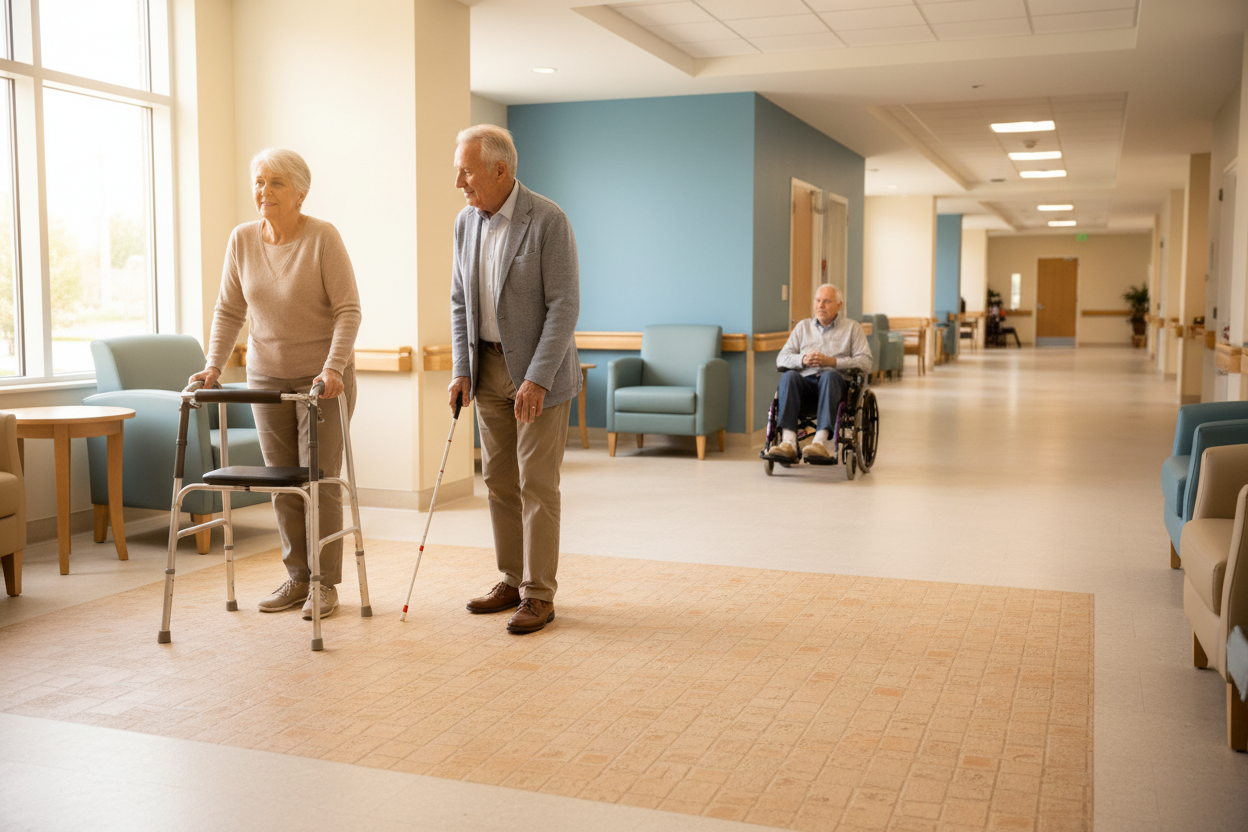
But here’s what many facility managers miss: functionality doesn’t have to mean sacrificing beauty. The most successful nursing home flooring solutions seamlessly blend practical performance with aesthetic appeal, creating spaces that feel more like home and less like an institution.
Essential Functional Requirements for Senior Care Flooring 🛡️
Before diving into design possibilities, let’s establish the non-negotiable functional requirements that any nursing home flooring must meet. Safety tops this list, with slip resistance being paramount. Look for flooring materials with textured surfaces or specialized coatings that provide grip even when wet.
Durability is equally crucial. High-quality nursing home flooring should withstand at least 10-15 years of heavy use while maintaining its appearance and performance. This means choosing materials with excellent wear ratings and proven track records in healthcare environments.
Hygiene and cleanability cannot be compromised. The flooring must be non-porous, resistant to bacteria and mold growth, and able to withstand frequent cleaning with strong disinfectants. Seamless installation is often preferred to eliminate grout lines or seams where bacteria could hide.
Comfort is often overlooked but incredibly important. Floors that provide some cushioning can reduce fatigue for staff and residents alike, while also minimizing the impact of falls. Sound absorption is another comfort factor—hard surfaces can create echoes and noise that may be disturbing or disorienting for residents with cognitive issues.
Design Elements That Create a Homelike Atmosphere 🏠
Creating a homelike atmosphere in nursing homes starts with moving away from the institutional “hospital” look that many facilities still embrace. Warm, natural colors can make spaces feel more inviting and less clinical. Think soft earth tones, muted blues, or gentle greens rather than stark whites or grays.
Pattern and texture add visual interest without compromising functionality. Subtle wood grain patterns, soft geometric designs, or even gentle marbling can break up large expanses of flooring and create more intimate, residential-feeling spaces. The key is choosing patterns that are sophisticated rather than busy—you want visual interest, not visual chaos.
Color psychology plays a significant role in senior care environments. Warmer tones can create feelings of comfort and security, while cooler tones might be more appropriate in areas designed for relaxation or medical care. Consider how different colors might affect residents with dementia or other cognitive conditions—high contrast can help with navigation, while certain colors might trigger unwanted emotional responses.
Natural light interaction is another crucial design consideration. Choose flooring materials that complement and enhance available natural light rather than creating glare or unwanted reflections that could be problematic for residents with vision issues.
Top Flooring Materials for Nursing Homes: Pros and Cons 📋
Luxury Vinyl Tile (LVT) has become increasingly popular in nursing homes, and for good reason. Modern LVT offers exceptional durability, water resistance, and an impressive range of design options that can mimic hardwood, stone, or ceramic tile. The cushioned backing provides comfort underfoot, and many products include antimicrobial treatments. However, some LVT products can be slippery when wet, so careful selection is crucial.
Rubber flooring might not sound glamorous, but today’s rubber floors are far from the industrial-looking options of the past. Available in numerous colors and patterns, rubber provides excellent slip resistance, comfort, and sound absorption. It’s also naturally antimicrobial and extremely durable. The main drawback is aesthetic—while much improved, rubber still has a distinctive look that some find less appealing than other options.
Linoleum (true linoleum, not vinyl) is making a comeback in healthcare settings. Made from natural materials, it’s inherently antimicrobial and available in a wide range of colors and patterns. It’s also environmentally friendly and can last for decades with proper care. However, linoleum requires more maintenance than some alternatives and can be damaged by harsh cleaning chemicals.
Polished concrete might seem too industrial, but when properly finished, it can create a sleek, modern look while providing excellent durability and easy maintenance. It can be colored, textured, or even embedded with decorative elements. The main concerns are hardness underfoot and potential for slipperiness without proper texturing.
Creating Visual Continuity Throughout Different Areas 🌊
One of the biggest challenges in nursing home design is creating visual flow between different functional areas while meeting the specific needs of each space. The dining room might need different performance characteristics than patient rooms, but dramatic changes in flooring can make a facility feel disjointed and institutional.
Consider using a consistent color palette throughout the facility while varying textures or patterns to define different areas. For example, you might use the same warm gray tone in LVT with a wood grain pattern in common areas and a subtle textile pattern in private rooms.
Transition strips and borders can help define spaces without creating jarring changes. A subtle border pattern can signal the transition from a hallway to a common area, while maintaining the overall design continuity.
Think about sight lines and how residents and visitors will experience the space as they move through it. The goal is to create a sense of journey and discovery rather than the feeling of moving through identical institutional corridors.
Budget-Friendly Solutions Without Compromising Quality 💰
High-quality nursing home flooring doesn’t have to break the budget, but it does require smart planning and strategic choices. Consider the total cost of ownership, not just the initial installation cost. A more expensive floor that lasts 15 years and requires minimal maintenance may be more cost-effective than a cheaper option that needs replacement in 5 years.
Phased installation can help spread costs over time while allowing you to test materials in different areas before committing to facility-wide installation. Start with high-traffic areas where the benefits will be most noticeable, then expand the program as budget allows.
Look for manufacturers who offer healthcare-specific warranties and support programs. Many flooring companies provide extended warranties for healthcare installations, recognizing the unique demands these environments place on their products.
Consider the long-term savings that come with improved resident satisfaction and staff efficiency. Floors that are easier to clean, more comfortable to work on, and create a more pleasant environment can have measurable impacts on staff retention and resident well-being.
Maintenance Strategies That Preserve Both Beauty and Function ✨
Even the best nursing home flooring will fail to meet expectations without proper maintenance. Develop cleaning protocols that are appropriate for your specific flooring materials—using the wrong chemicals or techniques can damage floors and void warranties.
Train staff on proper maintenance techniques and provide them with the right tools and products. A well-maintained floor not only looks better and lasts longer, but it’s also safer and more hygienic.
Establish regular inspection schedules to catch small problems before they become major issues. Look for signs of wear, damage, or areas where cleaning protocols might need adjustment.
Consider professional maintenance programs for specialized flooring materials. Many manufacturers offer maintenance services or can recommend certified contractors who understand the specific needs of their products in healthcare environments.
Future Trends in Senior Care Facility Flooring 🚀
The future of nursing home flooring is exciting, with new technologies and materials emerging that promise even better performance and aesthetics. Smart flooring systems with embedded sensors can monitor fall risks and alert staff to potential problems. Antimicrobial treatments are becoming more sophisticated and longer-lasting.
Biophilic design principles are influencing flooring choices, with more options that incorporate natural patterns and textures to create connections with the outdoors. This trend recognizes the psychological benefits of nature-inspired design for senior residents.
Sustainability is becoming increasingly important, with more eco-friendly materials and manufacturing processes. This isn’t just good for the environment—it’s often good for indoor air quality and resident health as well.
Conclusion: Creating Floors That Care 💝
Balancing aesthetics and functionality in nursing home flooring isn’t just possible—it’s essential for creating environments where seniors can live with dignity and comfort. The best flooring solutions recognize that beauty and performance aren’t opposing forces, but complementary elements that work together to create truly exceptional living spaces.
Remember that every flooring decision affects real people who call these facilities home. By choosing materials and designs that prioritize both safety and beauty, we can create environments that honor the residents who live there while supporting the staff who care for them.
The investment in quality flooring pays dividends in resident satisfaction, staff efficiency, and long-term facility reputation. When we get it right, flooring becomes more than just a surface to walk on—it becomes part of the foundation for a caring, homelike environment where seniors can thrive.
Call Us Now!