 Skip to content

How Flooring Affects Thermoregulation in Elderly Residents: A Complete Guide to Comfort and Health 🏠
When we think about creating comfortable living spaces for elderly residents, we often focus on furniture, lighting, and accessibility features. However, there’s one crucial element that’s frequently overlooked: flooring. The type of flooring in a senior’s home can significantly impact their body’s ability to regulate temperature, affecting everything from daily comfort to overall health outcomes.
As we age, our bodies become less efficient at maintaining optimal temperature, making environmental factors like flooring materials more critical than ever. Whether you’re a family member caring for an aging parent, a facility manager, or a senior yourself, understanding how different flooring options influence thermoregulation can help create safer, more comfortable living environments. 🌡️
Understanding Thermoregulation Challenges in Older Adults
Before diving into flooring specifics, it’s essential to understand why temperature regulation becomes more challenging as we age. The human body’s thermoregulatory system undergoes several changes during the aging process that make seniors more vulnerable to temperature extremes.
Older adults experience decreased muscle mass, which reduces their body’s ability to generate heat through shivering. Additionally, blood circulation often becomes less efficient, making it harder for the body to distribute warmth evenly. The skin also becomes thinner with age, reducing its insulating properties and making heat loss more rapid.
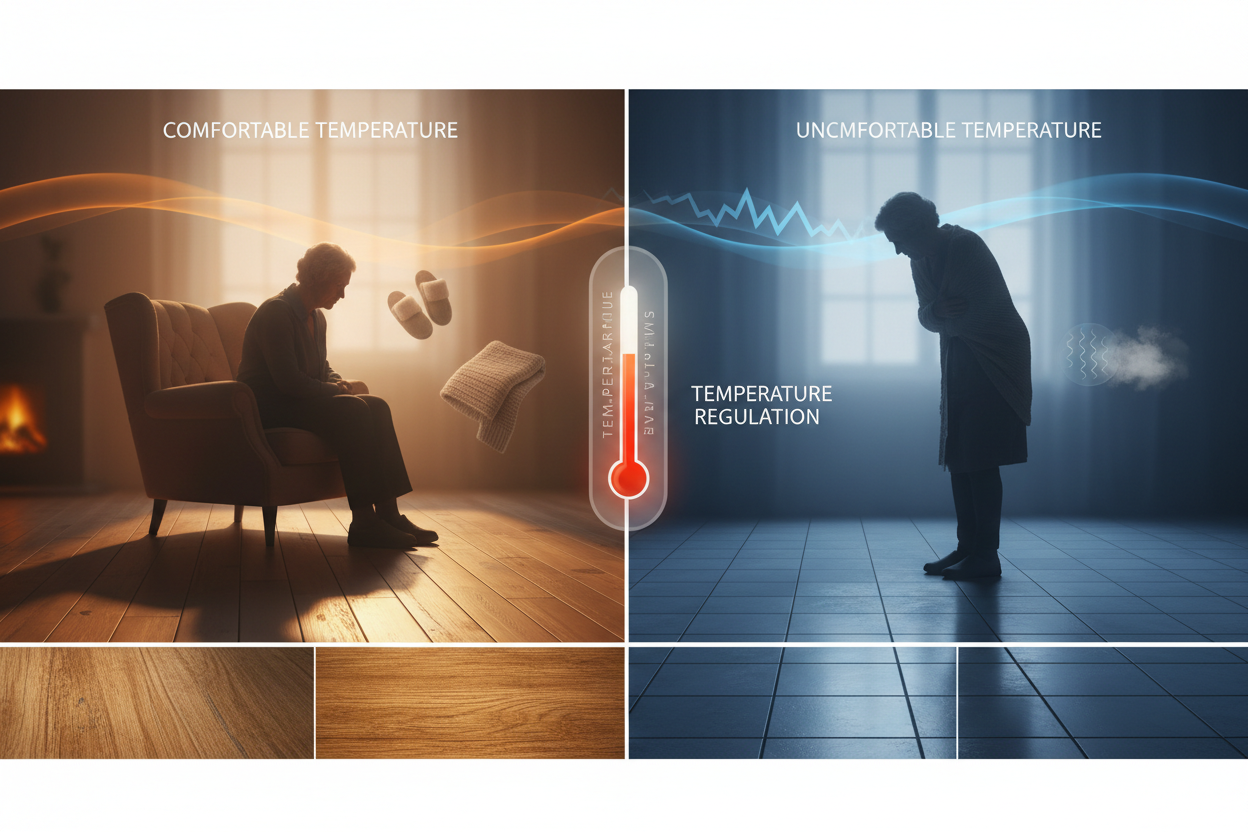
These physiological changes mean that environmental temperature control becomes increasingly important for elderly residents. While we can adjust thermostats and add blankets, the flooring beneath their feet plays a surprisingly significant role in their overall thermal comfort throughout the day.
The Science Behind Floor Temperature and Body Heat
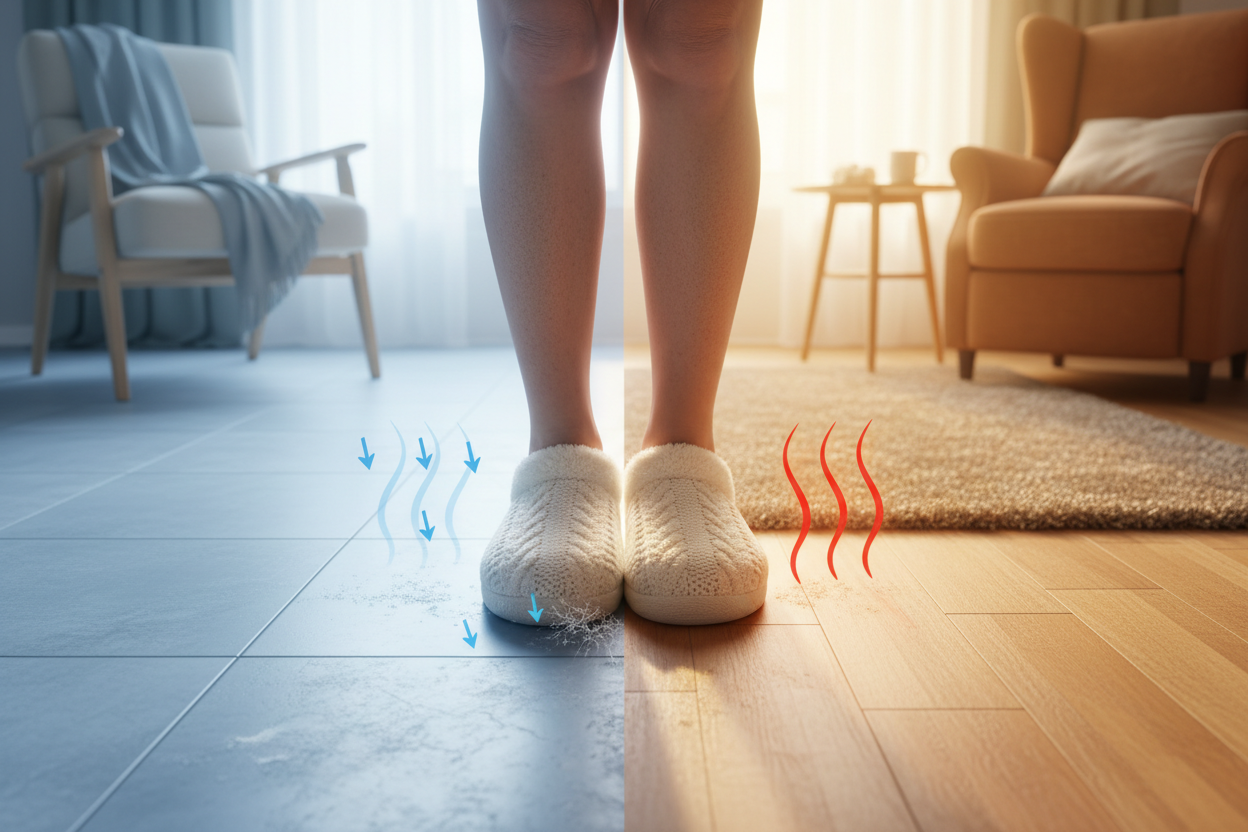
Flooring materials conduct heat at different rates, directly affecting how warm or cool our feet feel when we walk barefoot or in thin socks. This foot temperature can influence our entire body’s perception of warmth, triggering physiological responses that either help maintain comfortable body temperature or work against it.
When feet are cold due to contact with cool flooring surfaces, the body responds by constricting blood vessels in the extremities to preserve core body temperature. This vasoconstriction can lead to discomfort and may even contribute to falls, as reduced blood flow to the feet can affect balance and sensation.
Conversely, flooring that maintains a warmer surface temperature helps keep feet comfortable, promoting better circulation and overall thermal comfort. This is particularly important for seniors who may spend considerable time walking around their living spaces throughout the day. ✨
Best Flooring Options for Senior Thermal Comfort
Carpet: The Warm and Cozy Champion
Carpet remains one of the most thermally comfortable flooring options for elderly residents. The fibers create natural insulation, trapping air that helps maintain a warmer surface temperature. This makes carpet particularly beneficial in bedrooms and living areas where seniors might walk barefoot.
Beyond thermal benefits, carpet provides cushioning that can reduce fatigue during extended standing or walking. However, it’s crucial to choose low-pile options that won’t create tripping hazards and to ensure regular deep cleaning to maintain air quality.
Cork Flooring: Nature’s Thermal Regulator
Cork flooring offers excellent thermal properties thanks to its cellular structure, which naturally insulates against temperature transfer. This sustainable option feels warm underfoot while still being easy to clean and maintain – a perfect combination for senior living spaces.
Cork also provides slight cushioning, which can be beneficial for joints, and its antimicrobial properties help maintain a healthier indoor environment. The material’s natural warmth makes it an excellent choice for bathrooms and kitchens where seniors might be barefoot more frequently.
Luxury Vinyl Plank with Underlayment
Modern luxury vinyl plank (LVP) flooring, when paired with quality underlayment, can provide surprisingly good thermal comfort. The underlayment acts as an insulating barrier, preventing the cold transfer that’s common with traditional hard flooring materials.
LVP offers the appearance of hardwood while being more comfortable underfoot and easier to maintain. For seniors who prefer the look of traditional flooring but need better thermal properties, this combination can be an ideal solution. 🏡
Flooring Materials to Approach with Caution
Natural Stone and Ceramic Tile
While beautiful and durable, natural stone and ceramic tile can be challenging for elderly residents from a thermoregulation perspective. These materials are excellent heat conductors, which means they quickly absorb heat from feet, creating a perpetually cool surface that can be uncomfortable and potentially problematic for circulation.
If stone or tile flooring is preferred for aesthetic or practical reasons, consider using radiant floor heating systems or high-quality area rugs in key walking areas to mitigate the thermal challenges.
Concrete and Traditional Hardwood
Concrete floors, even when polished or stained, can be particularly challenging for senior thermal comfort. The material’s density and thermal mass mean it stays cool and draws heat away from feet rapidly.
Traditional hardwood, while warmer than stone or concrete, can still feel cool, especially in winter months. If hardwood is the preferred choice, ensure proper subfloor insulation and consider area rugs in frequently used pathways.
Innovative Solutions for Enhanced Thermal Comfort
Radiant Floor Heating Systems
For seniors who want the aesthetics of tile or hardwood but need better thermal comfort, radiant floor heating can be a game-changer. These systems warm the floor surface directly, eliminating the cold shock that can be problematic for elderly residents.
Electric radiant systems are particularly suitable for retrofitting existing homes, while hydronic systems work well in new construction. The gentle, even heat distribution can significantly improve comfort and may even help reduce overall heating costs. 💡
Strategic Area Rug Placement
When changing flooring isn’t feasible, strategic placement of area rugs can create thermal comfort zones throughout the living space. Focus on high-traffic areas like beside the bed, in front of seating areas, and along main walking paths.
Choose rugs with good backing to prevent slipping, and ensure edges are secured to avoid tripping hazards. Memory foam rug pads can add extra insulation while providing additional cushioning for joints.
Additional Considerations for Optimal Comfort
Room-Specific Flooring Strategies
Different rooms may benefit from different flooring approaches based on their use patterns. Bedrooms, where seniors may walk barefoot frequently, benefit most from warm flooring options like carpet or cork. Bathrooms might require water-resistant options like luxury vinyl with good underlayment, potentially supplemented with heated floors.
Living areas where seniors spend extended periods sitting and occasionally walking can benefit from a combination approach – perhaps area rugs over hard flooring to provide warmth where needed while maintaining easy cleaning in other areas.
Maintenance and Hygiene Balance
While thermal comfort is crucial, it must be balanced with hygiene and maintenance considerations, especially in senior living facilities. Some thermally comfortable options, like deep-pile carpet, may not be practical in all settings due to cleaning requirements.
The key is finding materials that offer good thermal properties while still meeting necessary hygiene standards. Cork, luxury vinyl with underlayment, and low-pile carpet options often provide the best balance of comfort and practicality. 🧹
Creating the Ideal Thermal Environment
Selecting the right flooring is just one part of creating an optimal thermal environment for elderly residents. The flooring choice should work in harmony with other environmental factors like ambient temperature control, humidity levels, and air circulation.
Consider the climate and seasonal variations in your area when making flooring decisions. What feels comfortable in summer might be too cold in winter, and vice versa. Some seniors might benefit from seasonal adjustments, like adding extra area rugs during colder months.
Remember that individual preferences vary significantly. Some seniors might prioritize the warm feel of carpet, while others might prefer the easy maintenance of hard surfaces with strategic heating solutions. The best approach often involves consulting with the residents themselves about their comfort preferences and any specific health considerations.
Creating comfortable, thermally appropriate flooring for elderly residents isn’t just about luxury – it’s about health, safety, and quality of life. When seniors are comfortable with their environment, they’re more likely to remain active, maintain independence, and enjoy better overall well-being. By understanding how different flooring materials affect thermoregulation and making informed choices, we can create living spaces that truly support healthy aging. 🌟
Call Us Now!