 Skip to content

Flooring Designs That Celebrate Cultural Diversity: A Journey Through Global Traditions 🌍
In our increasingly connected world, our homes have become canvases for expressing our multicultural experiences and celebrating the rich tapestry of global traditions. One of the most impactful ways to honor cultural diversity in interior design is through thoughtful flooring choices that tell stories, preserve heritage, and create meaningful connections to different corners of the world.
When I walk into a home with authentic Moroccan zellige tiles or Japanese tatami mats, I’m immediately transported. There’s something magical about how the right flooring can make you feel like you’re stepping into another culture entirely. Today, let’s explore how diverse flooring designs can transform your space into a celebration of global artistry and cultural richness.
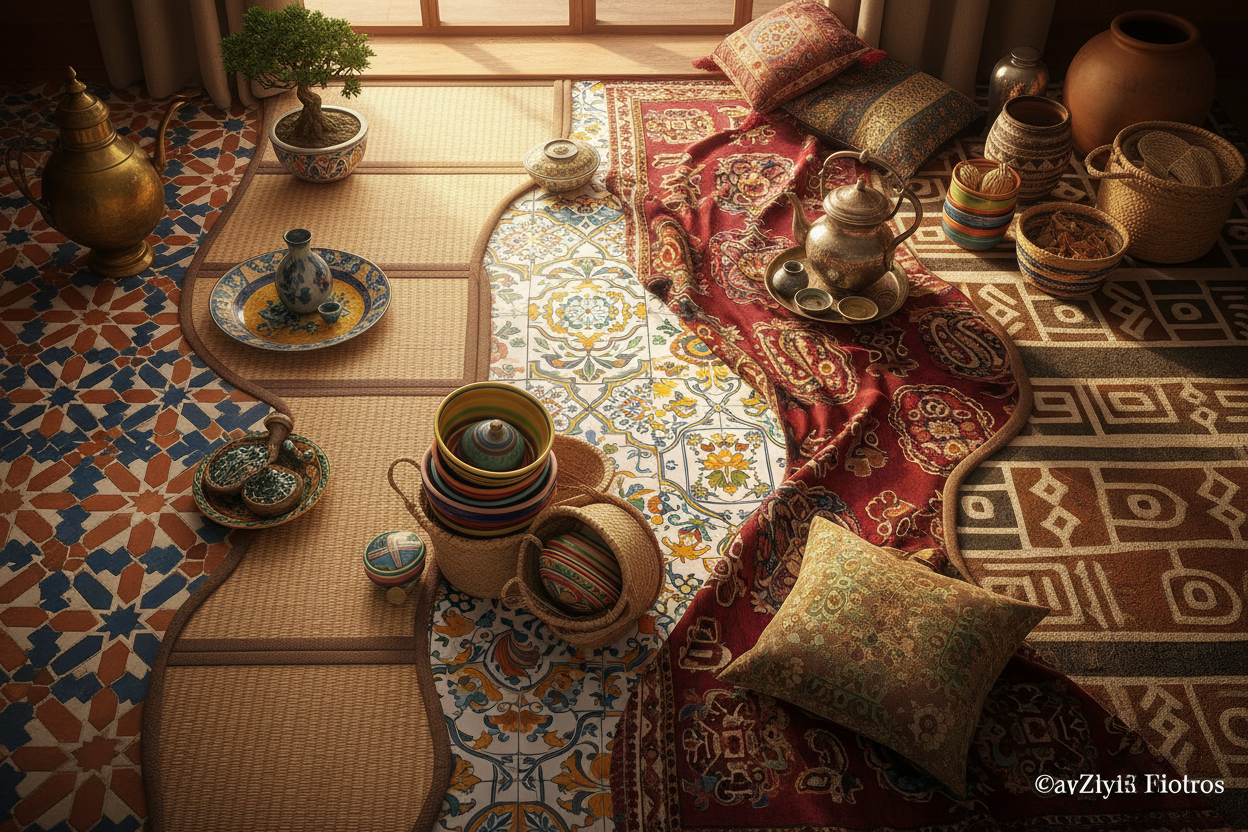
The Art of Moroccan Zellige: Timeless Elegance Underfoot ✨
Few flooring materials capture the essence of cultural craftsmanship quite like Moroccan zellige tiles. These hand-cut, glazed terracotta tiles have been adorning Moroccan palaces and homes for over a thousand years, and their irregular, slightly imperfect surfaces tell the story of artisans who’ve passed down their techniques through generations.
What makes zellige particularly special is its inherent variation – no two tiles are exactly alike. The subtle color differences and natural irregularities create a living, breathing surface that changes appearance throughout the day as light shifts across it. Traditional colors include deep ocean blues, forest greens, and warm earth tones that instantly warm any space.
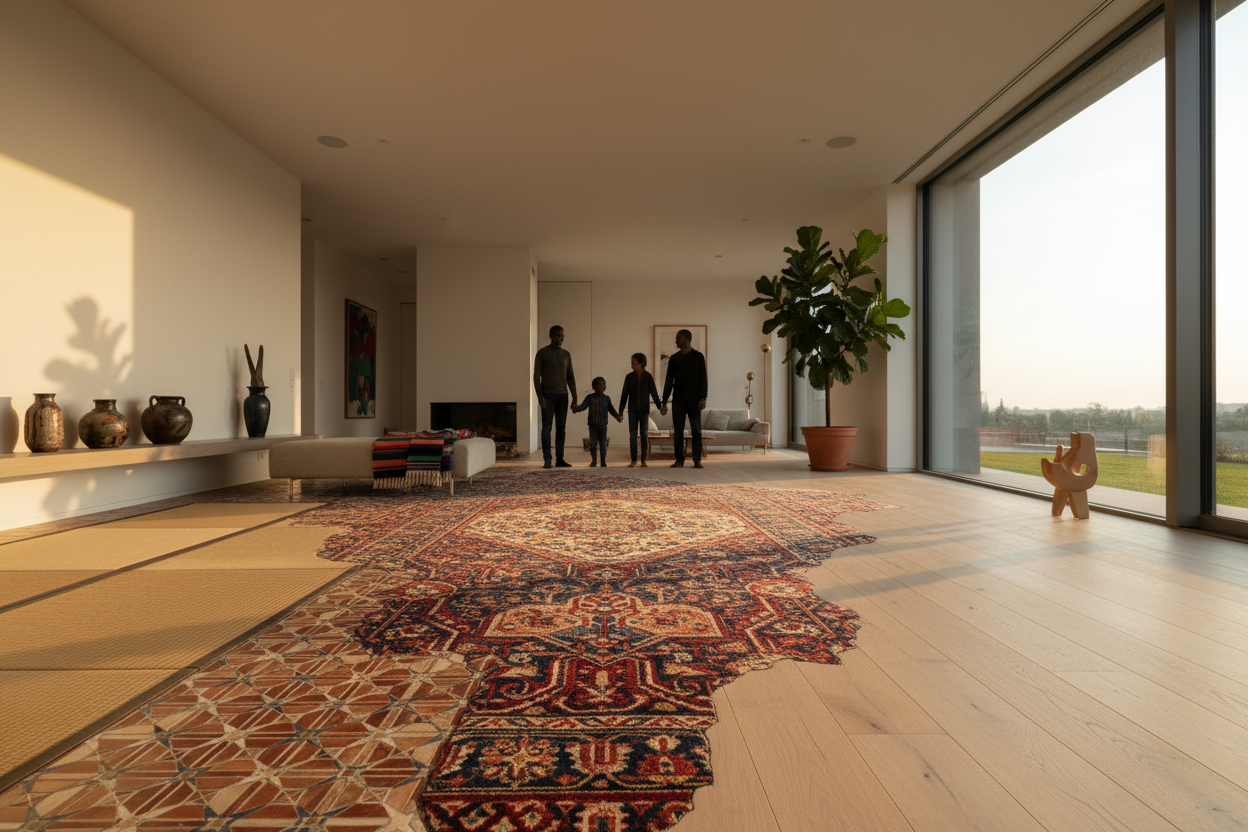
For modern homes, zellige works beautifully in entryways, bathrooms, and kitchen backsplashes. The key is embracing the imperfections rather than fighting them. These “flaws” are actually the hallmark of authentic craftsmanship and what makes each installation truly unique.
Japanese Tatami: Bringing Zen Philosophy Home 🎋
The Japanese concept of tatami flooring represents far more than just a surface to walk on – it’s a philosophy of living. These traditional woven rush mats, backed with rice straw, have been central to Japanese architecture for centuries. They’re not just beautiful; they’re designed to create harmony between humans and their living spaces.
Tatami mats are standardized in size, which traditionally determined room dimensions in Japanese homes. This modular approach creates a sense of order and proportion that’s deeply satisfying to experience. The natural materials provide excellent insulation, are naturally antimicrobial, and offer a subtle, pleasant fragrance that changes with the seasons.
In contemporary homes, tatami can be incorporated as area rugs, meditation spaces, or even entire rooms dedicated to relaxation and mindfulness. They work particularly well in minimalist interiors where their natural texture and muted colors can take center stage.
Indian Kota Stone: Ancient Durability Meets Modern Style 🏛️
From the quarries of Rajasthan comes Kota stone, a fine-grained limestone that has been used in Indian architecture for centuries. You’ll find it in ancient temples, royal palaces, and now, increasingly, in modern homes around the world. What I love about Kota stone is its incredible versatility – it can look rustic and traditional or sleek and contemporary, depending on the finish and setting.
The stone comes in various shades, from light beige to deep brown, with natural color variations that create visual interest without being overwhelming. Its non-slip surface makes it perfect for areas prone to moisture, while its durability means it can handle heavy foot traffic for decades.
Kota stone works beautifully in outdoor spaces, poolside areas, and large open-plan interiors. The key to using it successfully is understanding that each piece will have its own character – embrace the natural variations rather than trying to achieve perfect uniformity.
Mexican Talavera: Vibrant Storytelling Through Ceramics 🎨
Mexican Talavera pottery isn’t just about beautiful objects – it’s a UNESCO-recognized art form that represents the fusion of indigenous, Spanish, and Italian ceramic traditions. When used as flooring, Talavera tiles bring an explosion of color and pattern that can transform any space into a celebration of Mexican artistry.
Each Talavera tile is hand-painted, making every installation a unique work of art. The traditional motifs include geometric patterns, floral designs, and religious symbols, each carrying cultural significance. The vibrant blues, yellows, greens, and whites are achieved using natural minerals and have remained unchanged for centuries.
In modern applications, Talavera works wonderfully as accent flooring in powder rooms, kitchen islands, or outdoor patios. The trick is balancing the bold patterns with more neutral elements to prevent visual overwhelm while still honoring the tiles’ inherent vibrancy.
Turkish Kilim-Inspired Designs: Nomadic Heritage in Contemporary Spaces 🐪
While traditional kilims are woven textiles rather than hard flooring, their influence on contemporary flooring design is unmistakable. Modern manufacturers have created ceramic and luxury vinyl tiles that capture the geometric patterns and rich colors of these ancient nomadic rugs.
Turkish kilims tell stories – each pattern and color combination has meaning, often relating to protection, fertility, or good fortune. The geometric designs are both sophisticated and timeless, working beautifully in both traditional and ultra-modern settings.
Kilim-inspired flooring works particularly well in transitional spaces like hallways and entryways, where the bold patterns can make a statement without overwhelming the room. The key is choosing colors that complement your existing palette while still honoring the traditional vibrancy of the original textiles.
African-Inspired Terrazzo: Modern Technique, Ancient Inspiration 🌍
Terrazzo flooring has experienced a major renaissance, and contemporary designers are drawing inspiration from African art and culture to create stunning, culturally-rich installations. By incorporating aggregates in colors and patterns reminiscent of African textiles, pottery, and natural landscapes, modern terrazzo can pay homage to the continent’s rich artistic heritage.
Think warm ochres, deep terracottas, and rich browns mixed with touches of gold and copper. These colors reflect the African landscape while the terrazzo technique allows for the creation of patterns inspired by traditional African art forms like Kente cloth or mud cloth designs.
This approach works beautifully in commercial spaces, large residential areas, and anywhere you want to make a bold, culturally-aware design statement. The durability of terrazzo means these artistic expressions can last for generations.
Scandinavian Wood Traditions: Celebrating Nordic Craftsmanship 🌲
Scandinavian design is renowned for its emphasis on natural materials, functionality, and connection to nature. Traditional Nordic wood flooring techniques celebrate the natural beauty of local timber species like pine, birch, and oak, often with minimal processing to preserve the wood’s inherent character.
What sets Scandinavian wood flooring apart is the treatment and finishing techniques that have been refined over centuries of dealing with harsh climates. The result is flooring that’s not just beautiful but incredibly durable and practical.
Wide planks with natural variations in grain and color are hallmarks of this style. The finish is typically matte or low-sheen, allowing the natural beauty of the wood to shine through. This approach creates spaces that feel warm, welcoming, and deeply connected to nature.
Creating Harmony: Blending Cultural Elements Thoughtfully 🎭
The key to successfully incorporating culturally diverse flooring elements isn’t about creating a museum display – it’s about thoughtful integration that respects the source culture while creating a cohesive living space. This means understanding the cultural significance of the materials you’re choosing and using them in ways that honor their heritage.
Consider starting with one primary cultural influence and adding subtle nods to others through accessories, textiles, or smaller design elements. For example, you might choose Japanese-inspired wide-plank flooring as your base and add Moroccan-influenced area rugs or Indian textiles as accents.
It’s also important to source materials responsibly, supporting artisans and communities that have preserved these traditional techniques. When possible, choose suppliers who work directly with traditional craftspeople, ensuring that your design choices contribute positively to the communities that created these beautiful traditions.
Practical Considerations for Cultural Flooring Choices 🔧
While cultural authenticity is important, practical considerations can’t be ignored. Climate, foot traffic, maintenance requirements, and local building codes all play a role in determining what’s feasible for your specific situation.
For example, traditional tatami mats require specific humidity levels and may not be practical in very dry or very humid climates. Similarly, some natural stone options may require sealing and special maintenance in certain environments.
The good news is that many manufacturers now offer culturally-inspired alternatives that capture the aesthetic essence of traditional materials while offering improved durability and easier maintenance. High-quality reproductions can be a respectful way to incorporate cultural elements when authentic materials aren’t practical.
Celebrating cultural diversity through flooring design is about more than just aesthetics – it’s about creating spaces that tell stories, honor traditions, and bring the beauty of global craftsmanship into our daily lives. Whether you choose authentic handcrafted materials or thoughtfully designed cultural interpretations, the key is approaching these choices with respect, understanding, and appreciation for the rich heritage they represent.
As our world becomes increasingly interconnected, our homes can serve as bridges between cultures, creating spaces that celebrate our shared humanity while honoring the unique traditions that make each culture special. Through thoughtful flooring choices, we can literally build these connections from the ground up, creating foundations for understanding, appreciation, and beauty that will last for generations to come. 🏠💫
Call Us Now!