 Skip to content

Flooring Choices for Open Floor Plans in Nursing Homes: Creating Safe and Beautiful Spaces 🏥
When I first walked into a newly renovated nursing home last year, I was struck by how the thoughtful flooring choices transformed the entire atmosphere. The open floor plan felt warm and welcoming, yet unmistakably safe and functional. This experience reminded me just how crucial flooring decisions are in senior care facilities, especially when dealing with expansive, open layouts that serve multiple purposes throughout the day.
Open floor plans in nursing homes present unique challenges that go far beyond simple aesthetics. These spaces need to accommodate wheelchairs, walkers, and foot traffic while maintaining a homey atmosphere that residents can truly enjoy. The flooring you choose becomes the foundation – quite literally – for creating an environment that promotes both safety and wellbeing. 🌟
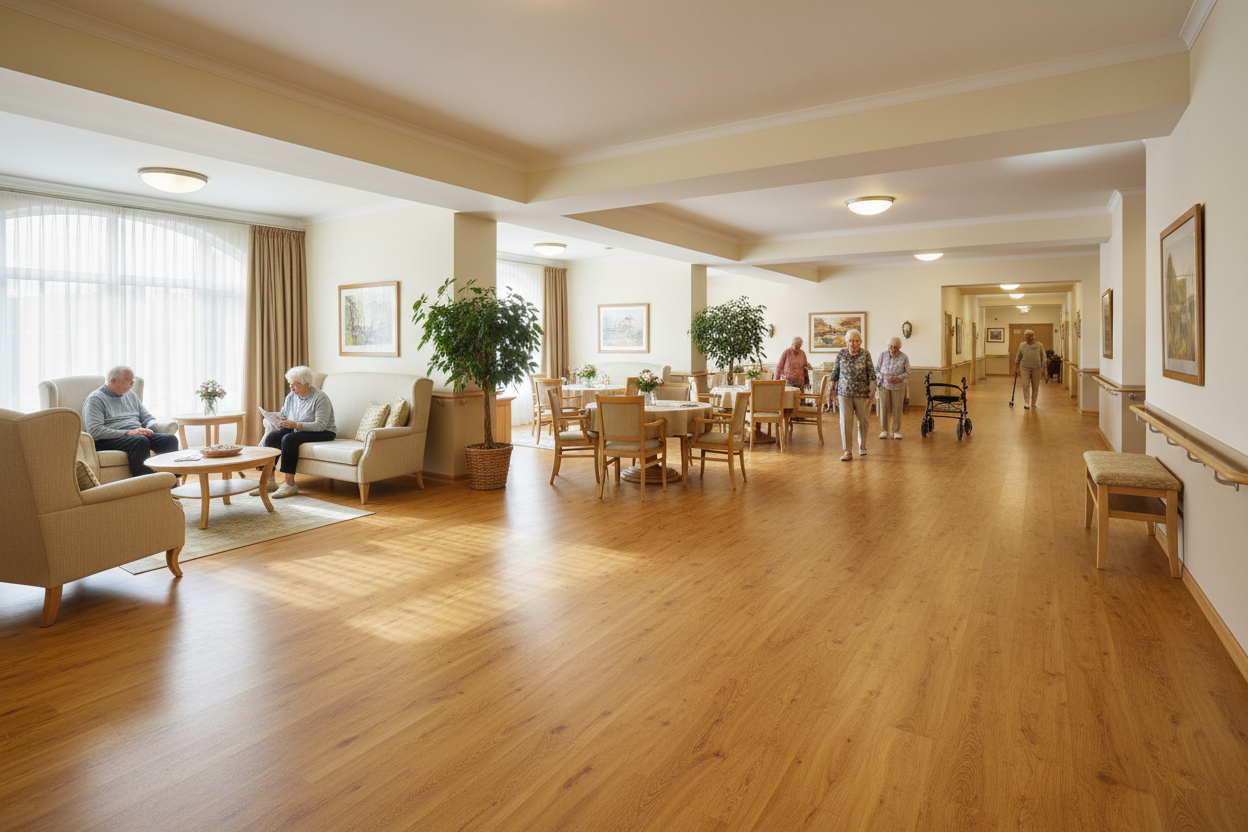
Understanding the Unique Demands of Nursing Home Open Floor Plans
Open floor plans in nursing homes serve multiple functions throughout any given day. A single space might host morning exercises, afternoon social activities, dining, and evening entertainment. This versatility places extraordinary demands on flooring materials that simply don’t exist in traditional residential or even commercial settings.
The constant movement of medical equipment, wheelchairs, and mobility aids creates wear patterns that can quickly deteriorate inappropriate flooring choices. I’ve seen beautiful hardwood floors in nursing homes that looked stunning for the first six months, only to become scarred and potentially hazardous as heavy equipment took its toll.
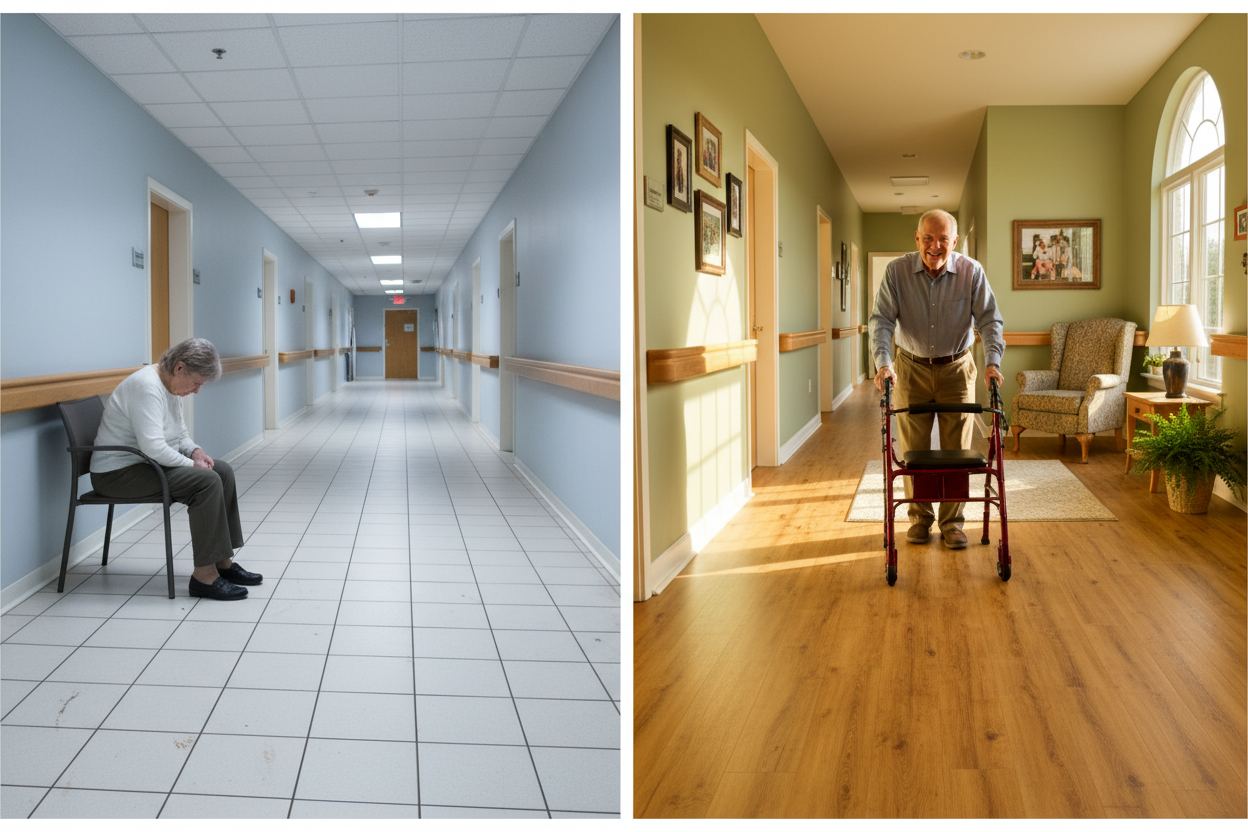
Beyond durability, these spaces must meet strict health and safety regulations while maintaining the warm, residential feel that makes residents feel at home rather than institutionalized. It’s a delicate balance that requires careful consideration of both practical and emotional needs.
Safety First: Non-Slip and Fall Prevention Features
Fall prevention isn’t just a priority in nursing home flooring – it’s absolutely critical. The statistics are sobering: falls are the leading cause of injury-related death among seniors, and the flooring choice can significantly impact fall risk. When selecting flooring for open floor plans, slip resistance should be your top consideration.
Modern flooring manufacturers have developed sophisticated testing methods to measure slip resistance, typically using coefficient of friction (COF) ratings. For nursing home environments, look for flooring with a COF rating of at least 0.6, though many experts recommend even higher ratings for areas that might become wet.
Texture plays a crucial role here, but it’s important to strike the right balance. Too much texture can make cleaning difficult and potentially catch wheelchair wheels or walking aid tips. The ideal flooring provides just enough grip to prevent slips while remaining smooth enough for easy mobility and maintenance. 🛡️
Durability and Maintenance: Long-Term Performance Considerations
In my experience consulting with nursing home administrators, maintenance costs often become the deciding factor in flooring choices. Open floor plans see heavy, continuous use, and the wrong flooring choice can lead to expensive repairs or premature replacement.
High-quality luxury vinyl tile (LVT) has emerged as a popular choice because it can withstand the constant traffic of wheelchairs and medical equipment while maintaining its appearance. Unlike traditional vinyl, modern LVT products feature protective wear layers that resist scuffs, scratches, and stains.
Maintenance requirements vary significantly between flooring types. While natural stone might seem durable, it often requires specialized cleaning products and techniques that can strain maintenance budgets. Conversely, many modern synthetic options can be maintained with standard cleaning protocols, reducing both cost and complexity.
Top Flooring Options for Nursing Home Open Floor Plans
Luxury Vinyl Tile (LVT): The Modern Standard
Luxury vinyl tile has revolutionized nursing home flooring, and for good reason. Today’s LVT products offer remarkable realism, mimicking everything from hardwood planks to natural stone tiles with impressive accuracy. More importantly, they deliver the performance characteristics that nursing homes desperately need.
The installation flexibility of LVT makes it particularly well-suited for open floor plans. You can create visual zones within a large space using different patterns or colors while maintaining consistent performance characteristics throughout. I’ve seen facilities use wood-look LVT in seating areas and stone-look patterns in dining zones, creating natural boundaries without physical barriers.
Modern LVT products also offer excellent sound absorption properties, which is crucial in open environments where noise can easily become overwhelming for residents with hearing sensitivities or cognitive impairments. 🔇
Polished Concrete: Industrial Strength with Style
Polished concrete might seem like an unlikely choice for nursing homes, but modern techniques have transformed this industrial material into an attractive, highly functional option. When properly sealed and finished, polished concrete offers unmatched durability and can be customized with colors, patterns, and even embedded designs.
The seamless nature of polished concrete makes it exceptionally hygienic – there are no grout lines or seams where bacteria can hide. This characteristic makes it particularly appealing for facilities focused on infection control. However, comfort can be a concern, and many facilities pair polished concrete with area rugs in seating zones to add warmth and cushioning.
Rubber Flooring: Comfort and Safety Combined
Commercial rubber flooring has come a long way from the utilitarian gym floors of the past. Modern rubber flooring systems offer excellent slip resistance, superior comfort underfoot, and remarkable durability. The cushioning effect of rubber can actually help reduce injury severity if falls do occur.
Rubber flooring is naturally antimicrobial and can be manufactured with additional antibacterial properties. It’s also remarkably quiet, which helps create a more peaceful environment in busy open floor plans. The main considerations are aesthetic – while rubber flooring options have improved dramatically, they may not provide the warm, residential feel that some facilities desire.
Ceramic and Porcelain Tile: Time-Tested Reliability
Ceramic and porcelain tiles remain popular choices for nursing homes, particularly in areas where moisture resistance is crucial. Modern manufacturing techniques have produced tiles with excellent slip resistance, and the design options are virtually limitless.
Large format tiles can help minimize grout lines in open floor plans, reducing maintenance requirements and creating a more seamless appearance. However, the hardness of ceramic and porcelain can be unforgiving if residents fall, and the installation quality becomes critical for long-term performance. 💎
Creating Visual Zones and Wayfinding Through Flooring Design
One of the most powerful aspects of flooring in open floor plans is its ability to create visual organization without physical barriers. Different flooring materials, colors, or patterns can naturally define spaces for different activities while maintaining the open, accessible environment that modern nursing homes strive to achieve.
Wayfinding becomes particularly important for residents with dementia or other cognitive impairments. Subtle changes in flooring can provide visual cues that help residents navigate independently. For example, a slightly different shade or pattern can indicate the transition from a social area to a dining space, providing gentle guidance without confusion.
Color psychology plays a significant role here. Warmer tones in seating areas can encourage relaxation and social interaction, while cooler tones in activity areas might promote alertness and engagement. The key is subtlety – dramatic changes can be jarring or confusing for elderly residents.
Budget Considerations and Cost-Effective Solutions
Nursing home budgets are often tight, but flooring is one area where cutting corners can lead to significantly higher long-term costs. I always advise facility managers to consider the total cost of ownership rather than just the initial installation price.
A slightly more expensive flooring option that lasts twice as long and requires half the maintenance will ultimately save money. Additionally, many flooring manufacturers offer healthcare-specific warranties that can provide additional protection for your investment.
Phased installation can help manage costs in large open floor plans. You might start with high-traffic areas and gradually expand the installation as budget allows. This approach also provides an opportunity to evaluate performance before committing to the entire space. 💰
Accessibility and ADA Compliance
Americans with Disabilities Act (ADA) compliance isn’t optional in nursing homes – it’s a legal requirement. Fortunately, most modern flooring options can easily meet ADA requirements when properly installed. The key considerations include surface firmness, slip resistance, and transition details.
Carpet, while comfortable, can be challenging for wheelchair users and those with mobility aids. If carpet is used in certain zones of an open floor plan, it must be low-pile and securely attached. Transitions between different flooring materials must be carefully designed to prevent tripping hazards while remaining navigable for wheelchairs.
Environmental and Health Considerations
Indoor air quality is crucial in nursing homes, where residents spend the majority of their time indoors. Many traditional flooring materials and adhesives can off-gas volatile organic compounds (VOCs) that may affect sensitive individuals.
Look for flooring products with low or no VOC emissions, and consider certifications like FloorScore or GREENGUARD. These certifications provide third-party verification that products meet strict chemical emissions standards. Additionally, many modern flooring options are made from recycled materials, supporting environmental sustainability goals. 🌱
Installation Best Practices for Open Floor Plans
The installation quality can make or break even the best flooring choice. In open floor plans, proper subfloor preparation becomes even more critical because any imperfections will be magnified across the large space. Moisture testing and mitigation are essential, particularly in ground-floor installations.
Professional installation is almost always worth the investment in nursing home environments. The specialized knowledge required to properly handle transitions, door clearances, and accessibility requirements makes this a poor choice for cost-cutting measures.
Conclusion: Making the Right Choice for Your Facility
Selecting flooring for open floor plans in nursing homes requires balancing multiple priorities: safety, durability, aesthetics, maintenance, and cost. The good news is that today’s flooring options offer unprecedented performance and design flexibility, making it possible to create beautiful, functional spaces that truly serve residents’ needs.
Remember that the best flooring choice for your facility depends on your specific circumstances – resident population, budget constraints, maintenance capabilities, and design goals. Take time to visit other facilities, speak with residents and staff, and consider bringing in samples for real-world evaluation.
The flooring you choose will impact your residents’ daily lives for years to come. By prioritizing safety, comfort, and functionality while maintaining an attractive, homelike environment, you can create spaces that truly enhance quality of life for those who call your facility home. After all, that’s what great nursing home design is really about – creating environments where people can thrive, not just survive. 🏡✨
Call Us Now!