 Skip to content

Choosing the Right Flooring for Residents with Sensory Processing Issues: A Comprehensive Guide 🏠
When my neighbor Sarah first told me about her daughter Emma’s reaction to walking barefoot on their hardwood floors, I didn’t fully understand the complexity of sensory processing issues. Emma would literally tiptoe around the house, avoiding certain areas entirely, and sometimes even refuse to walk on specific surfaces. This opened my eyes to something many of us take for granted – how flooring choices can dramatically impact the daily lives of individuals with sensory processing disorders (SPD).
Sensory processing issues affect millions of people, from children with autism spectrum disorders to adults with various neurological conditions. The flooring beneath our feet plays a crucial role in creating comfortable, accessible living spaces that support rather than overwhelm sensitive nervous systems. If you’re renovating, building, or simply looking to make your home more sensory-friendly, understanding how different flooring materials affect those with sensory sensitivities is essential. 🧠
Understanding Sensory Processing and Flooring Interactions
Before diving into specific flooring recommendations, it’s important to understand how sensory processing issues manifest in relation to floor surfaces. People with SPD may experience hypersensitivity (over-responsiveness) or hyposensitivity (under-responsiveness) to various stimuli, including tactile sensations from flooring materials.
Those with tactile hypersensitivity might find certain textures unbearable – think of the person who can’t stand the feeling of carpet fibers between their toes or becomes distressed by the cold touch of tile. On the flip side, individuals with hyposensitivity may seek out intense sensory input, preferring textured surfaces that provide more feedback to their nervous system.
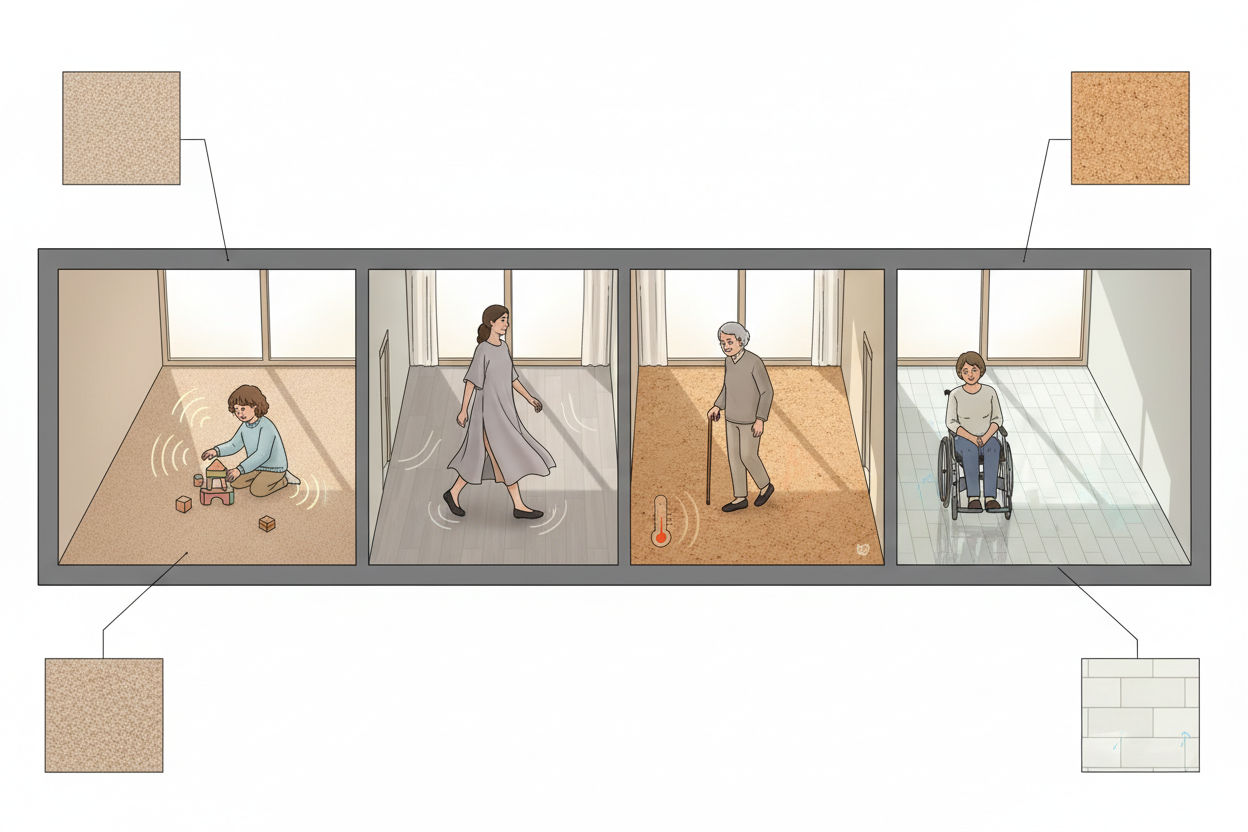
Temperature sensitivity is another crucial factor. Some individuals are extremely sensitive to cold surfaces, while others may not register temperature changes as readily. The acoustic properties of flooring also matter significantly – hard surfaces that create echoing footsteps can be overwhelming for those with auditory sensitivities. ✨
Carpet: Comfort Versus Concerns
Carpet often seems like the obvious choice for sensory-sensitive individuals due to its soft, cushioned feel. Many people with SPD find carpet comforting because it provides warmth, reduces noise, and offers a forgiving surface for those who might fall or stumble.
However, carpet isn’t universally loved by those with sensory issues. The texture can be problematic for some – particularly berber or loop-pile carpets that can feel scratchy or uneven. Additionally, carpet fibers can trigger tactile defensiveness in certain individuals, especially when walking barefoot.
From a practical standpoint, carpet requires more maintenance and can harbor allergens, dust mites, and odors – all of which can be problematic for individuals with multiple sensitivities. If you do choose carpet, opt for low-pile, tightly woven options in neutral colors. Cut-pile carpets tend to be softer and less irritating than loop-pile varieties.
Hard Flooring Options: Finding the Right Balance
Hard flooring surfaces present their own set of considerations for sensory-sensitive residents. While they’re easier to clean and maintain – important factors for those with allergies or chemical sensitivities – they can also create challenges around temperature, acoustics, and tactile comfort.
Hardwood floors are beautiful and durable, but they can be problematic for several reasons. They’re often cold to the touch, can be slippery, and create significant noise when walked on – especially with hard-soled shoes. The natural variations in wood grain and color can also be visually overwhelming for some individuals with sensory processing issues.
Laminate flooring offers some advantages over traditional hardwood. It’s typically warmer to the touch and can be more slip-resistant depending on the surface texture. However, cheaper laminate options can feel hollow or unstable underfoot, which may be unsettling for those seeking sensory security. 🏡
Luxury Vinyl: A Modern Solution
Luxury vinyl plank (LVP) and luxury vinyl tile (LVT) have emerged as excellent options for sensory-sensitive environments. These materials offer the visual appeal of hardwood or stone while providing better thermal comfort and acoustic properties.
The synthetic composition of luxury vinyl makes it warmer to the touch than natural stone or ceramic tile. Many luxury vinyl products also feature textured surfaces that provide subtle sensory input without being overwhelming. The cushioned backing found in many LVP products creates a more forgiving surface that’s easier on joints and provides better acoustic dampening.
Another significant advantage is the consistent appearance and texture of luxury vinyl. Unlike natural materials with inherent variations, luxury vinyl provides predictable sensory input, which can be comforting for individuals who struggle with unexpected sensory changes.
Tile and Stone: Considerations for Sensitive Feet
Ceramic, porcelain, and natural stone tiles present unique challenges for sensory-sensitive individuals. These materials are typically cold, hard, and can be slippery when wet. The grout lines in tiled floors can also create textural variations that some people find disturbing.
However, tile and stone aren’t automatically off-limits. Some individuals with hyposensitivity actually prefer the firm, cool sensation these materials provide. The key is understanding the specific sensory needs of the residents and choosing appropriately.
If you do select tile or stone, consider larger format tiles to minimize grout lines, choose textured surfaces for better slip resistance, and invest in radiant floor heating to address temperature concerns. Porcelain tiles with wood-look or fabric-look textures can provide visual warmth while maintaining the practical benefits of ceramic materials. 🌟
Cork and Bamboo: Natural Alternatives
Cork flooring deserves special consideration for sensory-sensitive environments. This natural material is naturally antimicrobial, provides excellent insulation (making it warmer underfoot), and has inherent cushioning properties that make it comfortable to walk on.
The cellular structure of cork creates a surface that’s both supportive and forgiving. It’s also naturally slip-resistant and provides good acoustic dampening. However, the texture of cork can be polarizing – some individuals love its unique feel, while others find it unsettling.
Bamboo flooring offers similar environmental benefits but with different sensory properties. It’s typically harder than cork but softer than traditional hardwood. The consistent grain pattern of bamboo can be visually calming, though the natural variations in color might be problematic for some individuals with visual sensitivities.
Acoustic Considerations: The Sound of Comfort
The acoustic properties of flooring are often overlooked but critically important for individuals with auditory processing issues. Hard surfaces can create echoes and amplify sounds, while soft surfaces absorb sound but might feel unstable or unpredictable.
If you’re choosing hard flooring, consider underlayments specifically designed for sound dampening. These products can significantly reduce impact noise and create a more acoustically comfortable environment. Area rugs can also help break up large expanses of hard flooring while providing acoustic relief in key areas.
For individuals who are sensitive to the sound of their own footsteps, softer flooring materials or those with good sound absorption properties are essential. The psychological comfort of moving quietly through a space cannot be understated for those with sensory sensitivities. 🔇
Practical Installation Tips for Sensory-Friendly Flooring
The installation process itself can impact the sensory properties of your chosen flooring. Proper subfloor preparation is crucial – uneven surfaces can create pressure points and uncomfortable sensations that persist long after installation.
Consider transition strips carefully. Abrupt changes in flooring height or texture can be jarring for sensory-sensitive individuals. Gradual transitions or consistent flooring throughout main living areas often work better than frequent material changes.
Pay attention to the adhesives, underlayments, and finishing products used during installation. Many individuals with sensory processing issues also have chemical sensitivities, so choosing low-VOC or zero-VOC products is important for creating a truly comfortable environment.
Creating Sensory Zones with Strategic Flooring Choices
Rather than using the same flooring throughout your home, consider creating different sensory zones that serve various needs and preferences. A soft carpet area might serve as a calm-down space, while a smooth, hard surface could be designated for activities requiring easy cleanup.
Bathroom and kitchen areas often require different considerations due to moisture and hygiene concerns. In these spaces, focus on slip-resistant surfaces with good thermal properties. Textured tiles or luxury vinyl designed for wet areas can provide safety without compromising sensory comfort.
Bedrooms might benefit from the warmth and sound absorption of carpet, while main living areas could feature luxury vinyl or cork for easy maintenance and consistent sensory input. The key is understanding how each space will be used and matching the flooring to those specific needs. 🎯
Maintenance and Long-term Considerations
The ongoing maintenance requirements of your flooring choice will impact the sensory environment over time. Flooring that requires frequent deep cleaning with strong chemicals can be problematic for those with chemical sensitivities. Similarly, surfaces that show wear patterns or damage easily might create visual stress for individuals who prefer consistency.
Consider how different flooring materials age and whether changes in appearance or texture over time might be problematic. Some materials, like luxury vinyl and laminate, maintain their appearance well over time, while others like hardwood may develop character marks that could be distressing to sensory-sensitive individuals.
Budget for quality underlayments and professional installation. While the initial investment might be higher, proper installation of sensory-appropriate flooring is crucial for long-term success and resident comfort.
Conclusion: Creating Comfortable Spaces for Everyone
Choosing the right flooring for residents with sensory processing issues requires careful consideration of multiple factors – from tactile properties and temperature to acoustics and visual consistency. There’s no one-size-fits-all solution, as sensory needs vary greatly from person to person.
The key is understanding the specific sensory preferences and sensitivities of your household members, then selecting flooring materials that support rather than overwhelm their nervous systems. Whether you choose the warmth of carpet, the consistency of luxury vinyl, the natural properties of cork, or the durability of tile, the goal is creating an environment where everyone can move comfortably and confidently through their daily routines.
Remember that small changes can make big differences. Area rugs, proper underlayments, and thoughtful transitions between different flooring materials can help create a more sensory-friendly environment regardless of your primary flooring choice. By prioritizing comfort and accessibility in your flooring decisions, you’re creating a home that truly works for everyone who lives there. 🏠💙
Call Us Now!