 Skip to content

How to Use Flooring to Create Zones for Different Activities 🏠
Have you ever walked into a beautifully designed open-plan home and wondered how they managed to make each area feel distinct and purposeful? The secret often lies beneath your feet! Flooring is one of the most powerful yet underutilized tools for creating functional zones in your living space. Whether you’re dealing with a studio apartment, an open-concept home, or simply want to better define areas within larger rooms, strategic flooring choices can transform your space from chaotic to cohesive.
Gone are the days when every room required four walls and a door to feel separate and functional. Today’s homeowners are embracing the art of zoning – creating distinct areas for different activities using visual and tactile cues. And what better way to ground these zones (literally!) than with thoughtful flooring decisions? ✨
Understanding the Psychology of Flooring Zones
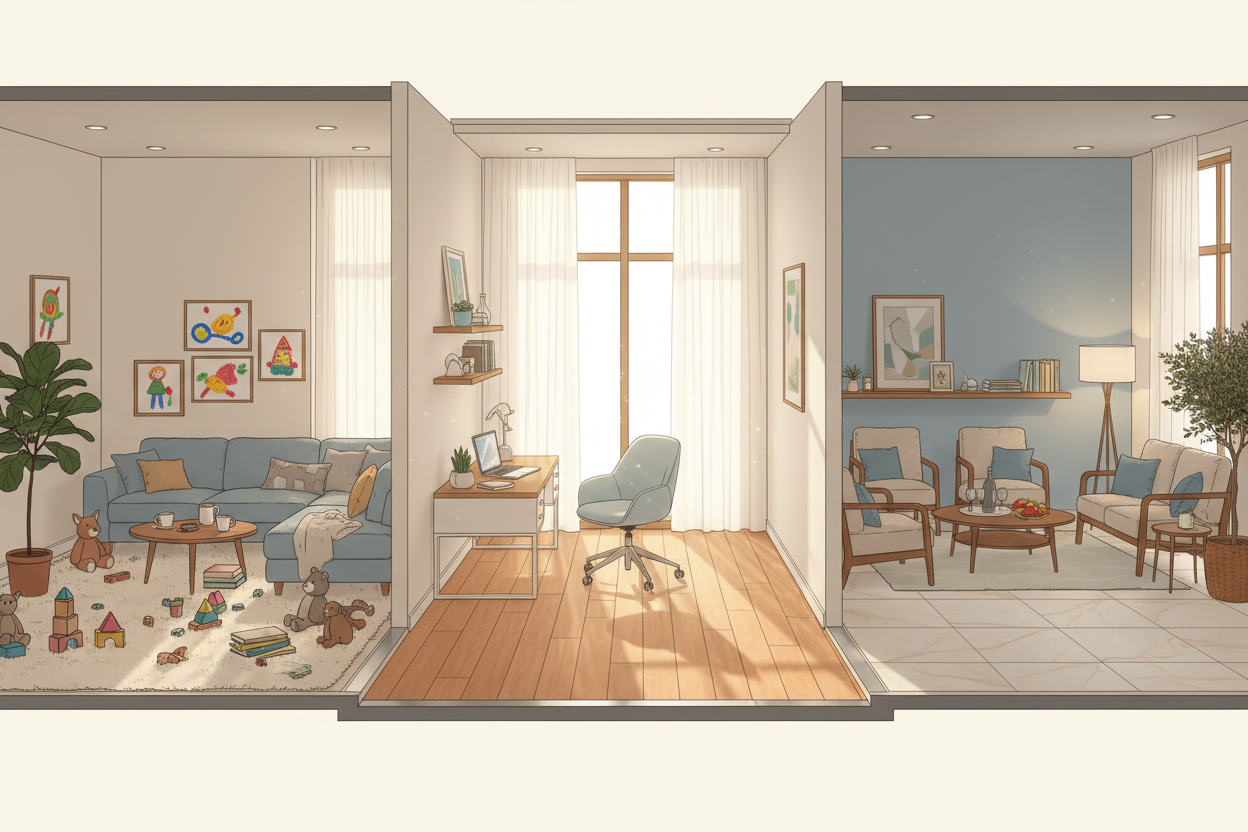
Before we dive into the practical aspects, it’s important to understand why flooring works so well for creating zones. Our brains naturally process changes in texture, color, and material as boundaries. When you step from hardwood onto a plush rug, or transition from tile to carpet, your mind immediately recognizes that you’ve entered a different space with potentially different rules and purposes.
This psychological response is deeply ingrained in human nature. Think about how differently you feel walking on sand versus concrete, or how a soft carpet makes you want to sit down and relax while polished marble keeps you moving. By leveraging these natural responses, you can guide behavior and create intuitive zones that feel both functional and comfortable.
The Living Room: Creating Conversation and Relaxation Zones
The living room is often the heart of the home, serving multiple purposes throughout the day. Here’s where flooring can work its magic to create distinct yet harmonious areas.
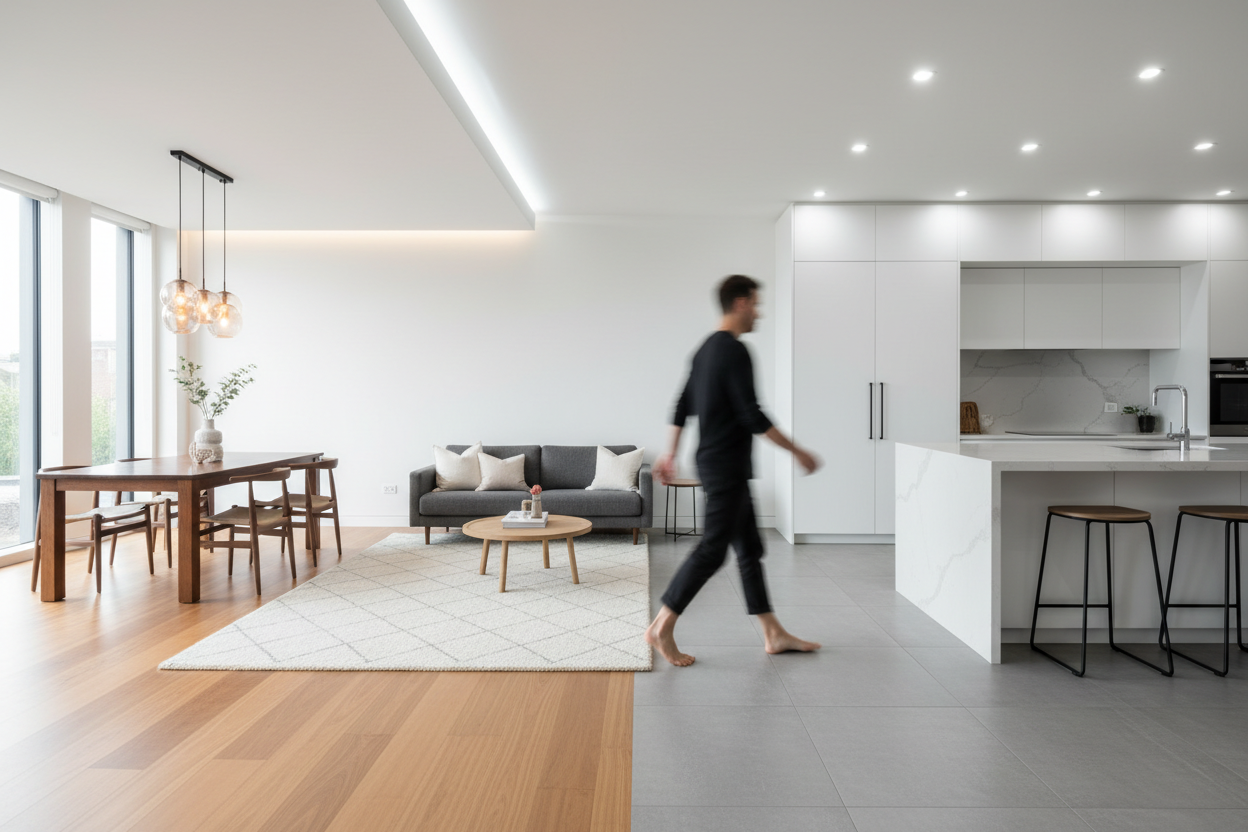
For your main seating area, consider anchoring it with a large area rug that extends beyond the furniture. This creates an intimate conversation zone that feels separate from the rest of the room. Choose a rug with enough visual weight to compete with your furniture – think rich textures, bold patterns, or deep colors that complement your overall design scheme.
If your living room also serves as a reading nook or workspace, you can define these areas with different flooring treatments. A smaller, softer rug under a reading chair creates a cozy retreat, while keeping a workspace on the main flooring (whether that’s hardwood, tile, or laminate) maintains a more energetic, productive feel. 📚
Pro tip: Don’t be afraid to layer rugs! A smaller accent rug on top of a larger neutral one can create even more defined micro-zones within your living space.
Kitchen and Dining Area Zoning Strategies
Open-plan kitchen and dining areas present unique opportunities for creative zoning. The key is balancing practicality with aesthetics – after all, you need flooring that can handle spills and heavy foot traffic while still looking gorgeous.
Consider using durable tile or luxury vinyl in the kitchen work triangle (the area between your sink, stove, and refrigerator) and transitioning to hardwood or a large area rug to define your dining space. This not only creates a visual separation but also provides practical benefits – easy cleanup where you need it most, and comfort where you dine and entertain.
Another effective approach is using the same flooring material throughout but changing the direction or pattern. For instance, you might run hardwood planks horizontally in the kitchen and vertically in the dining area, or use the same tile in different layouts. This creates subtle zoning while maintaining visual flow between spaces. 🍽️
Bedroom Multi-Functional Zones
Modern bedrooms often serve multiple functions – sleeping, dressing, working, and relaxing. Flooring can help define these different activities without requiring permanent walls or room dividers.
Start with your sleeping zone. A soft, plush rug beside and under the bed creates a luxurious feel that signals rest and relaxation. This tactile change from the main flooring immediately tells your brain it’s time to wind down.
For a workspace within the bedroom, keep this area on the main flooring. Whether it’s hardwood, laminate, or tile, the firmer surface helps maintain alertness and productivity. If you have a vanity or dressing area, consider a smaller accent rug that’s easy to clean – somewhere you can stand comfortably while getting ready but won’t trap makeup spills or hair products.
Remember, the goal isn’t to create jarring transitions but rather gentle suggestions that guide how you use each space. The flooring changes should feel natural and intentional, not random or chaotic. 💤
Entryway and Transition Spaces
Entryways are the perfect place to practice your zoning skills because they naturally serve as transition spaces. Here, you want flooring that can handle the wear and tear of daily comings and goings while clearly defining the entry zone from the rest of your home.
Tile, stone, or luxury vinyl work beautifully in entryways because they’re durable and easy to clean. You can create a defined entry zone by using these materials in a specific pattern or color that contrasts with your main living areas. A decorative tile pattern or a different colored stone can create a beautiful “welcome mat” effect that’s built right into your floor.
If your entryway opens directly into your living space, consider using a runner rug to bridge the transition. This creates a pathway that guides visitors into your home while maintaining the practical benefits of hard flooring where people remove shoes and drop bags. 🚪
Home Office and Study Zones
With more people working from home than ever, creating a dedicated workspace within existing rooms has become crucial. Flooring can help establish this professional zone even in the most casual of spaces.
Hard surfaces like hardwood, laminate, or tile work best for office areas because they’re easy to roll chairs on and simple to keep clean. If your office zone is carved out of a carpeted room, consider placing a hard surface chair mat or a low-pile area rug to define the space and protect your carpet from chair wheels.
The psychological impact of stepping onto a different surface to “go to work” shouldn’t be underestimated. This physical transition can help your brain shift into work mode, making you more productive even when your office is just a corner of your bedroom or living room. 💻
Practical Tips for Successful Flooring Zones
Creating zones with flooring isn’t just about picking different materials – it’s about doing it thoughtfully and strategically. Here are some practical considerations to keep in mind:
First, consider the flow between zones. You want transitions that feel natural, not jarring. Avoid dramatic height differences between flooring materials, as these can create tripping hazards and make your space feel choppy. Instead, focus on changes in texture, color, or pattern that create visual interest without physical obstacles.
Scale matters enormously. A tiny rug in a large room won’t create an effective zone – it’ll just look lost. Make sure your area rugs are proportional to both the furniture they’re anchoring and the overall space. When in doubt, go bigger rather than smaller.
Don’t forget about maintenance and practicality. While that beautiful white shag rug might look amazing in your dining area, it’s not going to stay beautiful for long. Choose flooring materials that match the intended use of each zone. High-traffic areas need durable materials, while relaxation zones can accommodate softer, more luxurious options.
Budget-Friendly Zoning Solutions
Creating zones with flooring doesn’t have to break the bank. Area rugs are often the most cost-effective way to define spaces, and you can find beautiful options at every price point. Thrift stores, online marketplaces, and end-of-season sales are great places to find quality rugs at affordable prices.
If you’re renting or don’t want to make permanent changes, removable options like peel-and-stick tiles, temporary floor decals, or washable rugs can create effective zones without damaging existing flooring. These solutions are perfect for apartments or homes where you can’t make permanent modifications. 💰
Common Mistakes to Avoid
While zoning with flooring is relatively straightforward, there are some common pitfalls to watch out for. One of the biggest mistakes is creating too many zones in a single space. This can make your room feel choppy and confused rather than organized and intentional.
Another common error is choosing flooring materials that compete rather than complement each other. Your zones should feel connected even as they serve different purposes. Stick to a cohesive color palette and consider the overall style of your home when making flooring choices.
Finally, don’t forget about proportions. Zones that are too small or too large for their intended purpose won’t function well, regardless of how beautiful the flooring is.
Conclusion: Bringing It All Together
Using flooring to create zones is both an art and a science. It requires thinking carefully about how you use your space, understanding the psychological impact of different materials and textures, and making choices that are both beautiful and practical. The best part? You don’t need to renovate your entire home to see dramatic results.
Start small – maybe with a single area rug to define your living room seating area or a runner to create a pathway through your entryway. Pay attention to how these changes affect both the look and feel of your space. You might be surprised at how such a simple change can make your home feel more organized, intentional, and comfortable.
Remember, your home should work for your lifestyle. The zones you create should reflect how you actually live, not how you think you should live. Whether you’re a busy parent who needs clearly defined play areas, a remote worker who needs a productive workspace, or someone who loves to entertain and needs flexible gathering spaces, flooring can help you create the functional, beautiful home you’ve always wanted. 🌟
The next time you walk through your home, look down at your floors and imagine the possibilities. With a little creativity and strategic thinking, you can transform your space from the ground up – literally!
Call Us Now!