 Skip to content

How to Select Flooring for Areas with High Moisture Levels: Your Complete Guide 💧
Choosing the right flooring for moisture-prone areas in your home can feel like navigating a minefield. One wrong decision, and you might find yourself dealing with warped boards, mold growth, or costly replacements down the line. Whether you’re renovating your bathroom, updating your basement, or planning a laundry room makeover, selecting moisture-resistant flooring is crucial for both functionality and longevity.
High-moisture environments present unique challenges that standard flooring materials simply can’t handle. From steam-filled bathrooms to humid basements, these spaces demand flooring solutions that can withstand constant exposure to water and humidity without compromising on style or durability. The good news? Today’s flooring market offers numerous options that combine moisture resistance with aesthetic appeal.
Understanding Moisture Levels and Their Impact on Flooring 🌊
Before diving into specific flooring options, it’s essential to understand how moisture affects different materials. High-moisture areas typically include bathrooms, kitchens, laundry rooms, basements, mudrooms, and any space where water exposure is frequent or humidity levels remain consistently elevated.
Moisture can damage flooring in several ways. It can cause wood to swell, warp, or rot, leading to gaps, buckling, or complete structural failure. Natural materials like bamboo and cork may also suffer similar fates when exposed to excessive moisture. Additionally, trapped moisture beneath flooring can create the perfect breeding ground for mold and mildew, potentially causing health issues and unpleasant odors.
Temperature fluctuations in moisture-rich environments can exacerbate these problems. The constant expansion and contraction of materials due to varying humidity levels can accelerate wear and tear, making it crucial to choose flooring specifically designed to handle these conditions.
Top Moisture-Resistant Flooring Options 🏠
Luxury Vinyl Plank (LVP) and Luxury Vinyl Tile (LVT)
Luxury vinyl flooring has revolutionized the moisture-resistant flooring market, and for good reason. These synthetic materials are completely waterproof, making them ideal for any high-moisture environment. Modern LVP and LVT options convincingly mimic the appearance of hardwood, stone, or ceramic tile while offering superior moisture protection.
The installation process is typically straightforward, with many options featuring click-lock systems that create seamless, water-tight connections. Quality luxury vinyl flooring also provides excellent durability and comfort underfoot, making it a practical choice for busy households. The variety of styles available means you won’t have to sacrifice aesthetics for functionality.
Porcelain and Ceramic Tile
Ceramic and porcelain tiles remain classic choices for moisture-prone areas, particularly bathrooms and kitchens. Porcelain tile, with its lower porosity rate, offers superior water resistance compared to ceramic options. Both materials are virtually impervious to moisture when properly installed with appropriate waterproof underlayment and sealed grout lines.
The key to successful tile installation in high-moisture areas lies in the details. Proper waterproofing behind the tiles, quality grout, and regular maintenance of grout lines ensure long-lasting performance. While tile installation can be more labor-intensive and costly upfront, the longevity and timeless appeal often justify the investment.
Natural Stone with Proper Sealing
Natural stone flooring can work in moisture-rich environments when properly selected and maintained. Dense stones like granite and slate naturally resist moisture better than porous options like limestone or travertine. However, all natural stone requires regular sealing to maintain its moisture resistance properties.
The beauty and uniqueness of natural stone make it an attractive option for homeowners seeking luxury and character. Each stone slab offers distinct patterns and colors that synthetic materials struggle to replicate. However, the maintenance requirements and higher cost make natural stone a choice that requires careful consideration and commitment to ongoing care.
Engineered Hardwood vs. Solid Hardwood in Moisture Areas 🌳
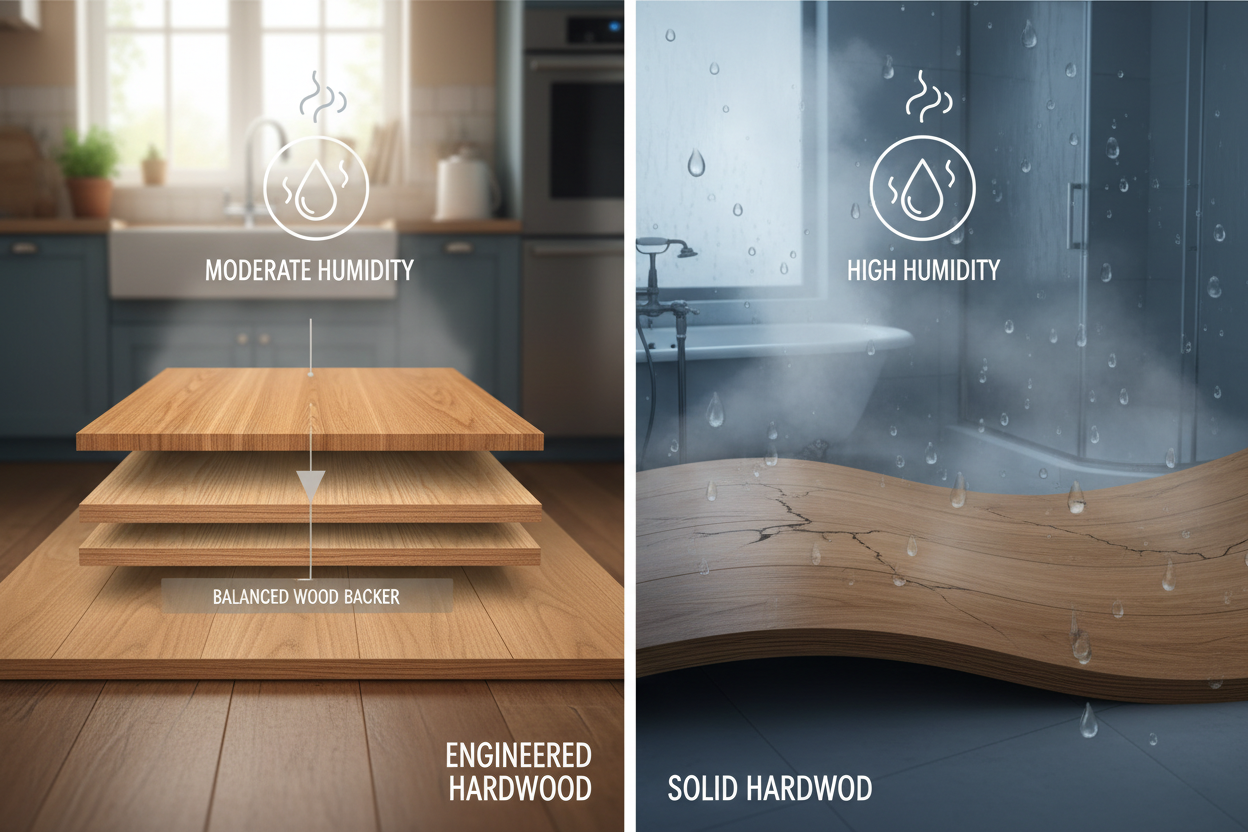
While traditional solid hardwood flooring isn’t recommended for high-moisture areas, engineered hardwood presents a more viable option. Engineered hardwood consists of a real wood veneer over a moisture-resistant core, typically made from plywood or high-density fiberboard.
This construction makes engineered hardwood more stable in fluctuating humidity conditions compared to solid wood. However, it’s important to note that even engineered hardwood has limitations in truly wet environments. It may work in areas with moderate moisture levels, like certain basements or kitchens, but isn’t suitable for bathrooms or laundry rooms where direct water exposure is common.
When considering engineered hardwood for moisture-prone areas, look for products specifically rated for such environments and ensure proper acclimation and installation techniques are followed.
Installation Considerations for High-Moisture Areas 🔧
Proper installation is just as important as material selection when it comes to moisture-resistant flooring. The subfloor must be completely dry and level before installation begins. Any existing moisture issues should be addressed and resolved before new flooring installation.
Moisture barriers and appropriate underlayments play crucial roles in protecting your investment. These materials create additional layers of protection between your flooring and potential moisture sources. In basement applications, vapor barriers are particularly important to prevent moisture from concrete slabs from affecting your flooring.
Professional installation often proves worthwhile for moisture-prone areas, as experienced installers understand the specific techniques and materials needed to ensure long-lasting performance. They can also identify potential issues before they become costly problems.
Maintenance Tips for Moisture-Resistant Flooring 🧽
Even the most moisture-resistant flooring requires proper maintenance to perform optimally over time. Regular cleaning prevents the buildup of soap scum, mineral deposits, and other residues that can compromise the flooring’s appearance and performance.
For tile flooring, maintaining grout lines is essential. Regular cleaning and periodic resealing of grout help prevent moisture infiltration and maintain the overall integrity of your tile installation. Similarly, natural stone flooring requires regular sealing to maintain its moisture resistance properties.
Luxury vinyl flooring, while low-maintenance, benefits from regular cleaning with appropriate products that won’t damage the surface or wear layer. Avoid harsh chemicals or abrasive cleaning tools that could compromise the flooring’s protective properties.
Proper ventilation in moisture-prone areas cannot be overstated. Exhaust fans, dehumidifiers, and adequate air circulation help manage humidity levels and prevent moisture-related problems regardless of your flooring choice.
Budget Considerations and Long-Term Value 💰
When selecting flooring for high-moisture areas, it’s important to consider both upfront costs and long-term value. While moisture-resistant options may carry higher initial price tags, they often prove more economical over time by avoiding costly repairs and replacements.
Luxury vinyl flooring typically offers the best balance of affordability, performance, and aesthetics for most homeowners. Tile installations may require higher upfront investment but can last for decades with proper maintenance. Natural stone represents the premium option, offering unmatched beauty but requiring the highest investment in both materials and ongoing maintenance.
Consider the total cost of ownership, including installation, maintenance, and potential replacement costs when making your decision. Sometimes spending more initially saves significant money and hassle in the long run.
Making the Right Choice for Your Space ✨
Selecting the perfect flooring for high-moisture areas requires balancing multiple factors including moisture resistance, aesthetics, durability, maintenance requirements, and budget constraints. Take time to evaluate your specific needs and circumstances before making a final decision.
Consider the level of moisture exposure your space experiences. A powder room might have different requirements than a basement family room or a busy kitchen. Think about your lifestyle, maintenance preferences, and long-term plans for the space.
Don’t hesitate to consult with flooring professionals who can assess your specific situation and provide personalized recommendations. They can help you navigate the numerous options available and ensure you make an informed decision that you’ll be happy with for years to come.
Remember that proper installation and maintenance are just as crucial as material selection. Even the best moisture-resistant flooring can fail if not properly installed or maintained. Invest in quality installation and commit to appropriate maintenance practices to maximize your flooring’s performance and lifespan.
Choosing the right flooring for high-moisture areas doesn’t have to be overwhelming. With careful consideration of your needs, proper material selection, and professional installation, you can enjoy beautiful, durable flooring that stands up to moisture challenges while enhancing your home’s comfort and value. Take your time, do your research, and make a choice that serves your family well for years to come! 🏡
Call Us Now!