 Skip to content

The Role of Flooring in Fall Prevention Strategies: Creating Safer Spaces for Everyone 🏠
When we think about fall prevention, our minds often jump to grab bars, proper lighting, or removing clutter. But there’s one crucial element that literally supports us every step of the way – our flooring. The surface beneath our feet plays a pivotal role in preventing slips, trips, and falls, yet it’s often overlooked in comprehensive safety strategies.
Falls are no laughing matter. They’re the leading cause of injury-related death among adults 65 and older, and they send millions of people to emergency rooms each year. While we can’t control every factor that contributes to falls, we absolutely can make smart choices about the flooring in our homes and workplaces. Let’s explore how the right flooring decisions can create safer environments for everyone, from active families to aging adults. 🛡️
Understanding the Connection Between Flooring and Fall Prevention
The relationship between flooring and fall prevention goes deeper than you might think. Every time we take a step, our feet interact with the surface below in complex ways. The texture, material, and condition of flooring directly impact our stability and confidence while walking.
Think about the last time you walked on a wet tile floor versus a carpeted hallway. The difference in your gait, the way you placed your feet, and your overall sense of security was probably noticeable. This isn’t just psychological – it’s biomechanical. Different flooring materials provide varying levels of traction, shock absorption, and stability, all of which influence our risk of falling.
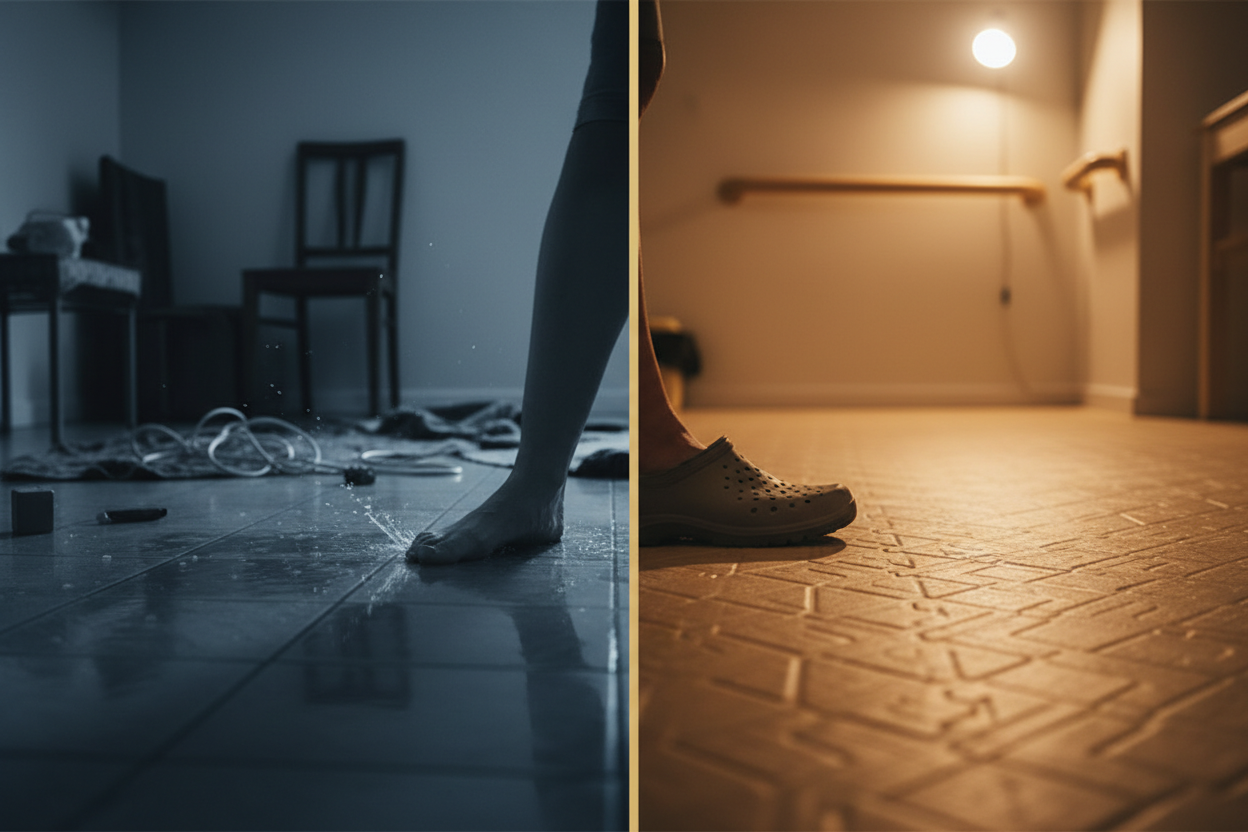
Research consistently shows that certain flooring characteristics can significantly reduce fall incidents. A study published in the Journal of the American Geriatrics Society found that homes with appropriate flooring modifications experienced a 19% reduction in fall-related injuries. That’s a substantial impact from what might seem like a simple change! 📊
Key Flooring Characteristics That Enhance Safety
Not all flooring is created equal when it comes to safety. Several specific characteristics make certain materials and installations more effective at preventing falls than others.
Slip resistance tops the list of important safety features. This isn’t just about avoiding obviously slippery surfaces like wet floors – it’s about choosing materials with appropriate friction coefficients for their intended use. The Americans with Disabilities Act recommends a static coefficient of friction of at least 0.6 for level surfaces and 0.8 for ramps.
Cushioning and shock absorption matter more than many people realize. When we walk, our feet and joints absorb impact with each step. Flooring that provides some give can reduce fatigue and improve stability, especially for people who spend long periods on their feet or those with joint issues.
Visual contrast and pattern clarity also play crucial roles. Flooring that provides clear definition between different areas helps people navigate safely. High-contrast borders, for example, can help define step edges or level changes that might otherwise be difficult to see.
Surface texture needs to strike the right balance – enough grip to prevent slipping, but not so much that it catches on shoes or mobility aids. The ideal texture provides traction without creating trip hazards. 🎯
Slip-Resistant Flooring Materials: Your Best Defense Against Falls
When it comes to slip-resistant flooring, several materials stand out as particularly effective options. Each has its own strengths and ideal applications.
Rubber flooring leads the pack for slip resistance. Originally developed for commercial and industrial settings, rubber flooring now comes in attractive residential options. It provides excellent traction even when wet, offers superior shock absorption, and maintains its slip-resistant properties over time. I’ve seen rubber flooring transform bathrooms and kitchens from accident-prone areas into confident-walking zones.
Textured vinyl and luxury vinyl planks (LVP) offer another excellent option. Modern vinyl flooring has come a long way from the slippery sheets of decades past. Today’s textured vinyl provides good traction while being easy to clean and maintain. The key is choosing products specifically rated for slip resistance rather than smooth, glossy options.
Properly treated concrete can be surprisingly safe. Techniques like broom finishing, stamping, or applying slip-resistant coatings can transform potentially hazardous concrete into a secure walking surface. This is particularly valuable for outdoor areas, garages, and basements.
Ceramic and porcelain tiles, when chosen carefully, can also provide good slip resistance. Look for tiles with textured surfaces and matte finishes rather than glossy ones. The grout lines in tiled floors actually contribute to slip resistance by creating additional texture.
Special Considerations for High-Risk Areas
Certain areas of our homes and workplaces deserve extra attention when it comes to fall prevention flooring. These high-risk zones are where most slip and fall accidents occur, making smart flooring choices absolutely critical.
Bathrooms top the list of dangerous areas. The combination of water, soap, and hard surfaces creates a perfect storm for accidents. Here, slip-resistant materials are non-negotiable. Textured vinyl, rubber flooring, or properly rated ceramic tiles can make bathrooms significantly safer. I always recommend avoiding large, smooth tiles in bathrooms – they might look elegant, but they’re accidents waiting to happen when wet. 🚿
Kitchens present their own challenges. Spills are inevitable, and people often move quickly while carrying hot or heavy items. Slip-resistant flooring that’s also easy to clean becomes essential. Textured vinyl, certain rubber options, or slip-resistant tiles work well here. Avoid glossy surfaces that become skating rinks when oil or water is spilled.
Entryways and transition areas require special attention because they often involve level changes and weather-related hazards. Water, snow, and mud tracked in from outside can make any flooring treacherous. Consider using highly slip-resistant materials in these areas, along with effective drainage and drying systems.
Staircases demand the highest level of safety consideration. The flooring material on stairs must provide excellent traction while being durable enough to handle concentrated foot traffic. Carpet with good padding, rubber treads, or textured materials designed specifically for stairs are all viable options.
Age-Friendly Flooring Solutions for Seniors
As we age, our balance, vision, and mobility can change, making thoughtful flooring choices even more critical. Age-friendly flooring goes beyond just preventing slips – it supports confidence and independence.
Low-pile carpet often works wonderfully for seniors. It provides cushioning that’s gentle on joints, offers good traction, and creates a forgiving surface if falls do occur. However, the key is choosing carpet that won’t catch on walkers, canes, or shuffling feet. Berber and other low-loop carpets can be problematic, while cut-pile options typically work better.
Cushioned vinyl flooring combines the safety benefits of slip resistance with the comfort of some shock absorption. This can be particularly valuable for seniors who spend significant time on their feet or who have conditions like arthritis that make hard surfaces uncomfortable.
Visual considerations become increasingly important with age. Flooring that provides clear contrast between different areas helps compensate for vision changes. Avoiding busy patterns that can create visual confusion or depth perception issues is also wise.
The transition between different flooring types needs careful attention in age-friendly design. Smooth, gradual transitions reduce trip hazards, while abrupt changes in height or material can create dangerous situations. 👵👴
Maintenance: Keeping Safe Flooring Effective
Even the best slip-resistant flooring won’t stay safe without proper maintenance. Regular care and attention ensure that safety features continue working as intended over time.
Cleaning protocols matter enormously. Different flooring materials require different approaches to maintain their slip-resistant properties. For example, using the wrong cleaning products on rubber flooring can actually make it more slippery, while proper maintenance keeps it safely textured.
Regular inspection should be part of any fall prevention strategy. Look for signs of wear that might compromise safety – smooth spots on textured surfaces, loose tiles, damaged carpet, or areas where slip-resistant coatings might be wearing thin. Catching these issues early prevents them from becoming safety hazards.
Immediate attention to spills and wet conditions is crucial, regardless of how slip-resistant your flooring is. Even the best materials have their limits, and standing water or certain substances can overwhelm any flooring’s safety features. Quick cleanup and proper drying maintain the safety benefits you’ve invested in.
Seasonal maintenance considerations also matter. Entranceways might need additional attention during wet or snowy seasons, while outdoor areas might require different care during various weather conditions. 🧽
Professional Assessment: When to Call in the Experts
While many flooring decisions can be made independently, certain situations call for professional expertise. Knowing when to seek help can make the difference between effective fall prevention and costly mistakes.
Complex installations, particularly those involving multiple level changes or specialized safety requirements, benefit from professional assessment. An experienced contractor can identify potential issues that might not be obvious to homeowners and recommend solutions that address specific safety concerns.
Accessibility compliance becomes important in many situations. Whether you’re modifying a home for aging in place or ensuring workplace safety, understanding and meeting relevant accessibility standards often requires professional guidance.
Existing flooring evaluation can reveal hidden safety issues. A professional can assess whether current flooring meets safety standards, identify areas of concern, and recommend targeted improvements that maximize safety benefits while minimizing costs.
Product selection guidance helps navigate the overwhelming array of options available today. Professionals stay current with new products, understand the real-world performance of different materials, and can match specific products to particular safety needs. 🏗️
Conclusion: Building Safer Spaces from the Ground Up
The floor beneath our feet does far more than just provide a surface to walk on – it actively contributes to our safety and confidence with every step we take. By understanding the crucial role that flooring plays in fall prevention, we can make informed decisions that protect ourselves and our loved ones from preventable accidents.
Whether you’re planning a renovation, building a new home, or simply looking to make your current space safer, remember that good flooring choices are investments in long-term safety and independence. The right materials, properly installed and maintained, can provide decades of secure footing and peace of mind.
Don’t wait for an accident to happen before addressing flooring safety. Start by assessing your current spaces, identifying high-risk areas, and prioritizing improvements that will have the greatest impact. Your future self – and your family – will thank you for taking this important step toward creating a safer environment.
Remember, fall prevention is most effective when it’s comprehensive, and flooring is just one piece of the puzzle. Combine smart flooring choices with good lighting, clear pathways, appropriate handrails, and regular safety assessments for the most effective protection against falls. Here’s to safer spaces and confident steps! 🌟
Call Us Now!