 Skip to content

How to Integrate Smart Technology into Nursing Home Flooring: Revolutionizing Senior Care Through Innovation 🏥
The future of senior care is literally beneath our feet. As nursing homes across the globe seek innovative ways to enhance resident safety, improve care quality, and streamline operations, smart flooring technology has emerged as a game-changing solution. This isn’t just about replacing old carpets with fancy tiles – we’re talking about transforming the very foundation of healthcare facilities into intelligent, responsive systems that can save lives and improve quality of care.
Imagine flooring that can detect when a resident falls, monitor their walking patterns for health insights, or even guide them safely to their destination during nighttime bathroom trips. This technology isn’t science fiction anymore – it’s happening right now in forward-thinking nursing facilities worldwide. Let’s explore how you can bring this revolutionary technology to your care facility. 🚀
Understanding Smart Flooring Technology in Healthcare Settings
Smart flooring represents a paradigm shift in how we think about the built environment in healthcare. At its core, this technology embeds sensors, pressure plates, and sometimes even LED lighting systems directly into the flooring material. These components work together to create an intelligent surface that can monitor, detect, and respond to various activities and situations.
The technology typically operates through a network of pressure sensors that can detect footsteps, falls, and even subtle changes in gait patterns. Advanced systems incorporate machine learning algorithms that can distinguish between different types of movements – whether someone is walking normally, shuffling due to mobility issues, or has fallen and needs immediate assistance.
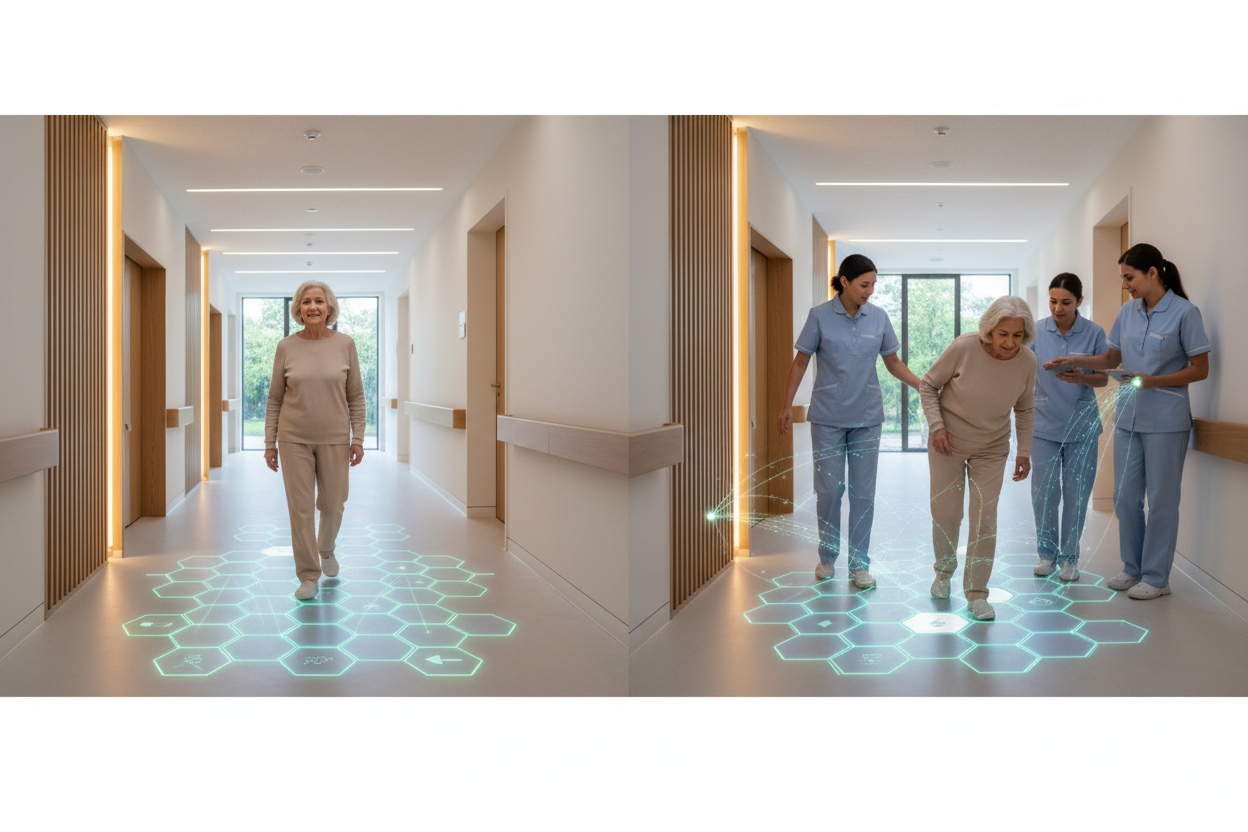
What makes this particularly exciting for nursing homes is the seamless integration. Unlike wearable devices that residents might forget to use or find uncomfortable, smart flooring works invisibly in the background, providing continuous monitoring without any change to daily routines. It’s like having a vigilant caregiver watching over every step, 24 hours a day.
Key Benefits of Smart Flooring for Nursing Home Residents
The advantages of implementing smart flooring technology in nursing homes extend far beyond simple fall detection. For residents, this technology can significantly enhance their sense of independence and security. Many seniors worry about falling when no one is around to help, which can lead to reduced mobility and social isolation. Smart flooring eliminates this fear by ensuring that help is always just moments away.
One of the most profound benefits is the improvement in response times during emergencies. Traditional call systems require residents to be conscious and able to reach their emergency button. Smart flooring detects falls immediately and can automatically alert staff, even if the resident is unconscious or unable to call for help. This rapid response can be the difference between a minor incident and a life-threatening situation.
The technology also provides valuable health insights through gait analysis. Changes in walking patterns can be early indicators of various health conditions, from medication side effects to the onset of neurological disorders. By continuously monitoring these patterns, healthcare providers can identify potential issues before they become serious problems, enabling proactive rather than reactive care. 💪
Essential Features to Look for in Smart Flooring Systems
When evaluating smart flooring solutions for your nursing home, certain features should be non-negotiable. First and foremost, look for systems with high accuracy in fall detection. False alarms can overwhelm staff and reduce trust in the system, while missed falls can have devastating consequences. The best systems use advanced algorithms that can distinguish between actual falls and other activities like dropping objects or sitting down heavily.
Real-time monitoring capabilities are equally crucial. The system should provide immediate alerts to designated staff members through multiple channels – whether that’s smartphones, pagers, or central monitoring stations. Integration with existing nurse call systems and electronic health records can streamline workflows and ensure that critical information reaches the right people quickly.
Privacy protection is another essential consideration. Residents and their families need assurance that the monitoring system respects privacy while providing necessary safety features. Look for systems that focus on movement patterns rather than identifying specific individuals, and ensure that all data is encrypted and stored securely.
Durability and maintenance requirements should also factor into your decision. Nursing home flooring takes a beating from wheelchairs, walkers, and heavy medical equipment. The smart flooring system must be robust enough to withstand this daily wear while maintaining its functionality. Consider systems with minimal maintenance requirements and reliable technical support. 🔧
Step-by-Step Implementation Guide for Nursing Facilities
Implementing smart flooring technology requires careful planning and execution. The first step involves conducting a comprehensive assessment of your facility’s needs and current infrastructure. This includes evaluating high-risk areas where falls are most likely to occur, such as bathrooms, hallways, and common areas. You’ll also need to assess your current IT infrastructure to ensure it can support the new technology.
Next, engage with multiple vendors to understand the different options available. Request demonstrations and, if possible, visit other facilities that have already implemented similar systems. This hands-on experience will help you understand how the technology works in real-world conditions and what challenges you might face during implementation.
The installation phase requires coordination between your facilities team, IT department, and the technology vendor. Depending on the system chosen, installation might involve minimal disruption (for surface-mounted sensors) or more extensive work (for fully integrated flooring replacement). Plan the installation in phases, starting with high-priority areas and expanding gradually to minimize disruption to residents and operations.
Staff training is absolutely critical for successful implementation. Your team needs to understand how the system works, how to respond to alerts, and how to troubleshoot common issues. Develop clear protocols for different types of alerts and ensure that all shifts are properly trained. Consider appointing technology champions among your staff who can provide ongoing support and training to their colleagues.
Cost Considerations and ROI Analysis
The financial investment in smart flooring technology can be substantial, but it’s important to consider both the upfront costs and the long-term return on investment. Initial costs typically include the flooring system itself, installation, integration with existing systems, and staff training. Depending on the size of your facility and the sophistication of the system, costs can range from tens of thousands to hundreds of thousands of dollars.
However, the ROI can be compelling when you factor in the potential savings. Falls in nursing homes cost the healthcare system billions of dollars annually. A single serious fall can result in hospital stays, surgeries, and extended rehabilitation that can cost tens of thousands of dollars. By preventing even a few serious falls per year, the system can quickly pay for itself.
Beyond direct cost savings, consider the operational benefits. Faster response times can reduce the severity of injuries, leading to shorter recovery times and reduced liability exposure. The data collected by smart flooring systems can also help identify patterns and risk factors, enabling more targeted prevention strategies that can further reduce fall rates.
Many facilities also find that smart flooring technology helps with staffing efficiency. Rather than conducting frequent safety rounds, staff can focus their attention where it’s most needed, when it’s most needed. This can improve job satisfaction and reduce turnover, which has its own significant cost implications in today’s challenging labor market. 💰
Overcoming Common Implementation Challenges
Every technology implementation comes with its challenges, and smart flooring is no exception. One of the most common obstacles is staff resistance to new technology. Some team members may worry that the system will replace human caregivers or create additional work. Address these concerns head-on by emphasizing that the technology enhances rather than replaces human care, and provide comprehensive training to build confidence and competence.
Technical integration can also be challenging, particularly in older facilities with legacy systems. Work closely with your IT team and the vendor to identify potential compatibility issues early in the process. Sometimes, upgrading other systems may be necessary to fully leverage the smart flooring technology, so factor these costs into your planning.
Resident and family acceptance is another important consideration. Some individuals may have privacy concerns or simply be uncomfortable with new technology. Transparent communication about how the system works, what data is collected, and how privacy is protected can help address these concerns. Consider holding information sessions for residents and families to demonstrate the technology and answer questions.
Maintenance and ongoing support present their own challenges. Ensure that your staff knows how to perform basic troubleshooting and that you have reliable technical support from your vendor. Develop relationships with local technical support providers who can respond quickly when issues arise. Regular system updates and maintenance schedules should be built into your operational procedures.
Future Trends in Smart Healthcare Flooring
The field of smart flooring technology is evolving rapidly, with exciting developments on the horizon that could further revolutionize nursing home care. Artificial intelligence and machine learning capabilities are becoming more sophisticated, enabling systems to provide increasingly accurate predictions about resident health and behavior patterns.
Integration with other smart building technologies is another emerging trend. Imagine flooring that works seamlessly with smart lighting systems to guide residents safely through darkened hallways, or integration with climate control systems that adjust temperature based on activity levels in different areas of the facility.
Biometric monitoring capabilities are also advancing. Future smart flooring systems may be able to detect vital signs through footsteps, providing continuous health monitoring without any wearable devices. This could enable early detection of cardiac events, respiratory issues, or other medical emergencies.
The development of more affordable and easier-to-install systems is making this technology accessible to smaller facilities and those with limited budgets. As the technology matures and becomes more widespread, costs are expected to continue decreasing while capabilities expand. 🌟
Conclusion: Taking the Next Step Toward Smarter Senior Care
Integrating smart technology into nursing home flooring represents more than just a technological upgrade – it’s a commitment to providing the highest quality care for our most vulnerable population. The benefits extend far beyond fall prevention, offering opportunities to improve overall health monitoring, enhance operational efficiency, and provide peace of mind for residents, families, and staff alike.
The technology is no longer experimental or prohibitively expensive for many facilities. With careful planning, proper implementation, and ongoing support, smart flooring can become an integral part of your care strategy that pays dividends for years to come. The question isn’t whether this technology will become standard in nursing homes – it’s whether your facility will be an early adopter that leads the way in innovative senior care.
As you consider this investment, remember that you’re not just upgrading your flooring – you’re investing in the safety, dignity, and well-being of every person who calls your facility home. In an industry where every second can matter and every fall prevented is a life potentially saved, smart flooring technology offers a foundation for better care that you can literally build upon. The future of nursing home care is smart, responsive, and more human than ever before. 🏡✨
Call Us Now!