 Skip to content

How to Incorporate Cultural Elements into Nursing Home Flooring Design: Creating Meaningful Spaces for Residents 🏡
Walking into a nursing home should feel like stepping into a place that honors the rich tapestry of lives lived, stories shared, and cultures celebrated. Yet, too often, these spaces feel sterile and disconnected from the vibrant backgrounds of their residents. The floor beneath our feet—quite literally the foundation of any space—offers an incredible opportunity to weave cultural elements into nursing home design in ways that are both practical and deeply meaningful.
When we think about creating environments that truly serve our elderly population, we must consider how design choices can either support or diminish a person’s sense of identity and belonging. Flooring, while often overlooked as merely functional, can become a powerful tool for cultural expression and memory activation. Let’s explore how thoughtful flooring design can transform nursing homes into spaces that celebrate diversity and honor the cultural heritage of those who call these places home.
Understanding the Cultural Landscape of Modern Nursing Homes 🌍
Today’s nursing home residents represent an incredibly diverse population. From Holocaust survivors to civil rights pioneers, from immigrants who built new lives in foreign lands to indigenous community members maintaining ancestral traditions—each person brings a unique cultural story that deserves recognition and respect.
The challenge for designers and administrators lies in creating spaces that acknowledge this diversity without overwhelming the senses or creating confusion for residents with cognitive impairments. Cultural flooring design must strike a delicate balance between celebration and functionality, between personal meaning and universal accessibility.
Research consistently shows that environments reflecting residents’ cultural backgrounds can significantly impact their emotional well-being, cognitive function, and overall quality of life. When an elderly Italian-American resident sees terra cotta patterns reminiscent of their grandmother’s kitchen, or when a resident of Irish heritage recognizes Celtic knot motifs, these visual cues can trigger positive memories and provide comfort during challenging times.
Practical Approaches to Cultural Flooring Integration ✨
Incorporating cultural elements into nursing home flooring doesn’t require a complete overhaul of existing systems. Smart, strategic choices can make a tremendous difference while maintaining safety standards and budget considerations.
One effective approach involves creating cultural zones or neighborhoods within the facility. The Mediterranean wing might feature warm terracotta tiles with subtle mosaic borders, while the Scandinavian section could incorporate light wood-look vinyl with clean geometric patterns. These zones allow residents to choose living spaces that resonate with their cultural background while providing variety throughout the facility.
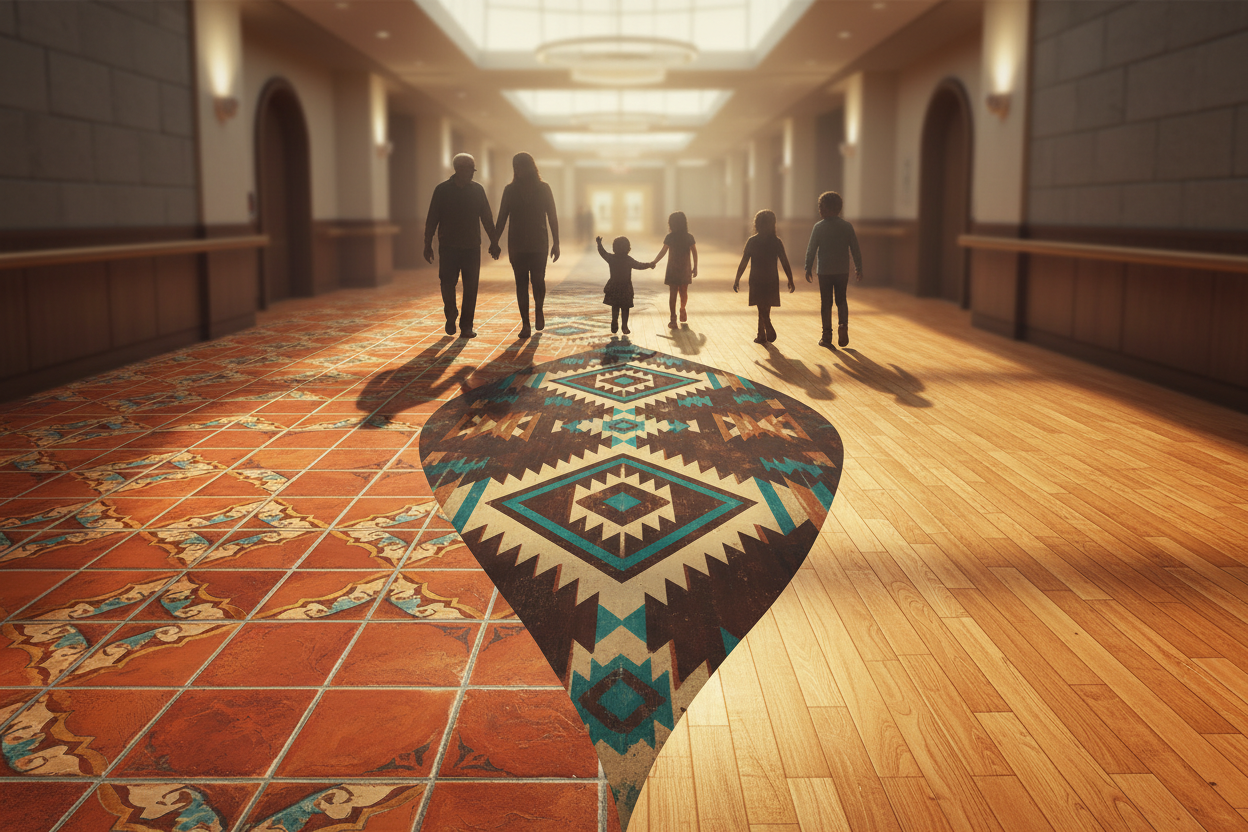
Pattern selection plays a crucial role in cultural representation. Traditional motifs can be simplified and enlarged for better visibility while maintaining their essential character. African kente cloth patterns, Native American geometric designs, or Asian-inspired florals can be adapted into flooring designs that honor their origins while meeting the practical needs of a healthcare environment.
Color psychology also comes into play when designing culturally sensitive flooring. Warm earth tones might appeal to residents from desert regions, while cool blues and greens could comfort those from coastal communities. The key is understanding the emotional associations different cultures have with specific colors and incorporating these thoughtfully into the design palette.
Material Selection for Cultural Expression and Safety 🛡️
The materials chosen for cultural flooring design must meet the dual demands of aesthetic appeal and safety requirements. Luxury vinyl tile (LVT) has emerged as a favorite choice for nursing homes because of its versatility in replicating various cultural aesthetics while maintaining slip resistance and easy maintenance.
Natural stone patterns can evoke memories of homeland landscapes—think slate reminiscent of Irish countryside or marble patterns that recall Mediterranean architecture. However, actual stone surfaces pose slip risks, making stone-look LVT a safer alternative that still provides visual authenticity.
Textile-inspired flooring offers another avenue for cultural expression. Carpet tiles that mimic traditional weaving patterns can create warmth and familiarity, particularly in common areas where residents gather. Persian rug patterns, Navajo designs, or Scottish tartan motifs can be reproduced in durable, stain-resistant materials that honor cultural traditions while meeting healthcare facility standards.
Wood-look flooring provides opportunities to reference different cultural building traditions. Bamboo patterns might resonate with residents of Asian heritage, while wide-plank oak designs could comfort those from American farming communities. The grain patterns, colors, and plank sizes can all be selected to reflect specific cultural preferences and memories.
Memory Care Considerations in Cultural Design 🧠
When designing flooring for memory care units, cultural elements become even more significant. For residents experiencing dementia or Alzheimer’s disease, familiar cultural patterns and colors can provide anchoring points that help with orientation and emotional regulation.
High contrast borders and clear pathways become essential in memory care environments. Cultural patterns can be incorporated into these wayfinding elements—perhaps using traditional border designs from residents’ cultural backgrounds to define walking paths or room entrances. This approach serves both functional and emotional purposes.
Avoiding overly busy patterns is crucial in memory care settings. Cultural elements should be simplified and used strategically rather than overwhelming the visual field. A single accent wall with cultural tile work or a border pattern around the perimeter of a room can provide cultural connection without creating visual confusion.
Familiar textures can also trigger positive memories and provide comfort. Smooth surfaces might remind residents of polished hardwood floors from childhood homes, while slightly textured surfaces could evoke memories of traditional tile work or natural materials from their cultural background.
Creating Inclusive Spaces That Honor Multiple Cultures 🤝
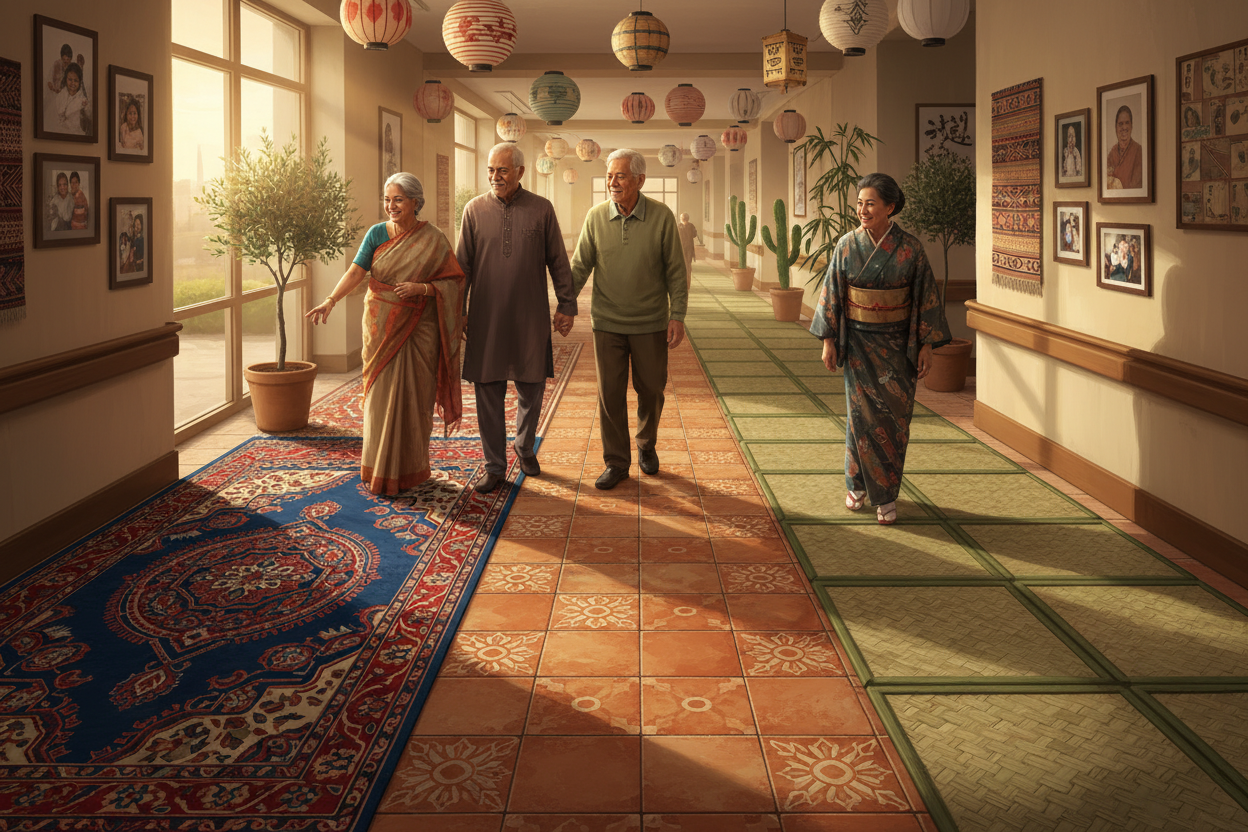
One of the greatest challenges in cultural flooring design is creating spaces that feel inclusive to residents from various backgrounds. The goal isn’t to create a “melting pot” that diminishes individual cultural identity, but rather a “mosaic” where different elements complement each other while maintaining their distinct character.
Common areas present unique opportunities for multicultural design. A central courtyard or main gathering space might feature a neutral base with cultural accent areas that rotate or change seasonally. This approach allows different cultural celebrations and traditions to be highlighted throughout the year while maintaining a cohesive overall design.
Transitional spaces between cultural zones require careful consideration. Gradual color and pattern transitions can help these areas feel natural rather than abrupt. Using complementary colors and similar pattern scales can create flow between different cultural areas while maintaining their distinct identities.
Universal symbols and patterns that transcend specific cultures can serve as unifying elements. Natural motifs like leaves, water patterns, or geometric shapes that appear across many cultures can provide common ground while still allowing for cultural specificity in other design elements.
Budget-Conscious Implementation Strategies 💰
Implementing cultural elements in nursing home flooring doesn’t have to break the budget. Strategic planning and phased implementation can make even ambitious cultural design projects financially feasible.
Starting with high-impact, low-cost changes can provide immediate benefits while building support for larger projects. Adding cultural border tiles to existing neutral flooring, creating accent areas with patterned rugs, or using vinyl decals with cultural motifs can begin the transformation process affordably.
Partnering with local cultural organizations can provide both design inspiration and potential funding sources. Many cultural groups are eager to support projects that honor their heritage and may offer design expertise, volunteer labor, or even financial contributions to meaningful projects.
Phased replacement allows facilities to incorporate cultural elements gradually as existing flooring reaches the end of its lifecycle. This approach spreads costs over time while ensuring that each new installation contributes to the overall cultural design vision.
Maintenance and Longevity of Cultural Flooring Designs 🔧
Beautiful cultural flooring means nothing if it can’t withstand the demands of a healthcare environment. Selecting materials and patterns that maintain their appearance over time is crucial for long-term success.
Digital printing technology has revolutionized the durability of patterned flooring. Modern LVT and carpet tiles can maintain vibrant cultural patterns for years with proper maintenance, making them excellent choices for high-traffic nursing home environments.
Choosing patterns that age gracefully is important for budget planning. Subtle variations in color and texture can help hide normal wear patterns, while overly uniform designs may show every scuff and stain. Traditional cultural patterns often incorporate natural variation that helps maintain appearance over time.
Staff training on proper maintenance of cultural flooring elements ensures that these meaningful design features continue to serve residents well. Understanding which cleaning products work best with specific materials and patterns helps preserve both the appearance and the cultural significance of these design choices.
Conclusion: Building Bridges Through Thoughtful Design 🌈
Incorporating cultural elements into nursing home flooring design represents far more than an aesthetic choice—it’s an investment in the dignity, comfort, and well-being of residents who deserve to see their life stories reflected in their living environment. When we take the time to understand and honor the cultural backgrounds of nursing home residents through thoughtful design choices, we create spaces that don’t just house people, but truly welcome them home.
The floor beneath our feet can tell stories, trigger memories, and provide comfort in ways we’re only beginning to understand. As our population becomes increasingly diverse and our understanding of person-centered care continues to evolve, cultural flooring design will play an increasingly important role in creating nursing homes that truly serve the whole person—not just their medical needs, but their emotional and cultural needs as well.
Whether through the warm terra cotta patterns that remind a resident of their Italian grandmother’s kitchen, the geometric designs that honor Native American heritage, or the subtle wood grains that evoke memories of a childhood farmhouse, cultural flooring design has the power to transform institutional spaces into places of belonging, comfort, and respect. In doing so, we honor not just the individuals in our care, but the rich tapestry of human experience that makes our communities stronger and more vibrant.
Call Us Now!