 Skip to content

The Influence of Flooring Texture on Senior Comfort and Safety: A Complete Guide to Age-Friendly Home Design 🏠
As we age, our homes should evolve with us, becoming sanctuaries that prioritize both comfort and safety. One often-overlooked aspect of senior-friendly home design is flooring texture – a critical factor that can mean the difference between confident mobility and dangerous falls. When my grandmother moved in with us last year, I never realized how much the simple texture beneath our feet could impact daily life until I watched her hesitate at every doorway, unsure of her footing.
The texture of flooring surfaces plays a pivotal role in senior safety, affecting everything from slip resistance to joint comfort. Understanding how different textures influence mobility, balance, and overall well-being can help families make informed decisions that enhance quality of life for their aging loved ones. Let’s explore this crucial aspect of accessible home design that could transform your living space into a safer, more comfortable environment. 🌟
Understanding the Science Behind Flooring Texture and Senior Safety
The relationship between flooring texture and senior safety isn’t just about aesthetics – it’s rooted in biomechanics and age-related physical changes. As we age, our proprioception (the body’s ability to sense its position in space) naturally declines, making textural feedback from flooring surfaces increasingly important for maintaining balance and stability.
Research from the National Institute on Aging reveals that seniors rely heavily on tactile feedback through their feet to navigate spaces safely. When flooring lacks appropriate texture, this crucial sensory input diminishes, potentially leading to unsteady gait patterns and increased fall risk. The coefficient of friction – essentially how much grip a surface provides – becomes a life-or-death consideration rather than a mere comfort feature.
Smooth, highly polished surfaces that might look stunning in design magazines can become treacherous for seniors, especially when wet or when wearing certain types of footwear. Conversely, surfaces with appropriate texture provide the grip and feedback necessary for confident movement, allowing seniors to maintain their independence longer.
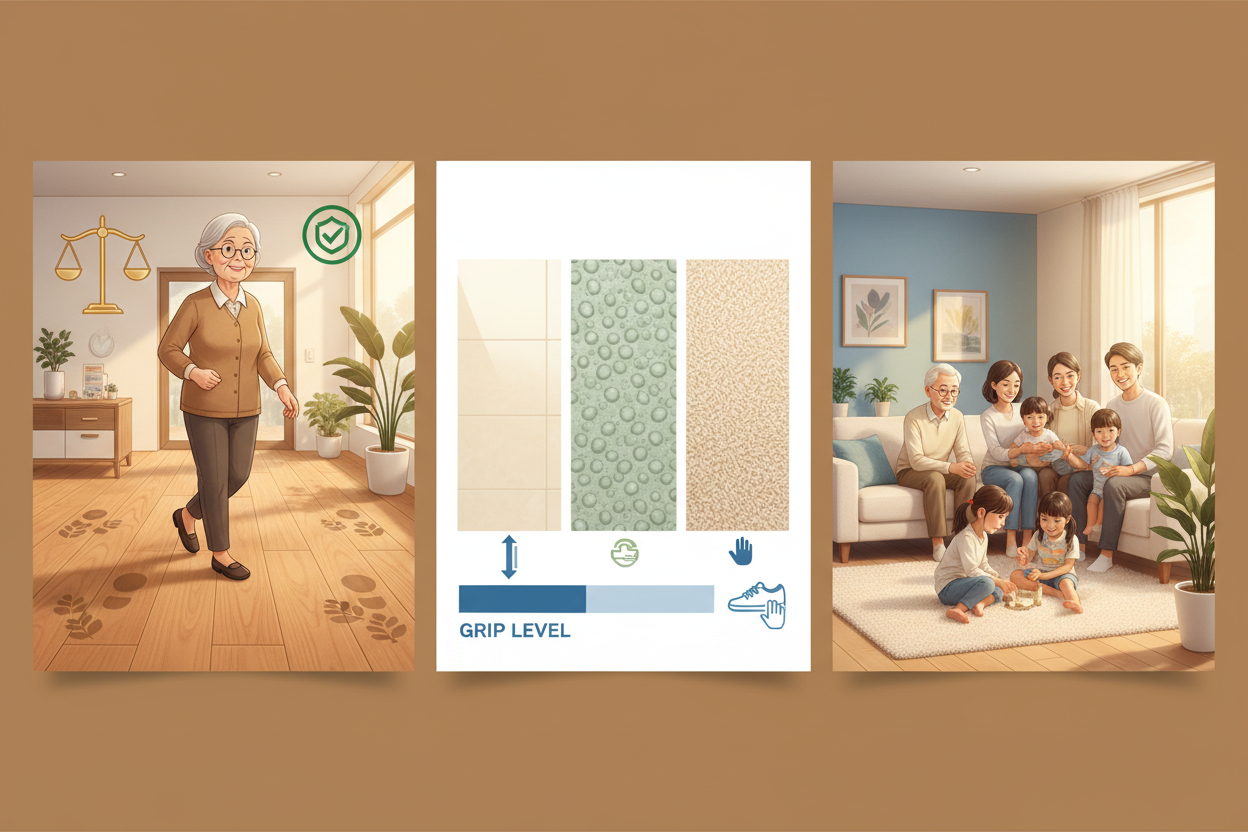
The Hidden Dangers of Smooth Flooring Surfaces for Elderly Residents
Polished hardwood, glossy tiles, and marble floors might epitomize luxury, but they pose significant challenges for senior residents. These mirror-like surfaces offer minimal friction, creating what safety experts call “slip hazards” – areas where even the slightest moisture or debris can cause catastrophic falls.
I’ll never forget watching my neighbor’s father, a proud 78-year-old veteran, slip on his pristine kitchen tiles after a small water spill. What should have been a minor mishap resulted in a hip fracture that changed his life forever. This incident opened my eyes to how seemingly innocent design choices can have profound consequences for senior safety.
Beyond slip risks, smooth surfaces provide no tactile landmarks for seniors with visual impairments. Without textural changes to indicate transitions between rooms or approaching hazards like stairs, these individuals must rely solely on diminished vision, creating additional safety concerns.
The psychological impact shouldn’t be underestimated either. Seniors who’ve experienced falls on smooth surfaces often develop a fear of walking on similar textures, leading to reduced mobility and social isolation. This “post-fall syndrome” can be just as debilitating as physical injuries, affecting mental health and overall quality of life. 😰
Optimal Flooring Textures for Enhanced Senior Mobility and Confidence
The ideal flooring texture for seniors strikes a delicate balance – providing enough grip for safety without creating obstacles for mobility aids like walkers or wheelchairs. Slightly textured surfaces with a matte finish typically offer the best combination of slip resistance and ease of movement.
Natural stone with a honed finish, textured ceramic tiles, and engineered hardwood with subtle grain patterns all provide excellent traction while remaining smooth enough for wheeled devices. These surfaces offer what experts call “appropriate friction” – enough resistance to prevent slips without impeding forward motion.
Low-pile carpeting with dense construction also deserves consideration, particularly in bedrooms and living areas where comfort is paramount. The key is choosing carpets that won’t catch on assistive devices while still providing cushioning for potential falls. Modern carpet tiles with slip-resistant backing combine the comfort of carpet with the safety features seniors need.
Luxury vinyl planks with embossed wood grain textures have emerged as a popular choice for senior living spaces. These surfaces mimic the appearance of natural wood while providing superior slip resistance and easier maintenance – crucial factors for aging in place successfully. 🌿
How Different Textures Affect Joint Health and Comfort in Aging Adults
The impact of flooring texture extends beyond safety to encompass joint health and overall comfort. Hard, unforgiving surfaces can exacerbate arthritis pain and contribute to fatigue, while appropriately cushioned textures can provide relief and support for aging joints.
Concrete and stone floors, while durable, offer no shock absorption, transferring impact directly to knees, hips, and ankles with each step. For seniors already dealing with joint deterioration, this constant jarring can accelerate pain and mobility issues. Adding area rugs or transitioning to softer surfaces in high-traffic areas can provide significant relief.
Conversely, surfaces with slight give – like cork flooring or cushioned vinyl – can reduce joint stress while maintaining stability. These materials compress slightly under foot pressure, absorbing impact that would otherwise stress arthritic joints. The result is often reduced pain and increased willingness to remain active.
Temperature regulation also plays a role in joint comfort. Textured surfaces that don’t conduct heat as readily as smooth materials can help maintain comfortable foot temperatures, reducing stiffness in joints that worsen with cold exposure.
Practical Tips for Choosing Senior-Friendly Flooring Textures
Selecting the right flooring texture for senior residents requires careful consideration of individual needs, mobility levels, and lifestyle factors. Start by assessing current mobility challenges and anticipating future needs – what works today should ideally continue working as aging progresses.
Consider the “wet test” when evaluating potential flooring options. Sprinkle a few drops of water on sample surfaces and test slip resistance with appropriate footwear. This simple test can reveal potential hazards before installation, saving both money and potential injuries down the road.
Room-by-room analysis helps optimize texture choices for specific functions. Bathrooms require maximum slip resistance, making textured tiles or slip-resistant vinyl essential. Bedrooms might prioritize comfort with low-pile carpeting, while kitchens need surfaces that balance safety with easy cleanup.
Don’t forget about transitions between different flooring types. Smooth transition strips and gradual texture changes help prevent tripping hazards while allowing seniors to adjust to different surface feels. Abrupt changes in texture or height can be particularly challenging for those with mobility aids. 🚶♂️
Creating Safe Transitions Between Different Flooring Textures
One of the most overlooked aspects of senior-friendly flooring design is managing transitions between different texture types. These boundary areas often become accident hotspots if not properly planned and executed.
Beveled transition strips help create smooth pathways between rooms with different flooring materials, reducing trip hazards while maintaining the integrity of each surface. The goal is creating seamless movement that doesn’t require seniors to consciously adjust their gait or worry about catching their feet.
Visual contrast at transition points can actually enhance safety when done thoughtfully. Subtle color or texture changes help seniors anticipate surface changes, allowing them to adjust their walking pattern accordingly. However, dramatic contrasts can be disorienting, so moderation is key.
Consider the direction of texture patterns when planning transitions. Wood grain or tile patterns that run parallel to walking paths create smoother visual flow than perpendicular patterns, which can appear as barriers or obstacles to seniors with visual processing challenges.
Maintenance Considerations for Textured Senior-Safe Flooring
The best safety-focused flooring texture means nothing if it can’t be properly maintained. Textured surfaces can trap dirt, moisture, and debris, potentially creating new hazards if not regularly cleaned and cared for.
Establish cleaning routines that address the specific needs of textured surfaces without compromising their safety features. Some cleaning products can actually reduce slip resistance by leaving residues, while others enhance it. Understanding these interactions helps maintain optimal surface conditions.
Regular inspection becomes crucial with textured flooring, as wear patterns can develop that reduce effectiveness over time. High-traffic areas may require more frequent attention or periodic restoration to maintain their safety characteristics.
Consider the long-term maintenance capabilities of senior residents when selecting textures. Surfaces that require specialized cleaning equipment or techniques may become problematic as physical capabilities decline. The best flooring choice balances safety with realistic maintenance expectations. 🧹
Conclusion: Prioritizing Safety Without Sacrificing Style in Senior Living Spaces
Creating a senior-friendly living environment doesn’t mean sacrificing style or personal preferences – it means making informed choices that prioritize safety while enhancing comfort and independence. The texture beneath our feet might seem like a small detail, but for seniors, it can determine the difference between confident mobility and fear-restricted living.
By understanding how different textures affect balance, joint health, and overall safety, families can make flooring decisions that support aging in place successfully. Whether you’re planning a renovation for an aging parent or preparing your own home for the future, considering flooring texture as a crucial safety element will pay dividends in comfort, confidence, and peace of mind.
Remember that the best flooring choice is one that meets individual needs while anticipating future changes. With thoughtful planning and attention to texture details, any home can become a safer, more comfortable haven that supports independence and quality of life for years to come. After all, home should be the place where we feel most secure – and the right flooring texture helps make that security a reality. ✨
Call Us Now!