 Skip to content

The Role of Flooring in Enhancing Privacy for Residents: Creating Your Personal Sanctuary 🏠
When we think about home privacy, our minds typically jump to curtains, blinds, or soundproof walls. But here’s something that might surprise you – your flooring choices play a crucial role in creating the private, peaceful sanctuary you’ve been dreaming of. From reducing noise transmission to creating visual boundaries, the right flooring can transform your living space into a true haven of tranquility.
Privacy isn’t just about keeping prying eyes away; it’s about creating an environment where you can truly relax, work, and live without unwanted disturbances. Whether you’re dealing with noisy upstairs neighbors, trying to keep your home office conversations confidential, or simply wanting to create distinct zones within your living space, flooring is your secret weapon. Let’s explore how different flooring options can enhance your privacy and improve your quality of life.
Understanding Sound Privacy: The Foundation of Peaceful Living 🔇
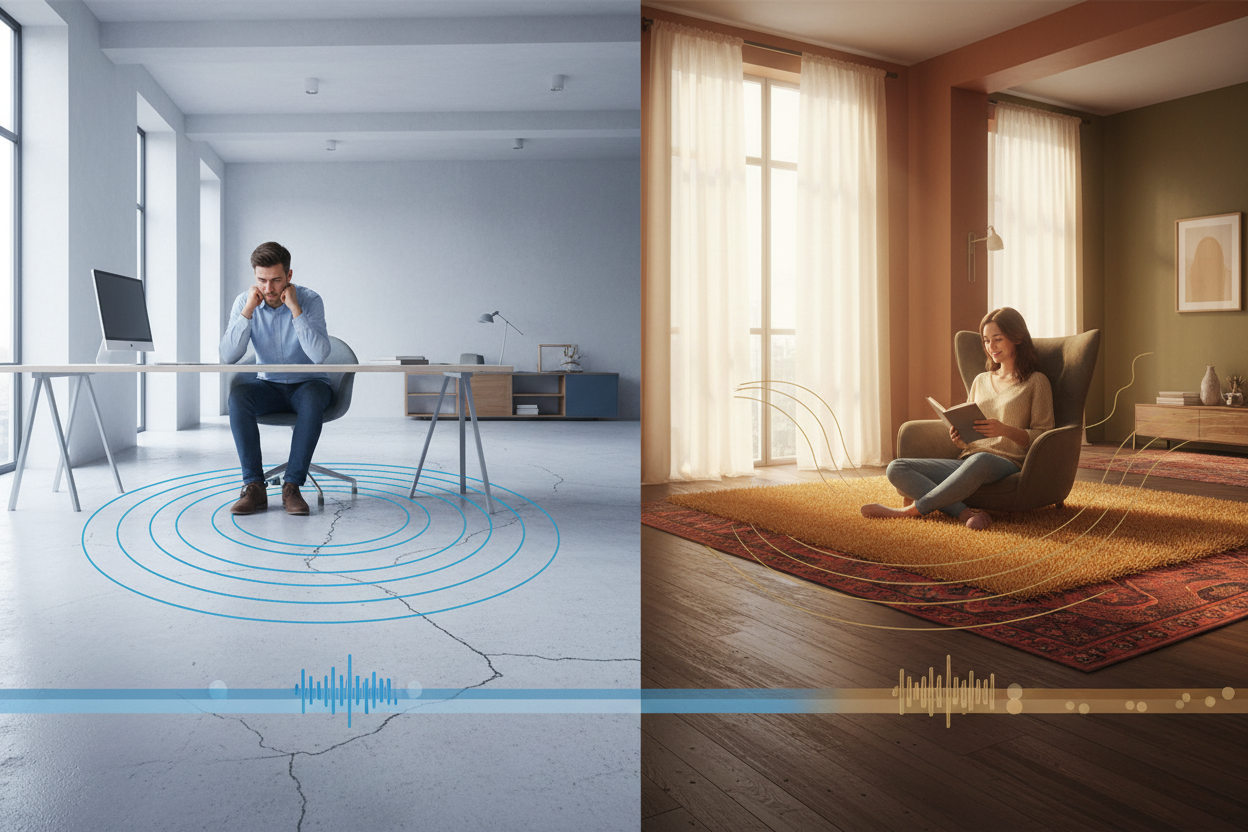
Sound privacy is perhaps the most significant way flooring impacts your daily comfort. Have you ever been jolted awake by footsteps from the apartment above, or struggled to concentrate during a work call because of noise from other rooms? The flooring beneath your feet – and above your head – plays a massive role in these scenarios.
Hard surfaces like tile, hardwood, and laminate can actually amplify sound transmission, creating what acoustics experts call “impact noise.” Every footstep, dropped object, or furniture movement becomes a potential disturbance that travels through your home’s structure. This is particularly problematic in multi-story homes, apartments, and condominiums where sound can easily travel between units.
The science behind sound transmission is fascinating yet straightforward. When someone walks across a hard floor, the impact creates vibrations that travel through the subfloor, into the ceiling below, and eventually reach your ears as unwanted noise. Understanding this process is the first step in choosing flooring that enhances rather than compromises your privacy.
Carpet: The Ultimate Sound Absorber for Maximum Privacy 🛋️
Carpet remains the champion when it comes to sound absorption and privacy enhancement. Its soft, fibrous structure naturally dampens sound waves, preventing them from bouncing around your room and traveling to adjacent spaces. If you’ve ever noticed how much quieter a carpeted room feels compared to one with hard flooring, you’ve experienced this acoustic benefit firsthand.
The privacy benefits of carpet extend beyond just sound absorption. Thick, plush carpeting with quality padding underneath creates an additional barrier against impact noise. When someone walks across a carpeted floor, the combination of carpet fibers and padding absorbs much of the impact energy, dramatically reducing the sound transmitted to rooms below or adjacent spaces.
Modern carpets also offer impressive options for privacy-conscious homeowners. Sound-rated carpet padding, specifically designed for noise reduction, can improve your floor’s acoustic performance by up to 70%. Carpet tiles have become increasingly popular for their versatility and sound-dampening properties, allowing you to create quiet zones exactly where you need them most.
However, it’s worth noting that carpet isn’t suitable for every space. Areas prone to moisture, like bathrooms and kitchens, require different solutions. But for bedrooms, living rooms, home offices, and family spaces, carpet provides unmatched privacy benefits while adding warmth and comfort to your environment.
Hard Flooring Solutions: Balancing Style and Sound Control 🏗️
While carpet excels in sound absorption, many homeowners prefer the aesthetic and maintenance benefits of hard flooring. The good news? You don’t have to sacrifice privacy for style. Several hard flooring options can provide excellent sound control when properly installed with the right underlayment.
Luxury vinyl plank (LVP) and luxury vinyl tile (LVT) have revolutionized the hard flooring market, offering the appearance of wood or stone with superior sound-dampening properties. These materials are inherently quieter than traditional hardwood or tile because they’re more flexible and less prone to transmitting impact noise. When paired with acoustic underlayment, vinyl flooring can rival carpet’s privacy benefits while maintaining the sleek appearance of hard surfaces.
Engineered hardwood presents another excellent option for privacy-conscious homeowners. Unlike solid hardwood, engineered wood’s layered construction naturally reduces sound transmission. The multiple layers work together to absorb and dissipate impact energy, creating a quieter walking surface. Quality acoustic underlayment beneath engineered hardwood can further enhance its sound-dampening properties.
Cork flooring deserves special mention as a naturally sound-absorbing hard surface. Cork’s cellular structure acts like millions of tiny air pockets, naturally dampening sound and providing excellent thermal insulation. It’s comfortable underfoot, environmentally friendly, and offers unique aesthetic appeal while maintaining superior acoustic properties.
The Magic of Underlayment: Your Secret Privacy Weapon 🎯
Here’s where the real magic happens – underlayment is often the unsung hero of flooring privacy. This layer, installed between your subfloor and finished flooring, can dramatically improve your floor’s acoustic performance regardless of the surface material you choose.
Acoustic underlayment works by creating a barrier that absorbs impact energy and prevents sound transmission. Different types serve different purposes: foam underlayment provides basic sound dampening, cork underlayment offers natural sound absorption with antimicrobial properties, and rubber underlayment delivers premium sound isolation for maximum privacy.
The thickness and density of your underlayment directly impact its effectiveness. While it might be tempting to choose the thickest option available, the key is matching the underlayment to your specific flooring type and privacy needs. Too thick, and you might create an unstable surface; too thin, and you won’t achieve the sound control you’re seeking.
Professional installers often recommend combining different types of underlayment for optimal results. For instance, a moisture barrier paired with acoustic foam can provide both protection and sound dampening in one installation. This layered approach ensures your flooring investment delivers maximum privacy benefits for years to come.
Visual Privacy Through Flooring Design and Layout 👁️
Privacy isn’t only about sound – visual privacy plays an equally important role in creating comfortable living spaces. Strategic flooring choices can help define spaces, create natural boundaries, and enhance the overall sense of privacy within your home.
Using different flooring materials to delineate spaces is a powerful design technique that enhances privacy without requiring walls or dividers. For example, transitioning from hardwood in your living area to tile in your entryway creates a natural boundary that signals a change in space function. This visual separation helps maintain privacy by clearly defining public and private areas within your home.
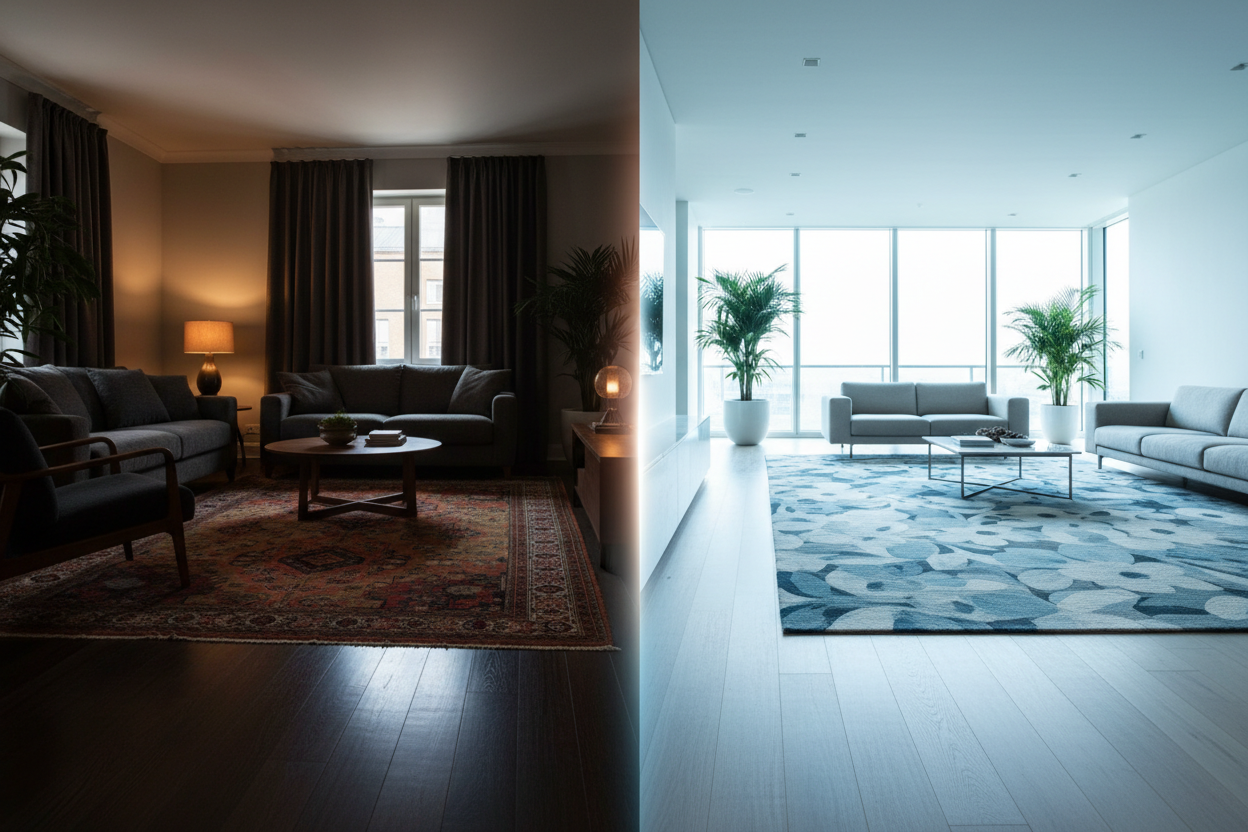
Color and pattern choices also impact visual privacy. Darker flooring colors tend to create a more intimate, private atmosphere, while lighter colors can make spaces feel more open and connected. Patterns can either enhance or diminish privacy depending on their scale and design – smaller, more intricate patterns often create a sense of enclosure, while large, bold patterns can make spaces feel more expansive and less private.
Area rugs deserve special mention as flexible privacy enhancers. They allow you to create temporary private zones within larger spaces, define conversation areas, and add sound absorption exactly where needed. The beauty of rugs lies in their versatility – you can adjust your privacy levels by simply moving or changing them as your needs evolve.
Multi-Level Homes: Special Privacy Considerations 🏢
Multi-story homes present unique privacy challenges that require careful flooring consideration. The sound of footsteps, furniture movement, and daily activities on upper floors can significantly impact the privacy and comfort of lower-level spaces.
Impact noise becomes particularly problematic in multi-level homes. Every step taken on an upper floor can potentially disturb occupants below, making it difficult to maintain privacy for activities like sleeping, working, or relaxing. This is especially challenging in homes with open floor plans where sound can travel freely between levels.
Floating floor installations offer excellent solutions for multi-level privacy concerns. These floors aren’t directly attached to the subfloor, creating a natural sound barrier that prevents impact noise transmission. Laminate, engineered hardwood, and luxury vinyl floors can all be installed as floating systems with appropriate underlayment for enhanced privacy.
For maximum privacy in multi-level homes, consider implementing different flooring strategies on different floors. Carpet on upper levels provides excellent impact noise reduction, while hard surfaces on lower levels offer easy maintenance and aesthetic appeal. This strategic approach ensures privacy throughout your home while meeting the practical needs of each space.
Maintenance and Longevity: Preserving Your Privacy Investment 🔧
Maintaining your flooring’s privacy benefits requires ongoing attention and care. Over time, wear and tear can diminish your floor’s sound-dampening properties, potentially compromising the privacy you’ve worked to create.
Regular maintenance varies by flooring type but generally includes keeping surfaces clean, addressing damage promptly, and monitoring the condition of underlayment and padding. Carpet requires regular vacuuming and professional cleaning to maintain its sound-absorbing properties, while hard surfaces need appropriate cleaning products that won’t damage acoustic underlayment.
Signs that your flooring’s privacy benefits may be diminishing include increased noise transmission, visible wear patterns, or changes in how the floor feels underfoot. Addressing these issues promptly can help preserve your investment and maintain the privacy levels you’ve established.
Professional inspections every few years can help identify potential problems before they impact your privacy. Flooring professionals can assess the condition of your underlayment, recommend maintenance strategies, and suggest upgrades that might enhance your floor’s acoustic performance.
Conclusion: Creating Your Private Oasis Through Smart Flooring Choices ✨
Your flooring choices have far more impact on your home’s privacy than you might have initially imagined. From reducing noise transmission to creating visual boundaries, the right flooring can transform your living space into the peaceful, private sanctuary you deserve.
Whether you choose the superior sound absorption of carpet, the balanced performance of engineered hardwood with quality underlayment, or the innovative properties of luxury vinyl with acoustic backing, the key is understanding how different materials and installation techniques contribute to your overall privacy goals.
Remember that privacy enhancement through flooring isn’t just about the surface material – it’s about the entire system working together. Quality underlayment, proper installation, and regular maintenance all play crucial roles in preserving and maximizing your privacy investment.
As you plan your next flooring project, consider privacy as seriously as aesthetics and durability. Your future self will thank you every time you enjoy a peaceful conversation, a restful night’s sleep, or a quiet moment of relaxation in your beautifully private home. After all, true luxury isn’t just about how your floors look – it’s about how they make you feel in your own personal space. 🏡
Call Us Now!